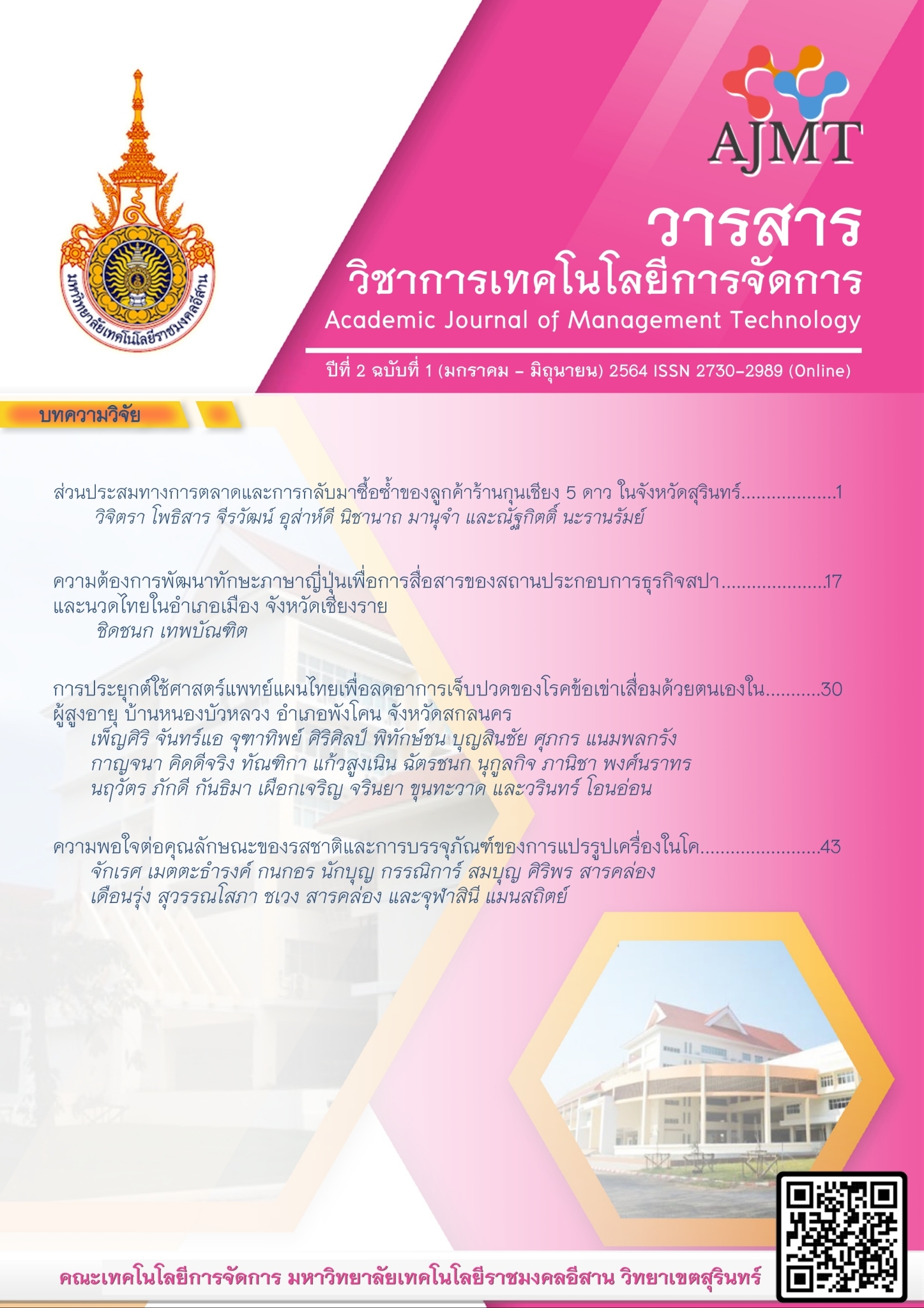
Using Thai Traditional Medicine for Self-Pain Relief Among the Elderly with Osteoarthritis in Ban Nongbaulurng, Phang Khon District, Sakon Nakhon Province
Keywords:
Sakon Nakhon Province, Elderly, Osteoarthritis Diseases, Thai Traditional Medicine, PainAbstract
This quasi-experimental study aimed to investigate the effects using Thai traditional medicine for self-pain relief among the elderly with osteoarthritis. The participants were randomized into a control group (N =30) and an experimental group (N =30). The period of this study was 12 weeks. The experimental group received a health education program consisting of 1) an exercise program and self reflexology guidelines for osteoarthritis; 2) demonstration and practice of the program; 3) a set of herbal knee packs; 4) a training for correct postures and proper diets to decrease knee pain. In addition, a questionnaire was used as the main instrument for collecting data in this research. The data were analyzed using paired sample t-test and independent t-test. The results showed that the participants in the experimental groups gained significantly higher average scores in knowledge on knee pain and behaviors to decrease knee pain. Moreover, they achieved higher scores in perception of their self-efficacy, outcome expectancy, and principles for reducing knee pain than before taking the training program, and their scores were higher than those of the control group. Besides, the findings suggested that the participants reported lower scores in knee pain. Therefore, it can be concluded that this health education program is suitable for elderly with osteoarthritis, and could help them improve their health, well-being, and life quality. It also helps the elderly to stay healthy to earn a living and help reduce their medical treatment costs.
Downloads
Published
How to Cite
Issue
Section
License
บทความที่ได้รับการตีพิมพ์เป็นลิขสิทธิ์ของคณะเทคโนโลยีการจัดการ มหาวิทยาลัยเทคโนโลยีราชมงคลอีสาน วิทยาเขตสุรินทร์
ข้อความที่ปรากฏในบทความแต่ละเรื่องในวารสารวิชาการเล่มนี้ เป็นความคิดเห็นส่วนตัวของผู้เขียนแต่ละท่านไม่เกี่ยวข้องกับคณะเทคโนโลยีการจัดการ มหาวิทยาลัยเทคโนโลยีราชมงคลอีสาน วิทยาเขตสุรินทร์ และคณาจารย์ท่านอื่นๆในมหาวิทยาลัยฯ แต่อย่างใด ความรับผิดชอบองค์ประกอบทั้งหมดของบทความแต่ละเรื่องเป็นของผู้เขียนแต่ละท่าน หากมีความผิดพลาดใดๆ ผู้เขียนแต่ละท่านจะรับผิดชอบบทความของตนเองแต่ผู้เดียว