
PROMOTIMG TRADITION AND ORDINATION RITUALS TO WORSHIP PHRA BOROMMATHAT CHEDI ON THE FOUNDINATION OF SOUTHERN SIAMESE LOCOAL BELIEFS TO SUPPORT THE CULTURAL ECONOMY NAKHON SI THAMMARAT PROVINCE
Article Sidebar
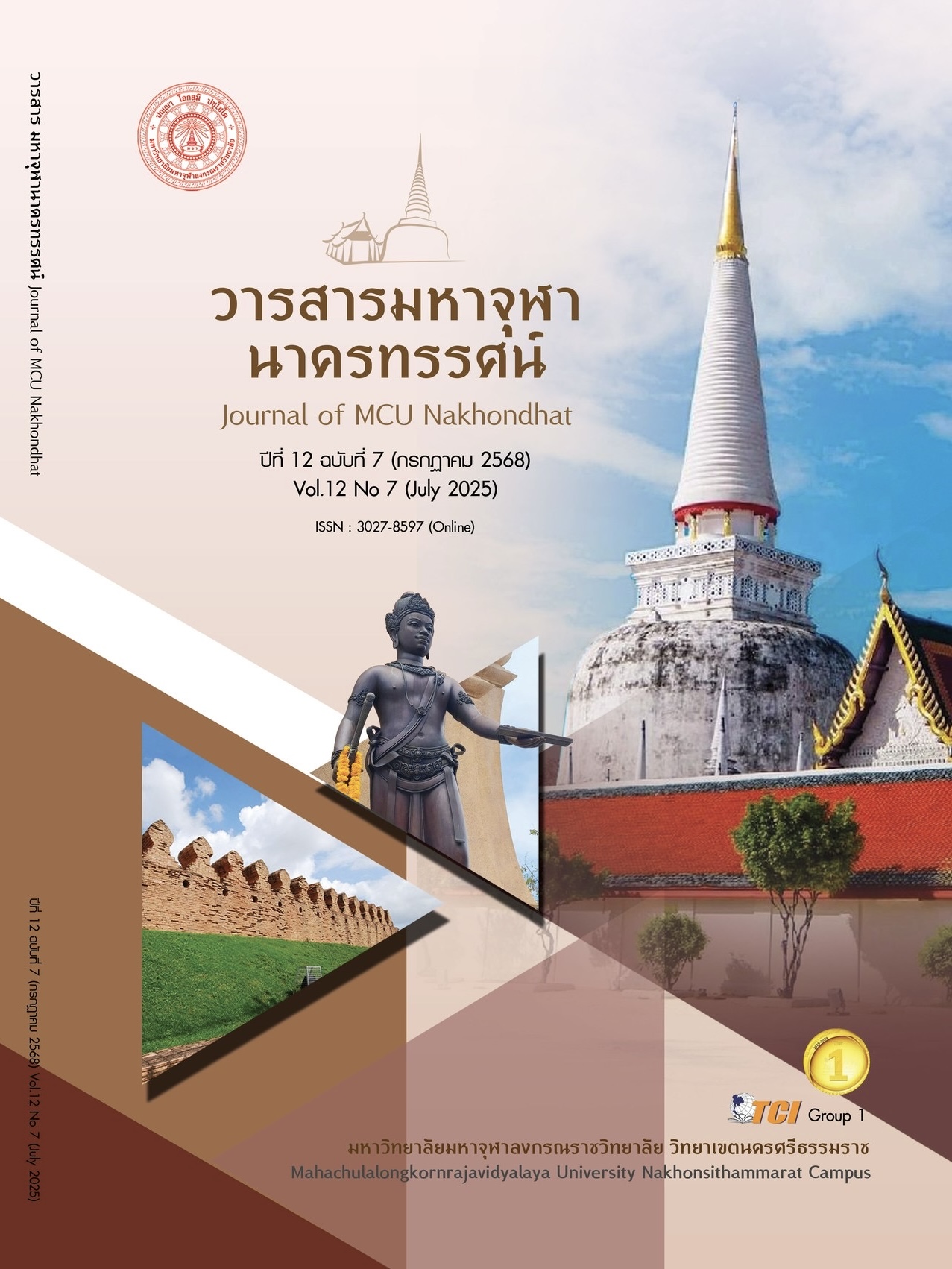
Main Article Content
Abstract
This research article aims to 1) Promote the tradition and ceremonies of ordination and homage to the Phra Borommathat Chedi based on the beliefs of Southern Thai local faiths, in order to support and strengthen the cultural economy of Nakhon Si Thammarat Province, and 2) Establish a network of alliances to promote these traditions and ceremonies, also aimed at bolstering the cultural economy of Nakhon Si Thammarat Province. This is qualitative research involving participant observation, in-depth interviews with key informants, and focus group discussions. The collected data were then organized according to content analysis principles. The findings reveal that: 1) Promoting the tradition and ceremonies of ordination and homage to the Phra Borommathat Chedi, rooted in Southern Thai local beliefs, serves as a way to repay parents, develop personal character, perpetuate Buddhism, preserve traditions, and generate merit to resolve karma. This aids in boosting the cultural economy of Nakhon Si Thammarat Province through awareness creation, community participation, knowledge transfer, and development planning. These are achieved through short-term course-based festivals, celebrations on significant days, and collaboration between government and private entities. 2) Establishing a network to promote the ordination rituals of Phra Borommathat Chedi and the cultural economy of Nakhon Si Thammarat Province is driven by the "SOMPONG MODEL." This model proceeds through the following steps: Situation analysis (S: SWOT), Organization and Obvious management (O: Organization and Obvious), Memorandum of Understanding (MOU: Memorandum of Understanding), Community Participation and Perfect Point (P: Participation and Perfect Point), Ordination ceremony (O: Ordination ceremony), Network coordination (N: Network), and Graduated training for new ordinands through a short course (G: Graduated).
Article Details

This work is licensed under a Creative Commons Attribution-NonCommercial-NoDerivatives 4.0 International License.
References
ธนิก เลิศชาญฤทธิ์. (2552). การจัดการทรัพยากรทางวัฒนธรรม. กรุงเทพมหานคร: คณะโบราณคดี มหาวิทยาลัยศิลปากร.
นิธิภัทร บาลศิริ. (2559). การจัดการการท่องเที่ยวเชิงวัฒนธรรมแบบมีส่วนร่วมเพื่อการอนุรักษ์และสืบทอดวิถีชีวิต ภูมิปัญญาท้องถิ่น และอัตลักษณ์ชุมชนมอญบางกระดี่ เขตบางขุนเทียน กรุงเทพมหานคร. ใน รายงานวิจัย. มหาวิทยาลัยราชภัฎธนบุรี.
ปรีชา นุ่นสุข และวิรัตน์ ธีระกุล. (2531). พระบรมธาตุเจดีย์นครศรีธรรมราชกับศิลปวัฒนธรรมและสังคมนครศรีธรรมราช. รายงานการสัมมนาประวัติศาสตร์นครศรีธรรมราช ครั้งที่ 4 ศิลปวัฒนธรรมกับการเปลี่ยนแปลงทางเศรษฐกิจและสังคมของนครศรีธรรมราช. กรุงเทพมหานคร: รุ่งศิลป์การพิมพ์.
พระครูปลัดเอกพัน สิริวณฺณเมธี (อินจันทึก). (2564). เหตุปัจจัยแห่งความเสื่อมในปาสาทิกสูตร. วารสารเสฏฐวิทย์ปริทัศน์, 1(2), 53- 64.
พระครูวิจิตรพิพัฒนโกศล (สุเวศน์ หอมนาน) และคณะ. (2565). รูปแบบการส่งเสริมประเพณีทางพระพุทธศาสนาของชาวไทลื้อ. วารสารบัณฑิตแสงโคมคำ, 7(2), 366-372.
พระธรรมโกศาจารย์ (ปัญญานันทภิกขุ). (2555). เมื่อเราบวช. ชลบุรี: ประยูรวงศ์พริ้นติ้ง จำกัด.
พระมหาทวี บุญทะมาตร์ และคณะ. (2562). แนวทางการแก้ไขปัญหาการบวช: การปะทะกันระหว่างคุณค่าเชิงวัฒนธรรมไทยกับคุณค่าใหม่ในสังคมปัจจุบัน. วารสาร มจร การพัฒนาสังคม, 4(1), 120-134.
พระมหาประทิ่น ทองน้ำแก้ว และคณะ. (2561). คติความเชื่อของประชาชนในการสักการบูชาพระบรมธาตุเจดีย์นครศรีธรรมราช. วารสารสถาบันวิจัยญาณสังวร, 9(2), 11-23.
พระมหาพชร กิตฺติวรเมธี. (2564). การพัฒนาสังคมโดยใช้หลักความเชื่อด้านพิธีกรรมทางพระพุทธศาสนา. วารสารมหาจุฬานาครทรรศน์, 8(7), 40-49.
สันติ อุนจะนำ. (2561). ปริศนาธรรมและความเชื่อที่เกี่ยวกับพระบรมธาตุเจดีย์นครศรีธรรมราช. วารสารมหาจุฬานาครทรรศน์, 5(3), 973-994.
อธิราชย์ นันขันตีด. (2558). การนับถือผีของชาวไทยย้อ: ความสัมพันธ์ด้านความเชื่อและนิเวศวิทยาวัฒนธรรม. ใน ดุษฎีนิพนธ์ปรัชญาดุษฎีบัณฑิต สาขาวิชาไทยศึกษา. มหาวิทยาลัยบูรพา.
อรุณ รอดประดิษฐ์. (2561). คติความเชื่อของประชาชนในการสักการบูชาพระบรมธาตุเจดีย์นครศรีธรรมราช. วารสารสถาบันวิจัยญาณสังวร, 9(2), 21-31.
Starkey, P. (1997). Networking for Development. London: The International Forum for Rural Transport and Development.
