การพัฒนาทักษะการฟังและการพูดภาษาญี่ปุ่น ด้วยเทคนิคแชโดอิ้ง
คำสำคัญ:
ภาษาญี่ปุ่น, ทักษะการฟัง , ทักษะการพูด , เทคนิคแชโดอิ้งบทคัดย่อ
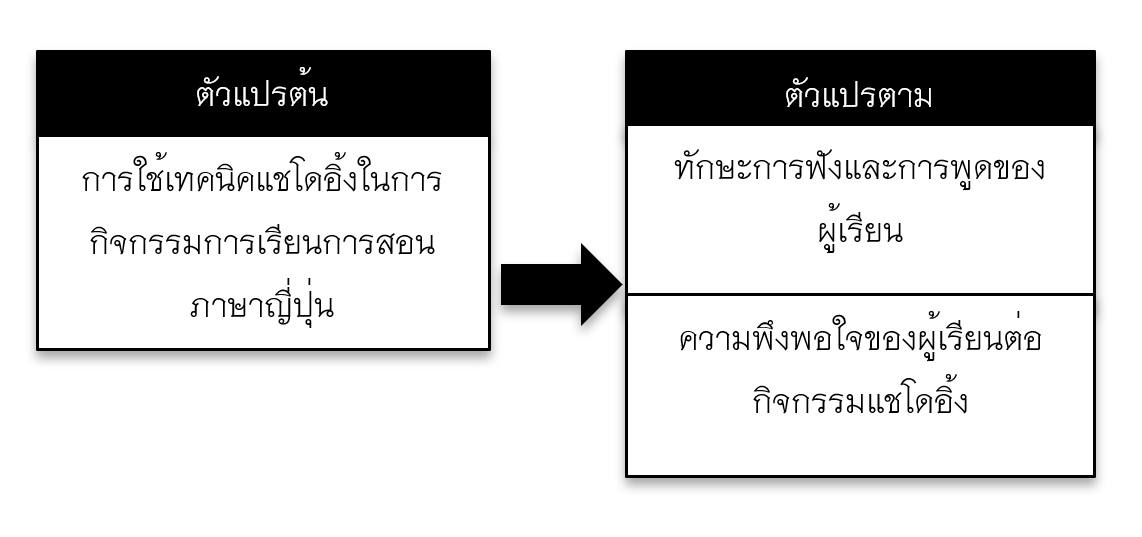
การวิจัยนี้มุ่งศึกษาประสิทธิผลของเทคนิคแชโดอิ้งในการพัฒนาทักษะการฟังและการพูดภาษาญี่ปุ่นสำหรับนักศึกษาชาวไทย โดยเน้นการประยุกต์ใช้เทคโนโลยีดิจิทัลเพื่อเพิ่มประสิทธิภาพในการเรียนรู้นอกห้องเรียน การศึกษานี้ใช้กลุ่มตัวอย่างจำนวน 22 คน ที่ลงทะเบียนเรียนวิชาการสนทนาภาษาญี่ปุ่น 1 เครื่องมือที่ใช้ในการวิจัยมี 3 ประเภท คือ กิจกรรมแชโดอิ้ง การสนทนากลุ่ม แบบทดสอบก่อนเรียน และหลังเรียน เพื่อวัดผลการพัฒนาทักษะและความพึงพอใจของผู้เรียน ผลการวิจัยแสดงให้เห็นว่าเทคนิคแชโดอิ้งมีประสิทธิผลอย่างมากในการพัฒนาทักษะการฟังและการพูดภาษาญี่ปุ่น โดยผู้เรียนมีคะแนนเฉลี่ยหลังเรียนสูงขึ้นจากก่อนเรียนจาก 15.54 คะแนนเพิ่มเป็น 19.36 คะแนนจากคะแนนเต็ม 25 คะแนน แสดงถึงการพัฒนาทักษะที่ดีขึ้นอย่างมีนัยสำคัญ การวิเคราะห์เชิงคุณภาพจากการสนทนากลุ่มเผยให้เห็นถึงการเพิ่มความมั่นใจ การจำคำศัพท์และประโยค และการปรับปรุงการออกเสียง อย่างไรก็ตาม ยังมีความต้องการในการปรับปรุงด้านความรวดเร็วในการรับสารและการโต้ตอบ การวิจัยนี้แนะนำว่าการปรับปรุงเทคนิคแชโดอิ้งให้เหมาะสมกับระดับความสามารถและ
ความต้องการของผู้เรียน รวมถึงการให้ข้อมูลป้อนกลับที่เจาะจงและการนำเทคโนโลยีมาประยุกต์ใช้ จะสามารถเพิ่มประสิทธิภาพของการฝึกฝน ซึ่งสามารถนำไปสู่การเรียนรู้ที่มีประสิทธิภาพและเป็นแรงจูงใจให้กับผู้เรียน
เอกสารอ้างอิง
กระทรวงการอุดมศึกษา วิทยาศาสตร์ วิจัยและนวัตกรรม. (2567). (ร่าง) ยุทธศาสตร์การวิจัยและนวัตกรรม 20 ปี (พ.ศ.2560-2579). สำนักงานการวิจัยแห่งชาติ (วช.). จาก https://www.nrct.go.th.
Boonprakate, C. (2021). Effects of using authentic materials on Japanese listening ability of third year Japanese major students, Nimitmai Review, 4(1), 73-82.
Hamada, Y. (2012). An effective way to improve listening skills through shadowing. The Language Teacher, 36(1), 3-10.
Japan Foundation. (2021) Survey on Japanese-Language Education Abroad 2021. Retrieved March, 31, 2023, Form https://www.jpf.go.jp/j/project/japanese/survey/result/dl/survey2018/Report_summarytables_e.pdf.
Jeong, K. (2018). Developing EFL learners’ communicative competence through multimedia-assisted language learning. Journal of theoretical and applied information technology, 96(5), 1367-1376.
Shiota, K. (2012). The effectiveness of shadowing on students’ psychology in language learning. Accents Asia, 5(1), 71-83.
Pradana, A. B. A., Wijayanto, S., Fadilah, U.N. (2021). Wake up call messages: Shadowing technique with listening logs to improve students oral performance. Proceedings of the 2nd Borobudur International Symposium on Humanities and Social Sciences, BIS-HSS 2020. European Union Digital Library. Form http://dx.doi.org/10.4108/eai.18-11-2020.2311766.
Saito, Y. (2022). Problems and issues in learning Japanese language among Thai and Chinese university students: A mixed method micro research. Osaka Keidai Ronshu, 73(2), 43-61.
Sugiarto, R., Prihantoro, Edy, S. (2020). The impact of shadowing technique on tertiary students’ English pronunciation. Journal of Linguistics and Language Teaching, 6(1), 114-125.
ดาวน์โหลด
เผยแพร่แล้ว
รูปแบบการอ้างอิง
ฉบับ
ประเภทบทความ
สัญญาอนุญาต
ลิขสิทธิ์ (c) 2024 มหาวิทยาลัยพะเยา

อนุญาตภายใต้เงื่อนไข Creative Commons Attribution-NonCommercial-NoDerivatives 4.0 International License.
Authors are responsible for the content of their manuscripts. The University of Phayao does not necessarily endorse or agree with the views expressed in published articles. Interested parties may reproduce or use the content; however, they must obtain prior written permission from the copyright holder and provide proper citation and acknowledgment.