
The Techniques for the Use of Aluminum to Make an Acoustic Lute's Sound Box
Article Sidebar
Main Article Content
Abstract
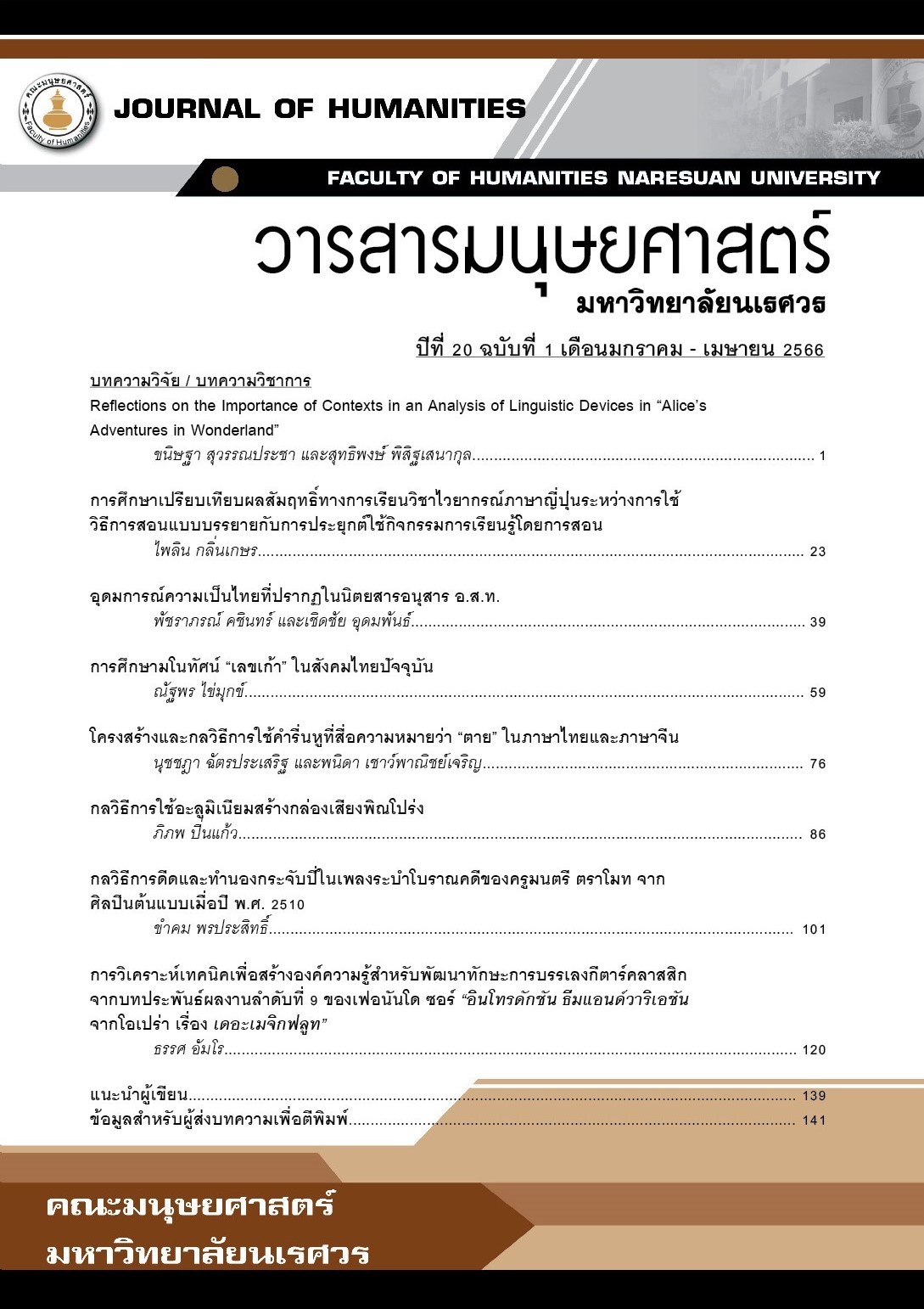
The research objective was to study techniques for the use of aluminum to make an acoustic lute's sound box. The study was conducted by studying related literature and using aluminum as a material instead of wood to make the sound box. The research results revealed that the researcher used aluminum, a material that is resistant to weather conditions and corrosion, hardly broken, heat-resistant, and lightweight, to make Northeastern acoustic lute’s sound box to replace the original material, wood. It was made by taking aluminum in a circular concave front with a diameter of 30 centimeters to cover with veneer, resulting in the shape of the sound box. The length of the Northeastern acoustic lute from the front to the heel is 75 centimeters while the neck of the string instrument is 45 centimeters long, creating the Northeastern acoustic lute with standard size. The researcher then evaluated the sound quality of the Northeastern acoustic lute that uses aluminum to make the sound box. It was found that the quality of sound has a clear resonance and radiate sound due to the clear lute sound box made of aluminum. This serves to resonate and amplify the audio signal. In addition, the researcher has determined that the Northeastern acoustic lute using aluminum to make the sound box has the major scale and can be played with Northeastern folk music band and western music band. As a result, the Northeastern acoustic lute using aluminum to make the sound box is durable to use and has very good sound quality, which is a good source of sound, regarded as a new innovation in Northeastern folk music.
Article Details

This work is licensed under a Creative Commons Attribution-NonCommercial-NoDerivatives 4.0 International License.
ข้อความรู้ใดๆ ตลอดจนข้อคิดเห็นใดๆ เป็นของผู้เขียนแต่ละท่านโดยเฉพาะ คณะมนุษยศาสตร์ มหาวิทยาลัยนเรศวร และกองบรรณาธิการวารสารมนุษยศาสตร์ฯ ไม่จำเป็นต้องเห็นพ้องด้วย
References
ณัฏฐพงศ์ พรหมพงศธร. (2551). โครงการออกแบบเครื่องดนตรีประเภทเครื่องเคาะ: อูดู (วิทยานิพนธ์ศิลปศาสตรมหาบัณฑิต). กรุงเทพฯ: มหาวิทยาลัยศิลปากร.
ดุษฎี มีป้อม, และ นิลวรรณ ถมังรักษ์สัตว์. (2551). หนังสือรายวิชาพื้นฐาน ดนตรี-นาฏศิลป์ชั้นมัธยมศึกษาปีที่ 2 กลุ่มสาระการเรียนรู้ศิลปะ. กรุงเทพฯ: วัฒนาพานิช.
แบล็คสวอลโลมิวสิค. (2558). ว่าด้วยเรื่องเสียงทางวิทยาศาสตร์และทางดนตรี. สืบค้นเมื่อ 29 มีนาคม 2563, จาก http://blackswallowmusic.blogspot.com/2015/06/blog-post.html
ปิยพันธ์ แสนทวีสุข. (2549). ดนตรีพื้นบ้านอีสาน: คีตกวีอีสาน ตำนานเครื่องดนตรี และการเรียนรู้ดนตรีพื้นบ้านอีสาน. มหาสารคาม: อภิชาติการพิมพ์.
ศุภวิชญ์ จิราพงษ์, และ ธนัสถา โรจนตระกูล. (2564). แนวทางการส่งเสริมการอนุรักษ์ทรัพยากรป่าไม้แบบยั่งยืน. Journal of Roi Kaensarn Academi, 6(10), 441-458.
สถาบันเหล็กและเหล็กกล้าแห่งประเทศไทย. (2557). รายงานฉบับสมบูรณ์การสำรวจสถานภาพอุตสาหกรรมโลหะนอกกลุ่มเหล็ก (Non-ferrous metals): อะลูมิเนียมภายใต้โครงการพัฒนาศูนย์ข้อมูลเชิงลึกอุตสาหกรรมเหล็กและโลหการประจำปีงบประมาณ 2557. กรุงเทพฯ: สถาบันเหล็กและเหล็กกล้าแห่งประเทศไทย.
สัญญา สมประสงค์. (2555). การศึกษาการทำเครื่องดนตรีพื้นบ้านอีสาน: กรณีศึกษาหมู่บ้านท่าเรือ ตำบลท่าเรือ อำเภอนาหว้า จังหวัดนครพนม (วิทยานิพนธ์ศิลปกรรมศาสตรมหาบัณฑิต). กรุงเทพฯ: มหาวิทยาลัยศรีนครินทรวิโรฒ.
สุชาติ ภาคสุชล, ปิยพันธ์ แสนทวีสุข, และ ประธาน วงศ์นุกูล. (2545). การพัฒนาเครื่องมือการผลิตเครื่องดนตรีพื้นบ้านอีสานเพื่อรองรับการผลิตเชิงธุรกิจ (วิทยานิพนธ์ศิลปศาสตรมหาบัณฑิต). มหาสารคาม: มหาวิทยาลัยมหาสารคาม.
อัครพล สีหนาท. (2553). การสร้างเครื่องดนตรีพื้นบ้านอีสาน: พิณโปร่งไฟฟ้า (วิทยานิพนธ์ศิลปกรรมศาสตรมหาบัณฑิต). มหาสารคาม: มหาวิทยาลัยมหาสารคาม.
