
The Compilation and Analysis of Motivic Movements in Ranat Eek Musical Instrument: A Case Study of the Cherd Song Composed by Samran Kerdphon, National Artist
Article Sidebar
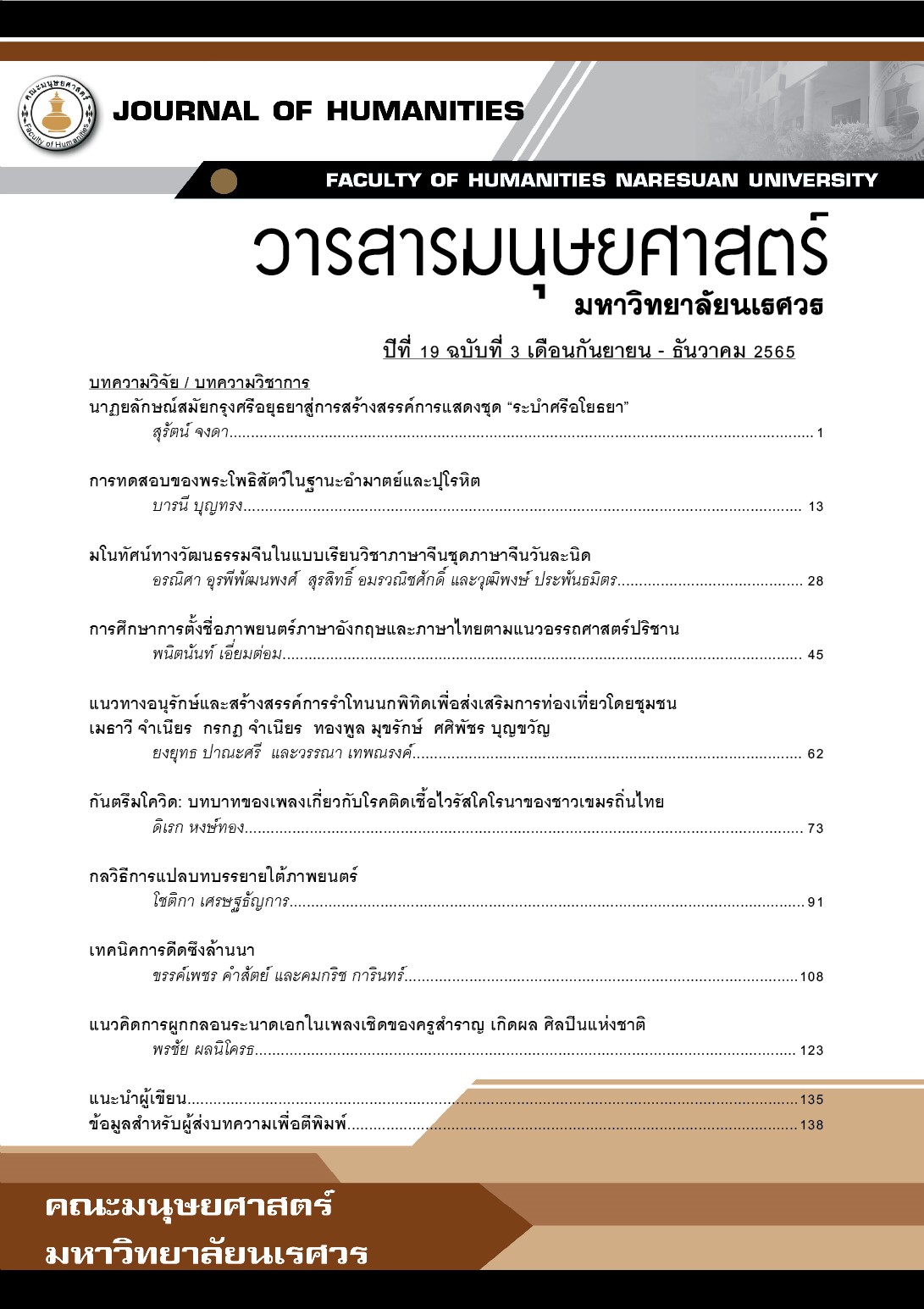
Main Article Content
Abstract
This research aims to study the concept of Kru Samran Kerdphon (the national artist of Thailand) creating the melodic phrases in Cherd song for Ranat Eek. This study was a qualitative research based on the melodic phrases of Ranat Eek that the researcher has gained and inherited from Kru Samran Kerdphon through interviews, research papers archives and related documents. This study identified that the concept of Kru Samran Kerdphon who invented the melodic phrases in Cherd song for Ranad Eek. Hence, this concept can be divided into three levels: the first level is holding melodic structures such as principal notes (Luktok), scales (Kloom saing) and melodic contour (Tid Tang Tamnong). The second level is known as rhyme-making which consists of four techniques such as melodic creation for lining up, jumping-over melodic creation (not more than 5 ranges), melodic creation in order to play all ranges of the Ranat Eek, melodic creation as to avoid the deadlock of melody. Finally, using the repetition of melodic contour to make the melodic balance of ‘thaang’ of the Ranat Eek in ‘ Waak’ (4 measures) or Prayok (8 measures).
Article Details

This work is licensed under a Creative Commons Attribution-NonCommercial-NoDerivatives 4.0 International License.
ข้อความรู้ใดๆ ตลอดจนข้อคิดเห็นใดๆ เป็นของผู้เขียนแต่ละท่านโดยเฉพาะ คณะมนุษยศาสตร์ มหาวิทยาลัยนเรศวร และกองบรรณาธิการวารสารมนุษยศาสตร์ฯ ไม่จำเป็นต้องเห็นพ้องด้วย
References
จรัญ กาญจนประดิษฐ์. (2560). เดี่ยวขลุ่ยเพียงออ เพลงสองชั้น. ขอนแก่น: โรงพิมพ์มหาวิทยาลัยขอนแก่น.
ณรงค์ชัย ปิฎกรัชต์. (2552). องค์ความรู้ศิลปินแห่งชาติ : นายสำราญ เกิดผล. กรุงเทพฯ: สำนักงานคณะกรรมการวัฒนธรรมแห่งชาติ กระทรวงวัฒนธรรม.
ณัฐวุฒิ สุธนไพบูลย์. (2560) การจัดการองค์ความรู้มรดกภูมิปัญญาทางวัฒนธรรม: กรณีศึกษาสำนักดนตรีไทยพาทยรัตน์ อำเภอบางบาล จังหวัดพระนครศรีอยุธยา (วิทยานิพนธ์ศิลปศาสตร มหาบัณฑิต) กรุงเทพฯ: มหาวิทยาลัยธรรมศาสตร์.
พรชัย ผลนิโครธ. (2561). โหมโรงเย็น: ระนาดเอก ทางครูสำราญ เกิดผล. ขอนแก่น: โรงพิมพ์คลังนานาวิทยา.
พิชิต ชัยเสรี. (2559). สังคีตลักษณ์วิเคราะห์. กรุงเทพฯ: โรงพิมพ์แห่งจุฬาลงกรณ์มหาวิทยาลัย.
พิษณุ บุญศรีอนันต์. (2551). การศึกษากลอนระนาดเอกและเทคนิคการบรรเลงระนาดเอกเพลงตระในพิธีไหว้ครูดนตรีไทย บรรเลงโดย ครูนัฐพงศ์ โสวัตร (วิทยานิพนธ์ศิลปศาสตรมหาบัณฑิต) กรุงเทพฯ: มหาวิทยาลัยศรีนครินทรวิโรฒ.
วราห์ เทพณรงค์. (2560). โน้ตเพลงไทยสำนักพาทยรัตน์ (วิทยานิพนธ์ศิลปมหาบัณฑิต). กรุงเทพฯ: สถาบันบัณฑิตพัฒนศิลป์ กระทรวงวัฒนธรรม.
วิเชียร เกิดผล. (2563). ศิลปินอาวุโสบ้านพาทยรัตน์. สัมภาษณ์ 23 พฤษภาคม 2563.
สำราญ เกิดผล. (2549). ศิลปินแห่งชาติ. สัมภาษณ์ 18 เมษายน 2549.
อุทัย ศาสตรา. (2553). กระบวนการถ่ายทอดการบรรเลงระนาดเอกของครูประสิทธิ์ ถาวร ศิลปินแห่งชาติ (วิทยานิพนธ์ครุศาสตรมหาบันฑิต). กรุงเทพฯ: จุฬาลงกรณ์มหาวิทยาลัย.
Samrongthong, B. (1997). Melodic organization and improvisation in Thai music, with special reference to the thaang ranaat eek (Doctoral dissertation). York: University of York.
