
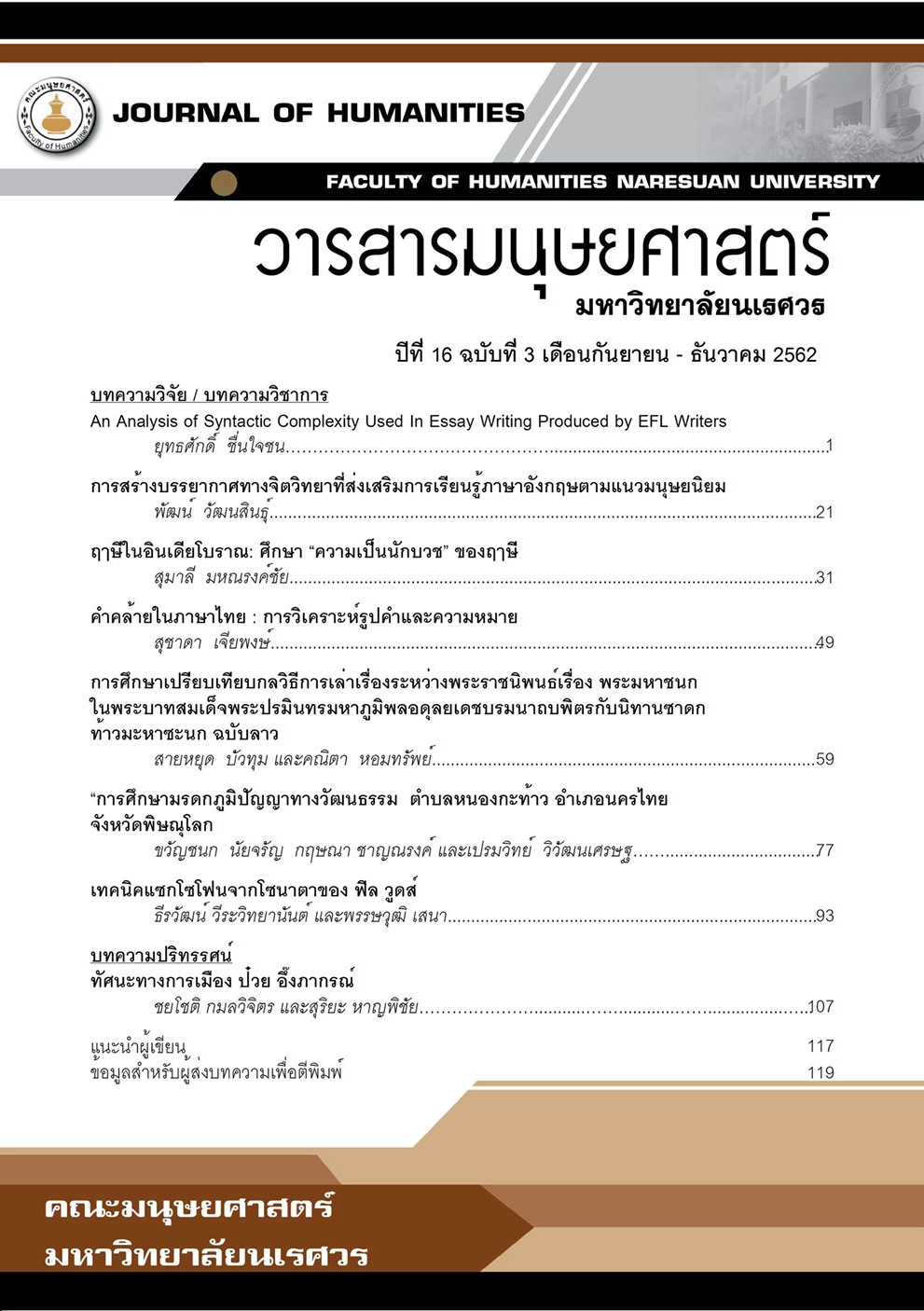
The Story of Mahajanaka by His Majesty the Late King Bhumibol Adulyadej and Nithan Sadok Thao Mahasanok, Lao Version: A Comparative Study of Narrative Techniques
Article Sidebar
Main Article Content
Abstract
This research aims to analyse the narrative techniques in the Story of Mahajanaka by His Majesty the Late King Bhumibol Adulyadej and Nithan Sadok Thao Mahasanok, Lao Version. Storytelling theory and notion of comparative literature study were used in the investigation. The results of study revealed that the story of Mahajanaka and Nithan Sadok Thao Mahasanok, Lao Version have similarity and dissimilarity strategies. The similarity strategies are integral setting, first person point of view, and picture storytelling for readers to have more comprehension in the story, and omniscient point of view.The dissimilarity strategies are plot, narrative techniques, characters, and theme. The plot of the Story of Mahajanaka had been changed at the end to make it differ from the Atthakatha Mahasanoka Chataka, whilst Nithan Sadok Thao Mahasanok, Lao Version mainly followed the Atthakatha Mahasanoka. In term of narrative techniques, the Story of Mahajanaka is considered the omniscient point of view when relating to main theme presentation and it is the third person limited point of view in order to avoid redundancy, whilst Nithan Sadok Thao Mahasanok, Lao Version is mostly considered the omniscient point of view in order to present characters’ feeling. Referring to characters, Phra Mahajanaka and Nang Manimekhala are main characters in the Story of Mahajanaka. Phra Mahajanaka is a holy character and a model of perseverance. Whereas, Nang Manimekhala is a Phra Mahajanaka’s intellect tester. This supports that Phra Mahajanaka is self- supportive. Whilst, Nithan Sadok Thao Mahasanok, Lao Version, woman characters: his mother and his wife, Nang Siwali are also main characters as the author aimed to present delicate personalities. In term of theme, the Story of Mahajanaka presents the idea of perseverance and intellect. Whilst, Nithan Sadok Thao Mahasanok, Lao Versio presents ordain Nekkhamma. Although both stories are from Buddha literature, each has its own unique because of the different purposes in composition. Additionally, it has been found that culture of having Buddha literature to Thai-Lao Societies is due to holding Buddha religion
Article Details
ข้อความรู้ใดๆ ตลอดจนข้อคิดเห็นใดๆ เป็นของผู้เขียนแต่ละท่านโดยเฉพาะ คณะมนุษยศาสตร์ มหาวิทยาลัยนเรศวร และกองบรรณาธิการวารสารมนุษยศาสตร์ฯ ไม่จำเป็นต้องเห็นพ้องด้วย
References
ชำนาญ รอดเหตุภัย. (2545). รายงานการวิจัยเรื่อง พระราชอัจฉริยปรีชญาแห่งพระมหากษัตริย์ในการสร้างสรรค์ภาษาและวรรณกรรม. นครปฐม: สถาบันราชภัฏนครปฐม.
ณัฐกาญจน์ นาคนวล. (2560). พระราชนิพนธ์เรื่อง ‘พระมหาชนก’ การสืบทอดและสร้างสรรค์วรรณคดีชาดกในบริบทสังคมไทยร่วมสมัย. ใน วารสารไทยคดีศึกษา. 13(2). 73-97.
ตรีศิลป์ บุญขจร. (2553). ด้วยแสงแห่งวรรณคดีเปรียบเทียบ. (พิมพ์ครั้งที่ 2). กรุงเทพฯ: ศูนย์วรรณคดีศึกษา คณะอักษรศาสตร์ จุฬาลงกรณ์มหาวิทยาลัย.
ตุลา คมกฤต มโนรัตน์.(2547). การวิเคราะห์แนวคิดเรื่องอำนาจในวรรณกรรม: ศึกษากรณีท้าวฮุ่ง ท้าวเจือง.วิทยานิพนธ์ปริญญามหาบัณฑิต คณะรัฐศาสตร์ (มานุษยวิทยา) มหาวิทยาลัยศิลปากร.
ปรมินทรมหาภูมิพลอดุลยเดช บรมนาถบพิตร, พระบาทสมเด็จพระ. (2557). พระราชนิพนธ์พระบาทสมเด็จพระเจ้าอยู่หัวภูมิพลอดุลยเดชฯ เรื่องพระมหาชนก. (พิมพ์ครั้งที่ 6). กรุงเทพฯ: บริษัท อมรินทร์ พริ้นติ้งแอนด์พับลิชชิ่ง จำกัด.
ผกา ปรีชาญาณ.(2535). จำปาสี่ต้น: การศึกษาเปรียบเทียบวรรณกรรมล้านนาไทยอีสานและลาว. วิทยานิพนธ์มหาบัณฑิต ศิลปศาสตร์ (จารึกภาษาไทย). มหาวิทยาลัยศิลปากร.
ยุพิน สุวรรณฤทธิ์ (2529).การศึกษาเชิงวิเคราะห์: วรรณกรรมลาวเรื่อง ไก่แก้ว. วิทยานิพนธ์มหาบัณฑิต. ศิลปศาสตร์ (จารึกภาษาไทย). มหาวิทยาลัยศิลปากร.
รื่นฤทัย สัจจพันธุ์. (2552). พระมหาชนก: คำสอนจากพ่อ. ใน จากเก่าสู่ใหม่ วรรณศิลป์ไทยไม่สิ้นสูญ. กรุงเทพฯ: ศูนย์สำนักพิมพ์มหาวิทยาลัยศรีนครินทรวิโรฒ. 73-109.
รื่นฤทัย สัจจพันธุ์. (2559). พระอัจฉริยภาพของพระบาทสมเด็จพระปรมินทรมหาภูมิพลอดุลยเดช ด้านวรรณศิลป์. ใน อัครศิลปินแห่งแผ่นดินสยาม. (พิมพ์ครั้งที่ 2). กรุงเทพฯ: สถาพรบุ๊คส์.
วนิดา บำรุงไทย. (2542).พระมหาชนก พระราชนิพนธ์พระบาทสมเด็จพระเจ้าอยู่หัวภูมิพลอดุลยเดชฯ ความงดงามแห่งวรรณกรรมสยาม ความงดงามแห่งน้ำพระราชหฤทัย. ใน วารสารมนุษยศาสตร์และสังคมศาสตร์ มหาวิทยาลัยนเรศวร. 7(1): 1-12.
สมัย วรรณอุดร (2545). การศึกษาเปรียบเทียบวรรณกรรมอีสานและลาวเรื่องลำบุษบา. วิทยานิพนธ์ปริญญามหาบัณฑิต คณะศิลปศาสตร์ (จารึกภาษาไทย) มหาวิทยาลัยศิลปากร.
สุจิตรา จงสถิตย์วัฒนา. (2542). พระมหาชนก: โมกขธรรมแห่งปัจจุบันสมัย. ใน วารสารภาษาและวรรณคดีไทย. 16. 185-201.
สุภัทรา โกไศยกานนท์. (2556). ภาษาและวัฒนธรรมในบทพระราชนิพนธ์ในพระบาทสมเด็จพระเจ้าอยู่หัวบทพระราชนิพนธ์ พระมหาชนก. ใน วารสารวิชาการและวิจัย มทร.พระนคร. 7(1). 57-66.
สรณัฐ ไตลังคะ. (2560). ศาสตร์และศิลป์แห่งการเล่าเรื่อง. (พิมพ์ครั้งที่ 3). โครงการเผยแพร่ผลงานทางวิชาการ คณะมนุษยศาสตร์ มหาวิทยาลัยเกษตรศาสตร์.
บ่อแสงคำ วงค์ดาราและคณะ. (2008). วรรณคดีลาว. นครหลวงเวียงจันทน์: สำนักพิมพ์ศึกษาเวียดนาม.
บัวบาน วรชุม. (2007). วรรณคดีลาว อดีตและปัจจุบัน. นครหลวงเวียงจันทน์: สำนักพิมพ์และจำหน่ายหนังสือรัฐ.
มหาสิลา วีระวงส์. (2014). นิทานชาดกท้าวมะหาซะนก. (พิมพ์ครั้งที่ 2). นครหลวงเวียงจันทน์: สำนักพิมพ์ดอกเกด.
