
Ṛṣi in Early India: A Study of Ṛṣis’ Asceticism
Article Sidebar
Main Article Content
Abstract
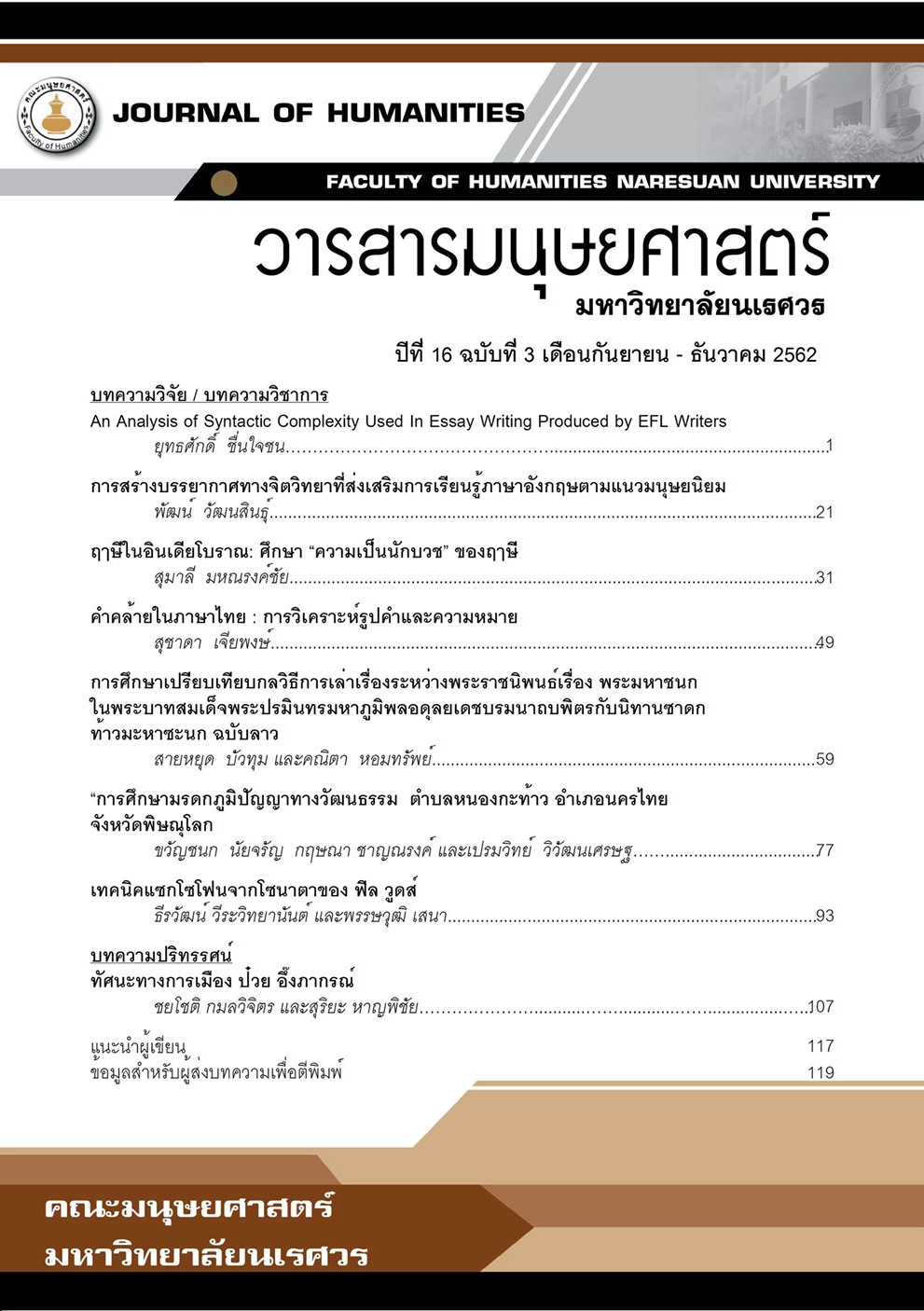
This research article aims at clarifying the status and concept of ṛṣis in Early India since the Vedic Era to the time before the Common Era. It studies this term through some major interchangeable names called to ṛṣis found in the Brahmanical and Buddhist texts, and analyses ṛṣis’ status in relation to the nature of “asceticism” understood at that time. The results show that none of the Brahmanical definitions given to ṛṣis expresses them as the renouncing ascetics. ṛṣis’ asceticism is determined by some great ṛṣis’ mental qualities, not by ṛṣis’ ways of life. The term most proper to call a Brahmin ṛṣi is “tāpasa,” not “munī.” The terms “munī” and “Pabbajita” are reserved to call some particular great ṛṣis who enter the stream of liberation, or live their lives as the renouncers only.
Article Details
ข้อความรู้ใดๆ ตลอดจนข้อคิดเห็นใดๆ เป็นของผู้เขียนแต่ละท่านโดยเฉพาะ คณะมนุษยศาสตร์ มหาวิทยาลัยนเรศวร และกองบรรณาธิการวารสารมนุษยศาสตร์ฯ ไม่จำเป็นต้องเห็นพ้องด้วย
References
ราชบัณฑิตยสถาน. (2546). พจนานุกรม ฉบับราชบัณฑิตยสถาน พ.ศ. 2542. กรุงเทพฯ: นานมีบุ๊คส์พับลิเคชั่นส์.
พระธรรมกิตติวงศ์. (2550). ศัพท์วิเคราะห์. กรุงเทพฯ: โรงพิมพ์เลี่ยงเชียง. พระไตรปิฎกภาษาไทย
ฉบับมหาจุฬาลงกรณราชวิทยาลัย เล่มที่ 9, 10, 20, 29. (2539). กรุงเทพฯ: มหาจุฬาลงกรณราชวิทยาลัย.
พระพุทธโฆสเถระ. (2557). สุมังคลวิลาสินี อรรถกถาทีฆนิกาย สีลขันธวรรค. กรุงเทพฯ: โรงพิมพ์มหาจุฬาลงกรณราชวิทยาลัย.
ลาล มณี โชศี. (2536). พราหมณ์ พุทธ ฮินดู. แปลโดย กรุณา กุศลาสัย. กรุงเทพฯ: แม่คำผาง.
สุนทร ณ รังษี. (2537). ปรัชญาอินเดีย: ประวัติและลัทธิ. กรุงเทพฯ: สำนักพิมพ์จุฬาลงกรณ์มหาวิทยาลัย.
เสถียรโกเศศ-นาคะประทีป. (2540). ลัทธิของเพื่อน. กรุงเทพฯ: พิราบ.
อรุณ เฉตตีย์. (2539). อินเดีย แผ่นดินถิ่นมหัศจรรย์. กรุงเทพฯ: ศูนย์อินเดียศึกษา มหาวิทยาลัยธรรมศาสตร์.
Bhargava, P. L. (1985). THE SELF-INTRODUCING ṚṢIS OF THE ṚGVEDA AND THE CHRONOLOGY OF ITS HYMNS. Annals of the Bhandarkar Oriental Research Institute, 66(1/4), 13-30.
Ghurye, G. S. (1952). Ascetic Origins. Sociological Bulletin, 1(2), 162-184.
Kaelber, W. O. (1979). Tapas and Purification in Early Hinduism. Numen, 26(2), 192-214.
Kumar Acharya, S. (1988). EVOLUTION OF THE INSTITUTION OF BEGGARY IN ANCIENT INDIA. Annals of the Bhandarkar Oriental Research Institute, 69(1/4), 269-277.
Masse, A. (2006). The Rsis of Ancient Indian Tradition. Retrieved on June 27, 2018. From
www.mahavidya.ca/2008/04/14/the-rsis-of-ancient-indian-tradition/Olivelle, P. (1981). Contributions to the Semantic History of Saṃnyāsa. Journal of the American Oriental Society, 101(3), 265-274.
Preciado-Solis, B. (1987). SOME PROBLEMS CONCERNING THE ORIGIN OF SAṂNYĀSA. Annals of the Bhandarkar Oriental Research Institute, 68(1/4), 359-369.
Rhys Davids, T. W. & Stede, W. (1999). Pāli-English Dictionary. London: The Pali Text Society.
Sahay, N. (2000). Stories about Rishis. Retrieved on September 24, 2018. From Deepamindia.com.
Sivananda, Sri Swami. (2000). Bhagavad Gita. Retrieved on August 15, 2017 From http://www.SivanandaDlshq.org/
Swaminathan. (2014). Who is a Rishi? How many types of Rishis? Retrieved on June 28, 2018. From https://tamilandvedas.com/tag/rsi/.
Werner, K. (1977). Yoga and the Ṛg Veda: An Interpretation of the Keśin Hymn (RV 10, 136).
Religious Studies, 13(3), 289-302.
Wisdom Library. (2018). Rishi, aka: Ṛṣi, Rsi; 8 Definition(s). Retrieved on June 28, 2018. From https://www.wisdomlib.org/definition/rishi.
Wisdom Library. (2018). Tapas, aka: Tāpas; 7 Definition(s). Retrieved on June 28, 2018. From https://www.wisdomlib.org/definition/tapas.
