
Soo Kwan Luang Chants from Laos and Isan : Literary Structures and Functions
Article Sidebar
Main Article Content
Abstract
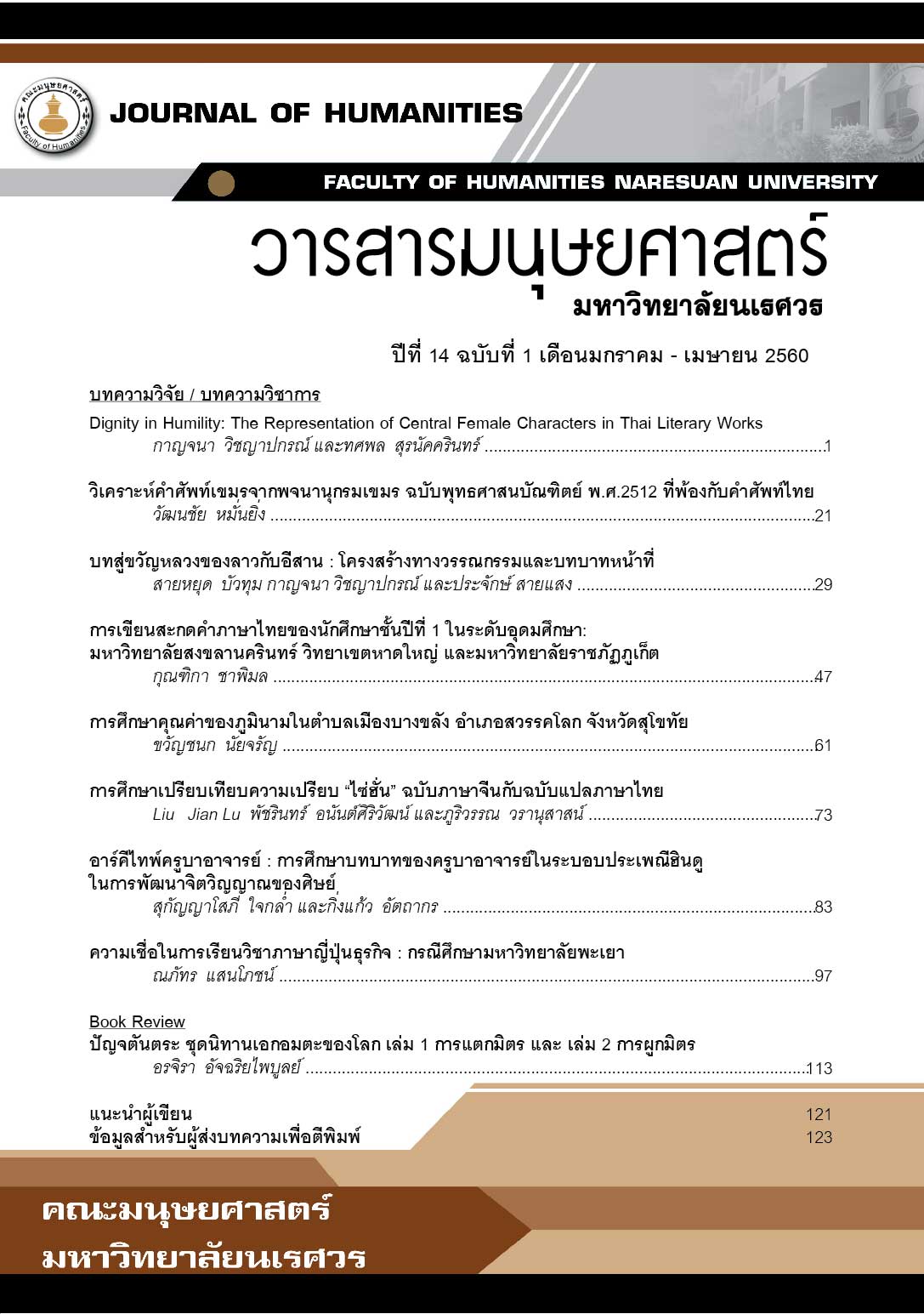
This article is a part of the thesis “A Comparative Study of Soo Kwan Chants between Laos and Isan : Literary Structures and Functions” which this article objectives is to analyze the literary structures and functions of Soo Kwan Luang Chants of Laos and Isan. The result revealed that Soo Kwan Luang, also known as Soo Kwan Mai, is among a variety of Soo Kwan chants performed during Soo Kwan ritual. The chant is believed to have a remedial power on the sick ones, particularly the elderly members who are highly revered by the community – the chant is exclusively reserved for those with a certain degree of honor. The prosody of the chant is adapted from Rai Yao, and the sequence of verses traditionally follows this pattern: 1. Choomnoom Tewada (assembly of divine spirits); 2. Pranam or Wai (sermons); 3. Grern or Aramphabot (introduction); 4. Reak Kwan (summon Kwan); 5. Plob Kwan (console Kwan); 6. Pud Kroh (drive away misfortunes); 7. Haiporn (give blessings). In certain Lao versions, an extra verse called Koo Kwan (threaten Kwan), which is more common in Soo Kwan Luang of Isan, is also included in the sequence. The rhetoric of the chant is rich with literary quality, especially for its abundant use of Pali and Sanskrit vocabulary; in fact, the use of Pali and Sanskrit fosters the sense of sacred solemnity, which is strategic in boosting the spirit of the sick one. The sociological roles and functions of Soo Kwan Luang are twofold: on the one hand, Soo Kwan Luang of Laos and Isan serve to transmit the beliefs in Kwan and Soo Kwan ritual throughout the regions; on the other hand, they also serve to reflect the societies of Laos and Isan – the verses provide clear depictions of local beliefs and ways of life, especially the supernatural beliefs and the organization of kinship relation.
Article Details
ข้อความรู้ใดๆ ตลอดจนข้อคิดเห็นใดๆ เป็นของผู้เขียนแต่ละท่านโดยเฉพาะ คณะมนุษยศาสตร์ มหาวิทยาลัยนเรศวร และกองบรรณาธิการวารสารมนุษยศาสตร์ฯ ไม่จำเป็นต้องเห็นพ้องด้วย
