แนวทางการปรับตัวขององค์กรภาคอุตสาหกรรมการบินและบริการขนส่งทางอากาศภายใต้สถานการณ์พลิกโฉมทางธุรกิจเพื่อรองรับการเปิดเสรีการขนส่งทางอากาศ ของประเทศไทย
คำสำคัญ:
การปรับตัว, อุตสาหกรรมการบินและบริการ, การพลิกโฉมทางธุรกิจ, การเปิดเสรีการขนส่งทางอากาศบทคัดย่อ
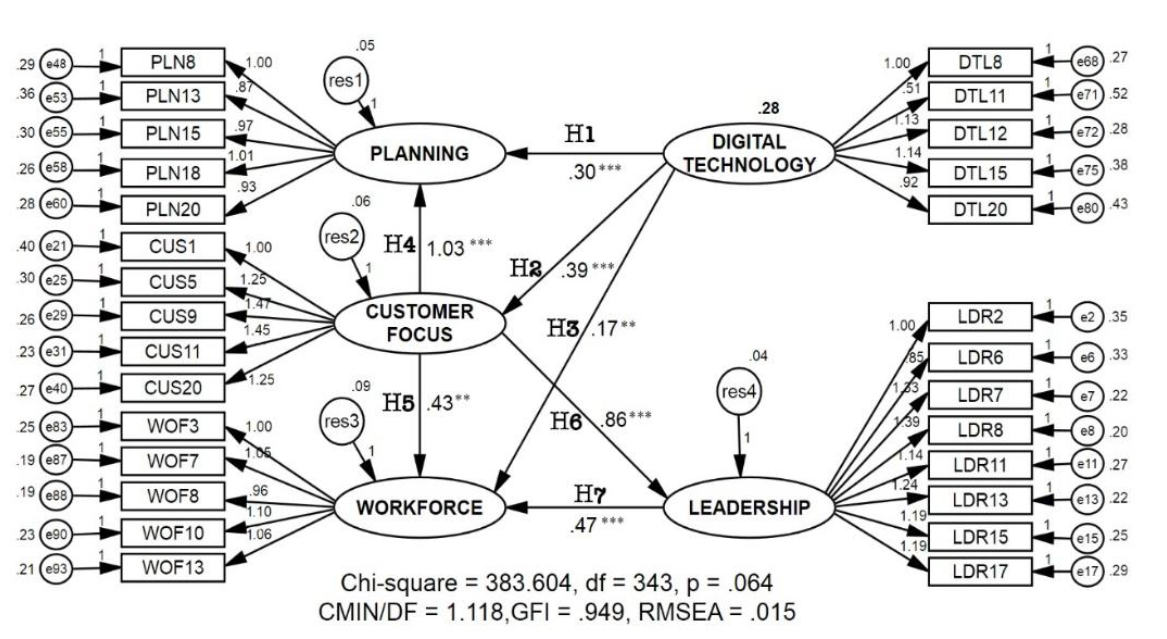
การวิจัยนี้มีวัตถุประสงค์ครั้งนี้ 1) เพื่อศึกษาลักษณะการดำเนินงานของภาคธุรกิจอุตสาหกรรมการบินและบริการขนส่งทางอากาศภายใต้สถานการณ์พลิกโฉมทางธุรกิจ 2) เพื่อศึกษาองค์ประกอบของแนวทางการปรับตัวขององค์กรภาคอุตสาหกรรมการบินและบริการขนส่งทางอากาศภายใต้สถานการณ์พลิกโฉมทางธุรกิจ และ 3) เพื่อพัฒนาแบบจำลองสมการโครงสร้างแนวทางการปรับตัวขององค์กรภาคอุตสาหกรรมการบินและบริการขนส่งทางอากาศภายใต้สถานการณ์พลิกโฉมทางธุรกิจเพื่อรองรับการเปิดเสรีการขนส่งทางอากาศของประเทศไทย การวิจัยนี้ใช้ระเบียบวิธีการวิจัยแบบผสมผสานระหว่างเชิงปริมาณและเชิงคุณภาพ กลุ่มตัวอย่างเชิงปริมาณ ได้แก่ ผู้บริหารที่รับผิดชอบด้านนโยบายและด้านที่เกี่ยวข้องในองค์กรภาคอุตสาหกรรมการบินและบริการขนส่งทางอากาศ จำนวน 500 ราย ส่วนกลุ่มตัวอย่างเชิงคุณภาพ ได้แก่ ผู้เชี่ยวชาญด้านธุรกิจอุตสาหกรรมการบินและบริการขนส่งทางอากาศ จำนวน 15 คน เครื่องมือที่ใช้ในการวิจัย ได้แก่ แบบสอบถามและแบบสัมภาษณ์ สถิติที่ใช้ในการวิจัยเชิงปริมาณ ได้แก่ สถิติเชิงพรรณา สถิติอ้างอิง และสถิติเชิงพหุ ส่วนเชิงคุณภาพใช้การวิเคราะห์เนื้อหา ผลการวิจัยพบว่า แนวทางการปรับตัวขององค์กรภาคอุตสาหกรรมการบินและบริการขนส่งทางอากาศภายใต้สถานการณ์พลิกโฉมทางธุรกิจเพื่อรองรับการเปิดเสรีการขนส่งทางอากาศของประเทศไทยที่มีค่าเฉลี่ยสูงที่สุด ด้านการตอบสนองต่อความต้องการ ได้แก่ การสร้างความสัมพันธ์ใกล้ชิดกับคู่ค้าทุกระดับ ด้านการเปลี่ยนแปลงทางดิจิทัล ได้แก่ การออกแบบโมเดลธุรกิจที่สอดคล้องกับการเปลี่ยนแปลงทางดิจิทัลตามกระบวนทัศน์ที่เปลี่ยนแปลงไป ด้านการปรับแนวความคิดหรือพฤติกรรม ได้แก่ การให้ความรู้ความเข้าใจแก่บุคลากรต่อวงจรการดำเนินธุรกิจและรูปแบบการเปลี่ยนแปลงแบบพลิกโฉมในแวดวงธุรกิจยุคเศรษฐกิจดิจิทัล และด้านการบริหารจัดการทรัพยากร ได้แก่ การออกแบบการทำงานด้วยโครงสร้างและการประสานงานโดยมีวัตถุประสงค์เพื่อให้บรรลุผลสำเร็จตามเป้าหมาย ส่วนผลการทดสอบสมมติฐานพบว่า ธุรกิจภาคพื้นดินและบริการจะให้ความสำคัญต่อแนวทางการปรับตัวขององค์กรภาคอุตสาหกรรมการบินและบริการขนส่งทางอากาศภายใต้สถานการณ์พลิกโฉมทางธุรกิจเพื่อรองรับการเปิดเสรีการขนส่งทางอากาศของประเทศไทยไม่แตกต่างกันอย่างมีนัยสำคัญทางสถิติที่ระดับ 0.05 ผลการวิเคราะห์ตัวแบบจำลองสมการโครงสร้างที่ได้พัฒนาขึ้นพบว่า ผ่านตามเกณฑ์การประเมินมีความสอดคล้องกลมกลืนกับข้อมูลเชิงประจักษ์ โดยมีค่าระดับความน่าจะเป็นของไคสแควร์เท่ากับ 0.09 ค่าไคสแควร์สัมพัทธ์เท่ากับ 1.108 ค่าดัชนีวัดระดับความสอดคล้อง เท่ากับ 0.952 และค่าดัชนีรากของค่าเฉลี่ยกำลังสองของการประมาณค่าความคลาดเคลื่อนเท่ากับ 0.015 ส่วนผลการวิจัยเชิงคุณภาพพบว่า ผู้เชี่ยวชาญเห็นด้วยกับแนวทางดังกล่าวและเหมาะสำหรับการนำไปใช้ในเป็นแนวทางในการปรับตัวรวมถึงการกำหนดรูปแบบทางธุรกิจเพื่อการเรียนรู้และเติบโตต่อไป
เอกสารอ้างอิง
ธานินทร์ ศิลป์จารุ. (2560). การวิจัยและวิเคราะห์ข้อมูลทางสถิติด้วย SPSS และ AMOS (พิมพ์ครั้งที่ 17). กรุงเทพฯ: ห้างหุ้นส่วนสามัญบิสซิเนสอาร์แอนด์ดี.
พงษ์ศักดิ์ ผกามาศ, อุดมวิทย์ ไชยสกุลเกียรติ และ สรายุทธ์ เศรษฐขจร. (2562). การจัดการการตลาดแบบองค์รวมยุคใหม่: มิติด้านการตลาดสำหรับธุรกิจยุคเศรษฐกิจดิจิทัล. วารสารนวัตกรรมการบริหารและการจัดการ, 7(1), 68-79.
ราชบัณฑิตยสภา ศ.นพ.สุรพล อิสรไกรศีล. (2563). [ออนไลน์]. ราชบัณฑิตบัญญัติศัพท์ “New Normal” ความปกติใหม่. ฐานวิถีชีวิตใหม่. สืบค้น 12 ธันวาคม 2567. จาก https://www.facebook.com/surapol.issaragrisil/posts/10207392559168907.
อาคีรา ราชเวียง, พงษ์ศักดิ์ ผกามาศ, ศิกาญจน์มณี ไซเออร์ส, สมใจ ศรีเนตร และ วีรวัฒน์ เพ็งช่วย. (2564). รูปแบบของการจัดองค์กรแห่งนวัตกรรมสำหรับการดำเนินธุรกิจอุตสาหกรรมยุคดิจิทัลที่มีประสิทธิภาพภายใต้สถานการณ์วิถีปกติใหม่ในประเทศไทย. วารสารวิชาการและวิจัยมหาวิทยาลัยภาคตะวันออกเฉียงเหนือ, 11(3), 184-200.
Acciarini, C., Boccardelli, P., & Vitale, M. (2021). Resilient companies in the time of Covid-19 pandemic: a case study approach. Journal of Entrepreneurship and Public Policy, 10(3), 336-351.
Agyapong, A., Maaledidong, P.D., & Mensah, H.K. (2021). Performance outcome of entrepreneurial behavior of SMEs in a developing economy: the role of international mindset. Journal of Strategy and Management, 14(2), 227-245.
Anggraini, P.G., Utami, E.R., & Wulandari, E. (2022). What happens to the stock market during the COVID-19 pandemic? A systematic literature review. Pacific Accounting Review, 34(3), 406-425.
Anh, D.L.T., & Gan, C. (2021). The impact of the COVID-19 lockdown on stock market performance: evidence from Vietnam. Journal of Economic Studies, 48(4), 836-851.
Arslan, A., Golgeci, I., Khan, Z., Ahokangas, P., & Haapanen, L. (2022). COVID-19 driven challenges in international B2B customer relationship management: empirical insights from Finnish high-tech industrial microenterprises. International Journal of Organizational Analysis, 30(7), 49-66.
Bıçakcıoğlu-Peynirci, N., & Tanyeri, M. (2022). Stakeholder and resource-based antecedents and performance outcomes of green export business strategy: insights from an emerging economy. International Journal of Emerging Markets, 17(1), 1-46.
Cavallo, A., Ghezzi, A., & Ruales Guzmán, B.V. (2020). Driving internationalization through business model innovation: Evidences from an AgTech company. Multinational Business Review, 28(2), 201-220.
Chekurov, S., Salmi, M., Verboeket, V., Puttonen, T., Riipinen, T., & Vaajoki, A. (2021). Assessing industrial barriers of additively manufactured digital spare part implementation in the machine-building industry: a cross-organizational focus group interview study. Journal of Manufacturing Technology Management, 32(4), 909-931.
Chen, J., Liu, L., & Wang, Y. (2021). Business model innovation and growth of manufacturing SMEs: a social exchange perspective. Journal of Manufacturing Technology Management, 32(2), 290-312.
Cimini, C., Boffelli, A., Lagorio, A., Kalchschmidt, M., & Pinto, R. (2021). How do industry 4.0 technologies influence organisational change? An empirical analysis of Italian SMEs. Journal of Manufacturing Technology Management, 32(3), 695-721.
Franquesa, J., & Vera, D. (2021). Small business debt financing: the effect of lender structural complexity. Journal of Small Business and Enterprise Development, 28(3), 456-474.
Free, C., & Hecimovic, A. (2021). Global supply chains after COVID-19: the end of the road for neoliberal globalisation?. Accounting, Auditing & Accountability Journal, 34(1), 58-84.
Gazzaneo, L., Padovano, A., & Umbrello, S. (2020). Designing Smart Operator 4.0 for Human Values: A Value Sensitive Design Approach. Procedia Manufacturing. International Conference on Industry 4.0 and Smart Manufacturing (ISM 2019), 42 (219–226). Italy: University of Calabria, Aula Caldora.
Hooi, L.W. (2021). SME performance: does organizational learning capability really matter?. International Journal of Organizational Analysis, 29(5), 1093-1116.
Insaidoo, M., Arthur, L., Amoako, S., & Andoh, F.K. (2021). Stock market performance and COVID-19 pandemic: evidence from a developing economy. Journal of Chinese Economic and Foreign Trade Studies, 14(1), 60-73.
International Transport Forum. (2019). Liberalisation of Air Transport. Retrived November 12, 2024, From https://www.itf-oecd.org/sites/default/files/docs/liberalisation_air_transport_1.pdf.
Jedynak, M., Czakon, W., Kuźniarska, A., & Mania, K. (2021). Digital transformation of organizations: what do we know and where to go next?. Journal of Organizational Change Management, 34(3), 629-652.
Jeong, M., Kim, K., Ma, F., & DiPietro, R. (2022). Key factors driving customers’ restaurant dining behavior during the COVID-19 pandemic. International Journal of Contemporary Hospitality Management, 34(2), 836-858.
Kaveh, A., Nazari, M., van der Rest, J.-P., & Mira, S.A. (2021). Customer engagement in sales promotion. Marketing Intelligence & Planning, 39(3), 424-437.
Khoirunnisa, N.L., & Almahendra, R. (2022). Micro design in inter-organizational hybrid governance: a study on product adaptation, reverse knowledge transfer and integration mechanism. Journal of Knowledge Management, 26(4), 873-894.
Lányi, B., Hornyák, M., & Kruzslicz, F. (2021). The effect of online activity on SMEs’ competitiveness. Competitiveness Review, 31(3), 477-496.
Li, Z. (2021). Exploring the role of organizational slack in the COVID-19 pandemic: an empirical study of the manufacturing industry. Corporate Governance, 21(6), 996-1010.
Nagel, L. (2020). The Influence of the COVID-19 Pandemic on the Digital Transformation of Work. International Journal of Sociology and Social Policy, 40(9/10), 861-875.
Rashid, S., & Ratten, V. (2021). Entrepreneurial ecosystems during COVID-19: the survival of small businesses using dynamic capabilities. World Journal of Entrepreneurship, Management and Sustainable Development, 17(3), 457-476.
Rostami, V., & Rezaei, L. (2021). The effect of competition in the product market and financial flexibility on business strategy. Journal of Facilities Management, 19(5), 632-651.
Russell, D.M., & Swanson, D. (2019). Transforming information into supply chain agility: an agility adaptation typology. The International Journal of Logistics Management, 30(1), 329-355.
Santos, R.S., Sun, S.L., & Luo, X. (2020). invisaWear: evolving the entrepreneurial mind-set. The CASE Journal, 16(4), 393-414.
Sisaye, S. (2022). The organizational ecological resource framework of sustainability reporting: implications for corporate social reporting (CSR). Journal of Business and Socio-economic Development, 2(2), 99-116.
Steiner, B., & Brandhoff, M. (2020). An analysis of configurations of relationship quality dimensions to explain sources of behavioral outcomes in globalized manufacturing. European Journal of Marketing, 55(13), 1-40.
World Economic Forum. (2023). Advanced Air Mobility: Shaping the Future of Aviation. Retrived November 18, 2024, From https://www3.weforum.org/docs/WEF_Advanced_Air_Mobility_2024.pdf.
ดาวน์โหลด
เผยแพร่แล้ว
รูปแบบการอ้างอิง
ฉบับ
ประเภทบทความ
สัญญาอนุญาต
ลิขสิทธิ์ (c) 2025 มหาวิทยาลัยพะเยา

อนุญาตภายใต้เงื่อนไข Creative Commons Attribution-NonCommercial-NoDerivatives 4.0 International License.
Authors are responsible for the content of their manuscripts. The University of Phayao does not necessarily endorse or agree with the views expressed in published articles. Interested parties may reproduce or use the content; however, they must obtain prior written permission from the copyright holder and provide proper citation and acknowledgment.