
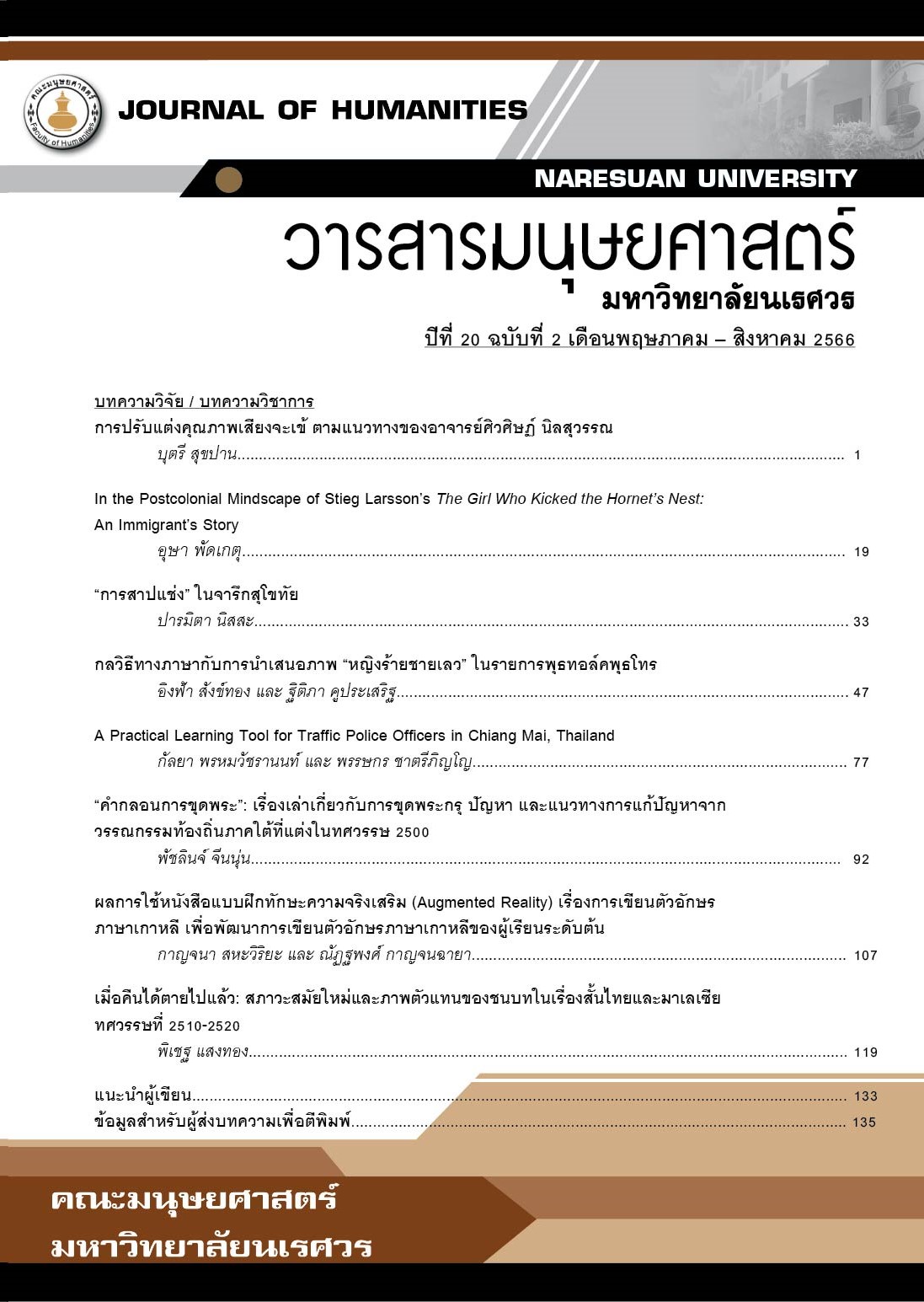
“Kamklonkankhudphra”: The Story About Digging Underground Hiding Buddha Images, Problems, and Solutions From Southern Local Literature Composed in 1957’S
Article Sidebar
Main Article Content
Abstract
This article aims to study story about digging underground hiding Buddha images; the reasons that people like to dig the underground hiding Buddha images, groups of people interested in Buddha images and the behavior of digging Buddha images and study about problem in digging up the Buddha images including solutions from southern local literature title “Kamklonkankhudphra” (Buddha image digging poem) composed in 1957’s. The study found that the main reasons that people like to dig the underground hiding Buddha images, are the belief that the gods inspired, the poverty, the greed, and the interest in collecting rare items. There are different ages, different religions, different areas and groups, including villagers, nuns, novices, and monks coming for interesting. The behavior of digging Buddha images provided images of the diggers in various gestures that sometimes it’s not attractive, especially among women. There are 5 problems in digging up the Buddha images. The first is the destruction of the farmland of the owners in the area where the Buddha images are buried because the villagers, who came to dig, make the farmland to be bumpy. The second is not following with state rules. The Third is making the conflict with government officials. The fourth is quarrels and deceit each other and the fifth is forging Buddha images for sale. During this problem, the author suggests solutions for 7 problems, which are 1) to collect or worship other amulets instead underground hiding Buddha images because they are also values. 2) to respect parents better than worship underground hiding Buddha images 3) to be diligent to make a living better than hoping a shortcut rich 4) not to be careless in life 5) to respect and honor the place 6) not arguing or deceiving each other and 7) to remember the teachings of adults. The popularity of digging underground hiding Buddha images has been reproduced until now because it is tied to human passions.
Article Details

This work is licensed under a Creative Commons Attribution-NonCommercial-NoDerivatives 4.0 International License.
ข้อความรู้ใดๆ ตลอดจนข้อคิดเห็นใดๆ เป็นของผู้เขียนแต่ละท่านโดยเฉพาะ คณะมนุษยศาสตร์ มหาวิทยาลัยนเรศวร และกองบรรณาธิการวารสารมนุษยศาสตร์ฯ ไม่จำเป็นต้องเห็นพ้องด้วย
References
กุสุมา สุ่มมาตร์, และราชันย์ นิลวรรณาภา. (2562). หนังสือธรรมะของพระสายปฏิบัติอีสาน: การศึกษาโครงสร้างและวัจนลีลาในสัมพันธสารประเภทเรื่องเล่า. วารสารปาริชาต, 32(2), 26-36.
คมชัดลึก. (2555, 15 ธันวาคม). ‘วิโรจน์ จิวะรังสรรค์’ สะสม ‘พระกรุ’. สืบค้น 13 ธันวาคม 2563, จาก https://www.komchadluek.net/news/lifestyle/147231
จำรัส เพชรทับ. (2545). ความเชื่อเกี่ยวกับเครื่องรางของขลังของชาวบ้าน อำเภอสิชล จังหวัดนครศรีธรรมราช (วิทยานิพนธ์ศิลปศาสตรมหาบัณฑิต). สงขลา: มหาวิทยาลัยทักษิณ.
ณรงค์ เส็งประชา. (2539). การศึกษาผลกระทบของตลาดพระเครื่องต่อสังคม ศาสนา และเศรษฐกิจ. นครปฐม: ภาควิชาสังคมวิทยา คณะมนุษยศาสตร์ สถาบันราชภัฏนครปฐม.
ทำนอง วงศ์พุทธ, นงลักษณ์ สูงสุมาลย์, และสมศรี ชัยวณิชยา. (2559). ความเชื่อร่วมเรื่องเครื่องรางของขลังในเมืองชายแดนไทย-ลาว-กัมพูชา. วารสารศิลปศาสตร์ มหาวิทยาลัยอุบลราชธานี, 12(1), 307-331.
นภัสวรรณ สุภาทิตย์. (2553). ไสยศาสตร์ในนิทานพื้นบ้านจังหวัดชลบุรี: ความเชื่อที่ยังปรากฏอยู่. วารสารการเมือง การบริหารและกฎหมาย, 2(3), 193-211.
เนียร จันทร์ทอง. (2505). คำกลอนการขุดพระ. สุราษฎร์ธานี: โรงพิมพ์พิมอำไพ.
ผู้จัดการออนไลน์. (2556, 1 มีนาคม). ฮือฮา! แห่ขุดพระกรุวัดพระปรางค์ เชื่อสร้างพุทธศตวรรษ 19-21. สืบค้น 13 พฤศจิกายน 2563, จาก https://mgronline.com/local/detail/9560000025809
พชรพร พนมวัน ณ อยุธยา. (2560, 29 กันยายน). คุยเรื่องลักลอบขุดของโบราณจากมุมมองเศรษฐศาสตร์: (ตอนที่ 2) “Micro-Level”. ไทยพับลิก้า. สืบค้น 29 ธันวาคม 2563, จาก https://thaipublica.org/2017/09/econoarchaeology4
พัชลินจ์ จีนนุ่น, วราเมษ วัฒนไชย, และปริยากรณ์ ชูแก้ว. (2560). วรรณกรรมภาคใต้ยุคการพิมพ์ พ.ศ. 2470 - 2520: ความหลากหลาย คุณค่าและภูมิปัญญา (รายงานผลการวิจัย). กรุงเทพฯ: สำนักงานคณะกรรมการวิจัยแห่งชาติ และสำนักงานกองทุนสนับสนุนการวิจัย.
พัชลินจ์ จีนนุ่น. (2555). ลักษณะเด่นและบทบาททางสังคมของวรรณกรรมคำสอนภาคใต้ “ฉบับพิมพ์เล่มเล็ก” (วิทยานิพนธ์อักษรศาสตรดุษฎีบัณฑิต). กรุงเทพฯ: จุฬาลงกรณ์มหาวิทยาลัย.
พิเชฐ แสงทอง. (2545). ศึกษาลักษณะเศรษฐกิจและสังคมของชุมชนชาวนาบริเวณลุ่มทะเลสาบสงขลาในวรรณกรรมนิราศ (วิทยานิพนธ์ศิลปศาสตรมหาบัณฑิต). กรุงเทพฯ: มหาวิทยาลัยรามคำแหง.
โพสต์ทูเดย์. (2558, 9 กรกฎาคม). แตกตื่น!แห่ขุดพระกรุบนเขาคีรีวงศ์. สืบค้น 13 พฤศจิกายน 2563, จาก https://www.posttoday.com/social/local/375295
มติชนออนไลน์. (2561, 21 กรกฎาคม). กรุแตก !! ยายนอนฝันมีคนมาบอกให้ไปเอาพระ เล่าให้ลูกชายฟัง พบพระสมัยอยุธยาหลายองค์. สืบค้น 13 พฤศจิกายน 2563, จาก https://www.matichon.co.th/news-monitor/news_1052891
มติชนออนไลน์. (2562, 11 ธันวาคม). กรุพระวัดดังแตก พบพระขุนแผน อายุหลายร้อยปีเพียบ (ชมภาพ). สืบค้น 13 พฤศจิกายน 2563, จาก https://www.matichon.co.th/region/news_1807110
วินัย สุกใส. (2547). วิเคราะห์ภาพสะท้อนเศรษฐกิจสังคมชุมชนลุ่มน้ำทะเลสาบสงขลาที่ปรากฏในวรรณกรรมท้องถิ่นประเภทร้อยกรองในยุคการพิมพ์ (พ.ศ. 2472-2503) (วิทยานิพนธ์การศึกษามหาบัณฑิต). สงขลา: มหาวิทยาลัยทักษิณ.
สุกัญญา สุจฉายา. (2556). ทุนวัฒนธรรมกับวัตถุมงคลในปัจจุบัน. วารสารอักษรศาสตร์, 42(2), 75-102.
อภินันท์ จันตะนี. (2559). เศรษฐกิจพระเครื่องเมืองไทย. วารสารบัณฑิตศึกษา มหาวิทยาลัยราชภัฏวไลยอลงกรณ์ ในพระบรมราชูปถัมภ์, 10(1), 95-105.
