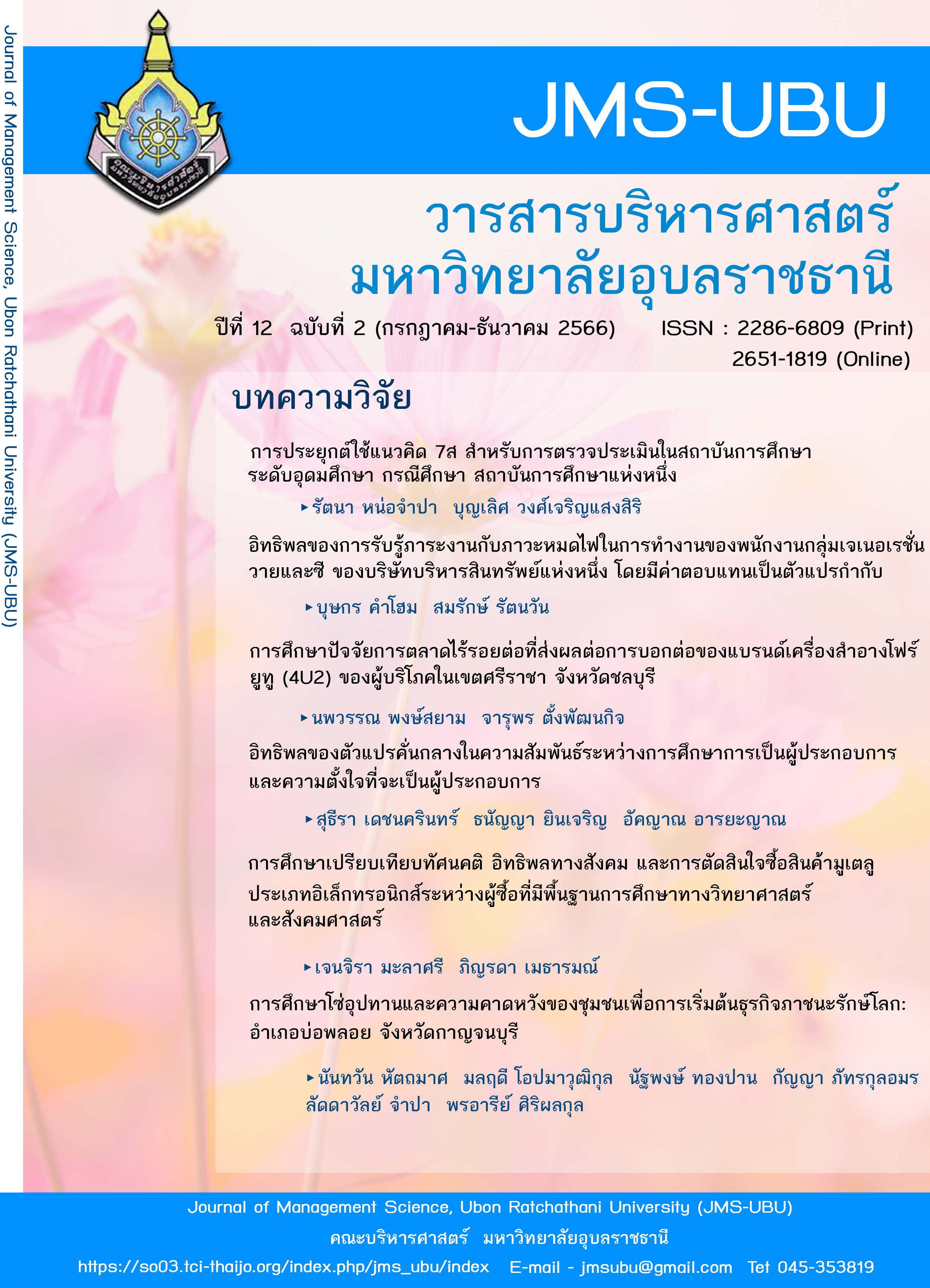
The Effect of Perceived Workload on Burnout of an Asset Management Company Employees Generation Y and Z: Compensation as a Moderating Variable
Article Sidebar
Main Article Content
Abstract
The research aimed to study the effect of perceived workload on job burnout and compensation as a moderating effect. Data were collected from 312 generation Y and Z employees at an asset management company. The instrument used in this research was a questionnaire. Data were analyzed by employing frequency, percentage, mean, standard deviation, pearson product moment correlation and hierarchical multiple regression analysis.
The results showed that 1) perceived workload was at a high mean level; 2) satisfaction with compensation was at a low mean level; 3) job burnout was at a moderate mean level; 4) perceived workload had a positive influence on burnout at work; 5) compensation was the variable governing the relationship between perceived workload and burnout at work.
Downloads
Article Details

This work is licensed under a Creative Commons Attribution-NonCommercial-NoDerivatives 4.0 International License.
All articles published in the Journal of Management Science, Ubon Ratchathani University are copyrighted by the journal. The views and opinions expressed in each article are those of the authors and do not necessarily reflect the views of the Faculty of Management Science, Ubon Ratchathani University. The authors are solely responsible for the content of their articles.
References
กิตติโชติ วุฒิวรสิน. (2560). ความสัมพันธ์ระหว่างความเหนื่อยหน่ายในงานและคุณภาพบริการของพนักงานธนาคารพาณิชย์. (สารนิพนธ์ปริญญามหาบัณฑิต). มหาวิทยาลัยเทคโนโลยีพระจอมเกล้าพระนครเหนือ, บัณฑิตวิทยาลัย.
ฐานิฎา เจริญเลิศวิวัฒน์. (2558). ความพึงพอใจในค่าตอบแทน สวัสดิการและคุณภาพชีวิตการทำงานที่มีผลต่อความจงรักภักดีต่อองค์กร : กรมควบคุมโรคกระทรวงสาธารณสุข. (การค้นคว้าอิสระปริญญามหาบัณฑิต). มหาวิทยาลัยเทคโนโลยีราชมงคลธัญบุรี, คณะบริหารธุรกิจ.
ทัศนีย์ สิรินพมณี, เมธาวี อุดมธรรมานุภาพ, และ สมโภชน์ เอี่ยมสุภาษิต. (2563). การรับรู้ภาระงาน สัมพันธภาพในงานการสนับสนุนทางสังคมต่อความเหนื่อยหน่ายในงานของพยาบาลวิชาชีพ โดยมีอิทธิบาทสี่ เป็นตัวแปรกำกับ. วารสารพยายาบาลกระทรวงสาธารณสุข, 30(2), 58-71.
ทิพรัตน์ บำรุงพนิชถาวร, วัลลภ ใจดี, เอมอัชฌา วัฒนบุรานนท์, และ นิภา มหารัชพงศ์. (2565). ปัจจัยที่มีความสัมพันธ์ต่อภาวะหมดไฟในการทำงานของผู้ปฏิบัติงานในโรงพยาบาลชุมชนในสถานการณ์การแพร่ระบาดของ Covid-19. วารสารสาธารณสุข มหาวิทยาลัยบูรพา. 17(1),100 -110.
บริษัทบริหารสินทรัพย์ กรุงเทพพาณิชย์ จำกัด (มหาชน). (2564). แบบแสดงรายการข้อมูลประจำปี. สืบค้นเมื่อ 15 มกราคม 2565, จาก https://market.sec.or.th/public/idisc/th/FinancialReport/R561-0000001882
บุญใจ ศรีสถิตย์นรากูร. (2555). การพัฒนาและตรวจสอบคุณภาพเครื่องมือวิจัย : คุณสมบัติการวัดเชิงจิตวิทยา. กรุงเทพฯ: โรงพิมพ์แห่งจุฬาลงกรณ์มหาวิทยาลัย.
ประพันธ์ ชัยกิจอุราใจ. (2560). ผลกระทบของค่าตอบแทนที่มีต่อพฤตกรรมการเป็นสมาชิกที่ดีขององค์การ และผลการปฏิบัติงานของพนักงานในกลุ่มอุตสาหกรรมไฟฟ้าอิเล็กทรอนิกส์ และโทรคมนาคม (รายงานวิจัย). กรุงเทพ: วิทยาลัยบัณฑิตศึกษาด้านการจัดการ มหาวิทยาลัยศรีปทุม.
ปองกานต์ ศิโรรัตน์. (2563). การศึกษาเกี่ยวกับภาวะหมดไฟในการทํางาน (Job Burnout) ของพนักงานองค์กรรัฐวิสาหกิจ กลุ่มเจเนอเรชั่นเบบี้บูมเมอร์. (สารนิพนธ์ปริญญามหาบัณฑิต). มหาวิทยาลัยมหิดล, วิทยาลัยการจัดการ.
พัลพงษ์ สุวรรณวาทิน และ ชิตพงษ์ อัยสานนท์. (2560). การรับรู้ภาระงาน และความเหนื่อยหน่ายในการทํางานของพนักงานต้อนรับบนเครื่องบิน โดยมีการสื่อสารภายในองค์การ และความเครียดในการทํางานเป็นตัวแปรกํากับ. วารสารวิทยาลัยโลจิสติกส์และซัพพลายเชน, 3(1), 93 -106.
ภรณฉัตร โอฐเจริญชัย. (2561). ปัจจัยที่สัมพันธ์กับภาวะขาดประสิทธิภาพในการทำงานขณะป่วยและ ภาวะหมดไฟในการทำงานของครูโรงเรียนเอกชน. (การค้นคว้าอิสระปริญญามหาบัณฑิต). มหาวิทยาลัยเชียงใหม่, คณะวิทยาศาสตร์.
มนัสพงษ์ มาลา. (2563). ภาวะเมื่อยล้าหมดไฟในการปฏิบัติงานของอาสาสมัครสาธารณสุขประจำหมู่บ้าน เขตสุขภาพที่ 4 (รายงานวิจัย). สืบค้นเมื่อ15 กุมภาพันธ์ 2565, จาก https://do4.hss.moph.go.th/images/63/02/วิจัยภาวะเมื่อยล้าหมดไฟในการปฏิบัติงาน.pdf
มนัสวี ศรีนนท์. (2561). ทฤษฎีเจเนอเรชันกับกรอบวิธีคิด. วารสาร “ศึกษาศาสตร์ มมร” คณะศึกษาศาสตร์ มหาวิทยาลัยมหามกุฏราชวิทยาลัย, 6(1), 374-373.
ลลิดา แท่งเพ็ชร. (2558). ความสัมพันธ์ระหว่างการรับรู้ภาระงาน สัมพันธภาพในการทำงานกับความเหนื่อยหน่ายในงานโดยมีการรับรู้ความสามารถของตนเองเป็นตัวแปรกำกับ (งานวิจัยส่วนบุคคลปริญญามหาบัณฑิต). มหาวิทยาลัยธรรมศาสตร์, คณะศิลปศาสตร์.
ศูนย์วิจัยกสิกรไทย. (2564). “Gen Z” First Jobber รุ่นใหม่เพื่อเข้าใจ"ความต่าง". สืบค้นเมื่อ 15 กุมภาพันธ์ 2565, จาก https://www.kasikornresearch.com/th/analysis/k-social-media/Pages/Gen-Z-11-08-21.aspx
สิฐ์จิรากิจ หิรัญดลรัชต์. (2563). การศึกษาความสัมพันธ์ระหว่างความพึงพอใจในค่าตอบแทนและความพึงพอใจในงาน กรณีศึกษา: ข้าราชการกรมราชทัณฑ์ในสังกัดเรือนจำเขต 2. (การค้นคว้าอิสระปริญญามหาบัณฑิต). มหาวิทยาลัยรามคำแหง, คณะบริหารธุรกิจ.
สุรารักษ์ สุพัฒนมงคล และ วันทนา เนาว์วัน. (2562). ปัจจัยค่าตอบแทนที่มีผลต่อประสิทธิภาพในการปฏิบัติงานของพนักงานฝ่ายผลิต บริษัทนิโปร (ประเทศไทย) จำกัด จังหวัดพระนครศรีอยุธยา. วารสารวิทยาการจัดการปริทัศน์, 21(1), 17-24.
เสาวลักษณ์ สระศรีสม. (2564). ภาระงานที่ส่งผลต่อความพึงพอใจในงานของบุคลากรกองคลังองค์กรปกครองส่วนท้องถิ่นจังหวัดกาญจนบุรี. (วิทยานิพนธ์ปริญญามหาบัณฑิต). มหาวิทยาลัยศิลปากร, บัณฑิตวิทยาลัย.
อุทิส ศิริวรรณ. (2559). จริต 6 กับคนเจนวาย: เปรียบเทียบคน 14 อารมณ์กับคน 3 ยุค. วารสารทางเดิน, 41(174). สืบค้นเมื่อ 15 กุมภาพันธ์ 2565, จาก https://www.druthit.com/212-จริต-๖-กับคน-gen-y/
Baakile, M. (2011). Comparative analysis of teachers’ perception of equity, pay satisfaction, affective commitment and intention to turnover in Botswana. Journal of Management Research, 3(1), 1-21.
Bakker, A. B., Van Der Zee, K. I., Lewig, K. A. & Dollard, M. F. (2006) The relationship between the big five personality factors and burnout: A study among volunteer counselors. The Journal of Social Psychology, 146(1), 31-50.
Baron, R. M., & Kenny, D. A. (1986). The moderator–mediator variable distinction in social psychological research: Conceptual, strategic, and statistical considerations. Journal of Personality and Social Psychology, 51(6), 1173–1182.
Deloitte. (2018). Workplace burnout survey. Retrieved May, 1, 2022, from https://www2.deloitte.com/us/en/pages/about-deloitte/articles/burnout-survey.html
Demerouti, E., Bakker, A. B., Nachreiner, F., & Schaufeli, W. B. (2001). The job demands: Resources model of burnout. Journal of Applied Psychology, 86(3), 499-512.
Krejcie, R. V., & Morgan, D. W. (1970). Determining sample size for research activities. Educational and Psychological Measurement, 30(3), 607-610.
Maslach, C., & Leiter, M. P. (2008). Early predictors of job burnout and engagement. Journal of Applied Psychology, 93(3), 498–512.
Maslach, C., & Jackson, S. E. (1981). The measurement of experienced burnout. Journal of Occupational Behaviour, 2(2), 99-113.
Maslach, C., Schaufeli, W. B., & Leiter, M. P. (2001). Job burnout. Annual Review of Psychology, 52, 397-422.
Muldary, T. W. (1983). Burnout and Health Professionals: Manifestations and Management. California: Capistrano Press, Ltd.
Newman, J. M., Gerhart, B., & Milkovich, G. T. (2017). Compensation (12th ed.). New York: McGraw-Hill.
Pendell, R. (2018). Millennials are burning out. Retrieved May, 1, 2022, from https://www.gallup.com/workplace/237377/millennials-burning.aspx
Rasoulian, M., Elahi, F., & Ebrahimi, A. A. (2004). The relationship between job burnout and personality traits in nurses. Iranian Journal of Psychiatry and Clinical Psychology, 9(4), 18-24.
Smith, M. M. A., Segal, J., & Robinson, L. (2019). Burnout prevention and treatment. Retrieved May, 1, 2022, from https://www. helpguide.org/articles/ stress/burnout-prevention-and-recovery.htm
Tremblay, M., Sire, B., & Balkin, D. (2000). The role of organizational justice in pay and employee benefit satisfaction and its effects on work attitudes. Group & Organization Management, 25(3), 268-289.
Vandenberghe, C., & Tremblay, M. (2008). The role of pay satisfaction and organizational commitment in turnover intentions: A two-sample study. Journal of Business Psychology, 22, 275-286.
World Health Organization. (2019). Burn-out an “occupational phenomenon”. Retrieved May, 1, 2022, from https://www.who.int/news/item/28-05-2019-burn-out-an-occupational-phenomenon-international-classification-of-diseases
