
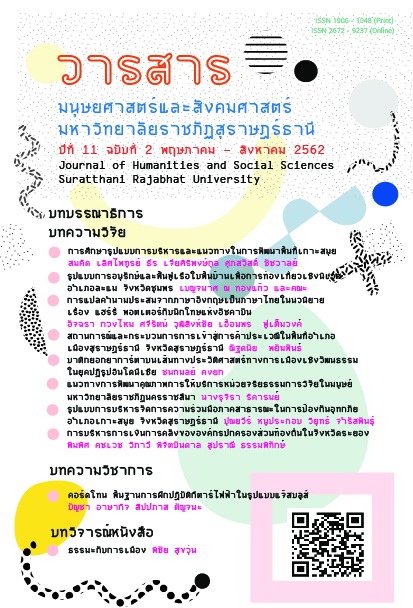
บาติกยอกยาการ์ตาบนเส้นทางประวัติศาสตร์ทางการเมืองเชิงวัฒนธรรมในยุคปฏิรูปอินโดนีเซีย
Article Sidebar
Main Article Content
บทคัดย่อ
บทความวิจัยชิ้นนี้มีวัตถุประสงค์ที่ต้องการศึกษาประวัติศาสตร์ทางการเมือง เชิงวัฒนธรรมของบาติกเมืองยอกยาการ์ตาในยุคปฏิรูป ประเทศอินโดนีเซีย อันเป็นผลสืบเนื่องมาจากการได้รับการขึ้นทะเบียนให้บาติกอินโดนีเซียเป็นมรดกโลกจากองค์การยูเนสโกเมื่อปี 2009 ความสำเร็จในครั้งนี้เปรียบเสมือนการประกอบสร้างอัตลักษณ์ให้แก่
ชาติอินโดนีเซียอย่างเป็นทางการ อย่างไรก็ตาม ภายใต้การดำเนินการดังกล่าวเต็มไปด้วยการเคลื่อนไหวในลักษณะการเมืองเชิงวัฒนธรรมที่มีการต่อสู้ช่วงชิงความเป็นเจ้าของวัฒนธรรมบาติกระหว่างประเทศอินโดนีเซียและประเทศมาเลเซีย เหตุผลในการเลือกบาติกยอกยาการ์ตาในการศึกษาครั้งนี้ เนื่องจากบาติกยอกยาการ์ตาได้รับการขนานนามว่าเป็น “บาติกคลาสสิคหรือบาติกดั้งเดิม” ทำให้บาติกยอกยาการ์ตาได้กลายเป็นภาพตัวแทนของบาติกอินโดนีเซีย ประกอบกับเมืองยอกยาการ์ตามีความสำคัญในแง่ของประวัติศาสตร์ทางการเมืองและวัฒนธรรมอินโดนีเซีย ในแง่ประวัติศาสตร์ทางการเมือง เมืองยอกยาการ์ตาถือเป็นเมืองที่มีความสำคัญในยุคการสร้างชาติอินโดนีเซีย กล่าวคือ เมืองแห่งนี้เคยเป็นฐานที่ตั้งของเมืองหลวงอินโดนีเซียในช่วงการเรียกร้องอิสรภาพส่งผลให้ได้รับการแต่งตั้งให้เป็น เขตปกครองพิเศษยอกยาการ์ตาจวบจนปัจจุบัน สำหรับแง่ประวัติศาสตร์ทางวัฒนธรรม เมืองยอกยาการ์ตาเป็นเมืองที่ยังคงเต็มไปด้วยการธำรงรักษาไว้ซึ่งวัฒนธรรมชวาแบบดั้งเดิม หนึ่งในนั้นคือวัฒนธรรม “บาติก” บาติกยอกยาการ์ตามิได้ผลิตขึ้นเพื่อเป็นเพียงเครื่องแต่งกายที่ทรงคุณค่าและความงามเท่านั้น แต่ยังทำหน้าที่สะท้อนภาพทางสังคมชวารวมไปถึงภาพรวมของสังคมอินโดนีเซีย นอกจากนี้ชาวชวาผู้ซึ่งเป็นกลุ่มประชากรหลักของประเทศได้ขับเน้นความเป็นชวาให้ปรากฏเด่นชัดผ่านศิลปวัฒนธรรมต่าง ๆ ความเป็นชวาที่ส่งผ่านบาติกยอกยาการ์ตาจึงถูกนำมาเป็นส่วนหนึ่งในการประกอบสร้างอัตลักษณ์แห่งชาติในยุคปฏิรูปอินโดนีเซีย นัยยะนี้แสดงให้เห็นว่าการเมืองและวัฒนธรรมมิอาจแยกออกจากกันได้
Article Details

อนุญาตภายใต้เงื่อนไข Creative Commons Attribution-NonCommercial-NoDerivatives 4.0 International License.
ต้นฉบับทุกเรื่องที่พิมพ์เผยแพร่ได้รับการตรวจสอบความถูกต้องทางวิชาการโดยผู้ทรงคุณวุฒิ (Peer Peview) เฉพาะสาขามนุษยศาสตร์และสังคมศาสตร์ การตีพิมพ์บทความซ้ำต้องได้รับการอนุญาตจากกองบรรณาธิการเป็นลายลักษณ์อักษร
เอกสารอ้างอิง
Anderson, B. (1990). Language and Power: exploring political cultures inIndonesia. New York: Cornell Paperbacks.
Chaiwat Larnchim. (2016). Cultural Politics of Javanese Society in the 19th Century: Reflections on the Concept of the State of the Drama. Journal of Southeast Asia, 5(1), 2-36 . (In Thai)
Department of Trade Negotiations in Ministry of Commerce. (2014).Awareness of investment in ASEAN: Republic of Indonesia.
(n.p., n.d.). (In Thai)
Economic and Social Commission for ASIA and the Pacific. (2014). Asia-Pacific trade and investment report 2014 : Recent Trends and Developments. New York: United Nations publication.
Elliott, I.M. (1984). Batik Fabled Cloth of Java. New York: Periplus Editions.
Fraser-Lu, S. (1986). “Indonesian Batik” Process, Patterns and Places. New York: Oxford University Press.
Hall, D.G.E. (1979). A History South-East Asia. Book 2. Translated byThanpuying Waroon Yupanitwong Na Ayutthaya et al. Bangkok: Foundation for Textbooks, Social Sciences and Humanities. (In Thai)
Hall, S. (1992). Cultural Studies and Its Theoretical Legacies. In Cultural Studies. edited by Lawrence Grossberg, Cary Nelson and Paula
Treichler. (pp. 277-294). London: Routledge.
Herzfeld, M. (2005). Cultural Intimacy: Social Politics in the Nation-State.New York: Routledge.
Himpunan Pencinta Kain Batik & Tenun. (1990). Sekaring Jagad Ngayogyakarta Hadiningrat. Jakarta: Wastraprema. (In Indonesia)
Keller, I. (2002). Batik: The art and craft. Clarendon: Tuttle Publishing.
Natapong Chitniratna. (2007). The community. (2nded). Songkhla: Thaksin University. (In Thai)
Panuwat Panduprasert. (2013). History of Decentralization in Indonesia. The 14th National Conference on Political Science and Public
Administration (2013). Ubon Ratchathani University. (In Thai)
Princess Maha Chakri Sirindhorn Anthropology Centre. (2009). Batik is anational treasure or heritage of mankind?. [Online]. Retrieved from http://www.sac.or.th/exhibition/aseantimeline. [2017, October 30]. (In Thai)
Proyek Pengembangan Industri Kecil Dan Menengah. (1996). Katalog BatikKhas Yogyakarta. Yogyakarta: Kantor Wiyalah Departmen Perindutrian. (In Indonesia)
Reid, A. (2011). To Nation by Revolution: Indonesia in the twentieth century.Singapore: NUS press.
Sandholz, S. (2017). Urban Centres in Asia and Latin America: Heritage andIdentities in Changing Urban Landscapes. Switzerland: Springer International Publishing.
Setiawan, D. (2015). Jogja Fashion Week Carnival Costume in The Context of Locality. Journal of Arts Research & Education, 15(2), 126-131.
Soedewi, S. (2011). Technic and Decorative Varieties of Yogya & Solo’s Batik. Yogyakarta: Naturatama. (In Indonesia)
Soewarsono, M.A. (2011). Nationalism and Cultural Resilience in Indonesia: A Challenge. Jakarta: Lipi Press. (In Indonesia)
Sutardi, T. (2007). Anthropology: Revealing Cultural Diversity. Bandung: PTSetia Purna Inves. (In Indonesia)
Suwattana Maneecharuen. (2015). Constitution of the Republic of Indonesia on 1945 with the concept of Nationality. Veridian E-Journal, Thai Version, Silpakorn University, Humanities-Social Science and Arts Program, 8(2), 1964-1976. (In Thai)
Tirta, I. (1996). Batik: A Play of Light and Shades. Jakarta: PT Gaya FavoritPress. (In Indonesia)
Vickers, A. (2005). A History of Modern Indonesia. Cambridge: CambridgeUniversity Press.
