
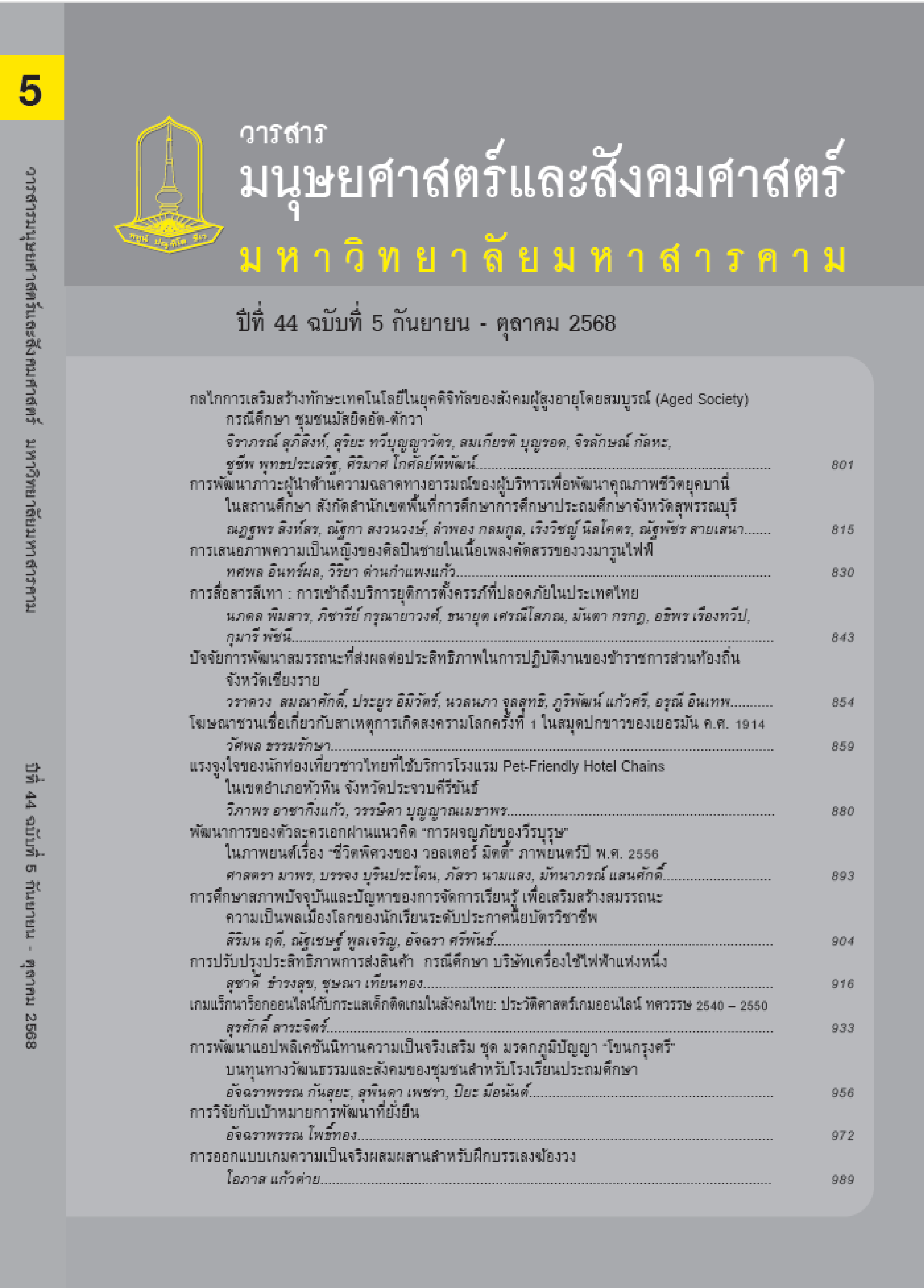
ปัจจัยการพัฒนาสมรรถนะที่ส่งผลต่อประสิทธิภาพในการปฏิบัติงานของข้าราชการส่วนท้องถิ่นจังหวัดเชียงราย
Article Sidebar
Main Article Content
บทคัดย่อ
การวิจัยครั้งนี้มีวัตถุประสงค์เพื่อศึกษา 1) ระดับปัจจัยการพัฒนาสมรรถนะและประสิทธิภาพในการปฏิบัติงานของข้าราชการส่วนท้องถิ่นจังหวัดเชียงราย และ 2) ปัจจัยการพัฒนาสมรรถนะที่ส่งผลต่อประสิทธิภาพในการปฏิบัติงานของข้าราชการส่วนท้องถิ่นจังหวัดเชียงราย กลุ่มตัวอย่างที่ใช้ในการวิจัยประกอบด้วยข้าราชการส่วนท้องถิ่นจังหวัดเชียงราย จำนวน 365 คน โดยใช้แบบสอบถามเป็นเครื่องมือในการเก็บข้อมูล และวิเคราะห์ข้อมูลด้วยสถิติการวิเคราะห์ถดถอยพหุคูณแบบขั้นตอน ผลการวิจัยพบว่า 1) ระดับปัจจัยการพัฒนาสมรรถนะและประสิทธิภาพในการปฏิบัติงานของข้าราชการส่วนท้องถิ่นจังหวัดเชียงรายอยู่ในระดับมาก และ 2) ปัจจัยการพัฒนาสมรรถนะที่ส่งผลต่อประสิทธิภาพในการปฏิบัติงานของข้าราชการส่วนท้องถิ่นจังหวัดเชียงรายอย่างมีนัยสำคัญทางสถิติที่ระดับ .01 ได้แก่ การพัฒนาวิธีการสอนฝึกอบรมเชิงนวัตกรรม การพัฒนาโค้ชและการให้คำปรึกษา และการพัฒนารายบุคคลตามความสามารถ ซึ่งปัจจัยทั้งสามสามารถร่วมกันอธิบายความผันแปรได้ร้อยละ 78.0 โดยสมการถดถอยในรูปแบบคะแนนมาตรฐาน คือ ประสิทธิภาพในการปฏิบัติงาน = 0.260 (การพัฒนาวิธีการสอนฝึกอบรมเชิงนวัตกรรม) + 0.226 (การพัฒนาโค้ชและการให้คำปรึกษา) + 0.217 (การพัฒนารายบุคคลตามความสามารถ) ปัจจัยเหล่านี้สอดคล้องกับหลักการพัฒนาทรัพยากรมนุษย์ยุคใหม่ที่เน้นการเรียนรู้ผ่านวิธีการทันสมัย การให้คำปรึกษาอย่างใกล้ชิด และการพัฒนาตามศักยภาพเฉพาะบุคคล หากนำมาประยุกต์ใช้อย่างจริงจังจะช่วยยกระดับสมรรถนะและประสิทธิภาพการปฏิบัติงานของบุคลากรท้องถิ่นได้อย่างเป็นรูปธรรม
Article Details
เอกสารอ้างอิง
กรรณิการ์ สุวรรณศรี. (2563). การบริหารทรัพยากรมนุษย์. นครปฐม: สำนักพิมพ์มหาวิทยาลัยราชภัฏนครปฐม.
จุฑารัตน์ เพช็รสุวรรณ. (2560). การพัฒนาทรัพยากรมนุษย์ที่ส่งผลต่อประสิทธิภาพในการปฏิบัติงานของพนักงานโรงแรมบางกอกเซ็นเตอร์. [การค้นคว้าอิสระ หลักสูตรวิทยาศาสตรมหาบัณฑิต สาขาวิชาการจัดการทรัพยากรมนุษย์ วิทยาลัยบัณฑิตศึกษาด้านการจัดการ]. กรุงเทพฯ: มหาวิทยาลัยศรีปทุม.
ชูขวัญ รัตนะพิทักษ์ธาดา. (2566). สมรรถนะของผู้นำทางการศึกษาเพื่อการอยู่รอด และเติบโตในยุค BANI World. The Journal of Pacific Institute of Management Science (Humanities and Social Science), 9(1), 16-28.
ฐิติชญา สุโพธิโสภณ และ อนันต์ชัย คงจันทร์. (2563). การพัฒนาบุคลากรในองค์กรปกครองส่วนท้องถิ่น. วารสารการพัฒนาท้องถิ่น, 14(2), 37-49.
ธัญญารัตน์ พรหมสุทธิ์. (2565). รูปแบบการพัฒนาทรัพยากรมนุษย์ยุค ประเทศไทย 4.0 ของ สำนักงานอุตสาหกรรม จังหวัด. วารสารนวัตกรรมการบริหาร และการจัดการ, 10(3), 11-22.
พัชรา วงค์ตาผา และ เนาวนิตย์ สงคราม. (2562). การพัฒนาบุคลากรตามทฤษฎีการเรียนรู้แบบผสมผสานและทฤษฎีการจัดการความรู้. วารสารการบริหารและพัฒนาทรัพยากรมนุษย์, 6(2), 78-91.
มานะชัย เทพสุรินทร์. (2565). แนวทางการพัฒนาทรัพยากรมนุษย์ของบุคลากรสังกัดเทศบาลในเขตอำเภอแก้งคร้อ จังหวัดชัยภูมิ. วารสารวิจัยวิชาการ, 5(5), 127-142.
สำนักงานจังหวัดเชียงราย. (2566). รายงานประจำปีงบประมาณ ส่วนท้องถิ่นจังหวัดเชียงราย ประจำปีงบประมาณ พ.ศ.2566. เชียงราย: สำนักงานจังหวัดเชียงราย.
สิทธปวีย์ ธนโสตถิกุลนันท์. (2562). ตัวแบบประสิทธิภาพการบริหารจัดการธุรกิจการขนส่งทางแม่น้ำในประเทศไทย. [ดุษฎีนิพนธ์ปริญญาปรัชญาดุษฎีบัณฑิต สาขาวิชาการจัดการบัณฑิตวิทยาลัย]. กรุงเทพฯ: มหาวิทยาลัยสยาม.
สุวรรณา ประณีตพลกรัง. (2561). การพัฒนาบุคลากรในองค์กรปกครองส่วนท้องถิ่น. วารสารการบริหารการพัฒนา, 8(4), 21-33.
สำนักงานจังหวัดเชียงราย. (2566). รายงานประจำปีงบประมาณ ส่วนท้องถิ่นจังหวัดเชียงราย ประจำปีงบประมาณ พ.ศ.2566. เชียงราย: สำนักงานจังหวัดเชียงราย.
อริศรา ชัยนาม. (2563). การพัฒนาสมรรถนะบุคลากรในองค์กรปกครองส่วนท้องถิ่น. วารสารวิชาการมหาวิทยาลัยเชียงใหม่, 12(2), 45-58.
Cronbach, L. J. (1990). Essentials of psychological testing. (5th ed.). Harper Collins Publishers.
Emerson, H. (1913). Harrington Emerson's Home Course of Study in Personal Efficiency: Lesson One-[twenty-four] (No. 1-12). Emerson Institute.
Lee, J., & Kim, H. (2021). The role of innovative training in enhancing public sector workforce performance. Public Administration Review, 81(4), 345-359.
Likert, Rensis. (1967). The Method of Constructing and Attitude Scale. In Reading in Fishbein, M (Ed.), Attitude Theory and Measurement. pp. 90-95.
Marino, P. (2009). Leadership skills and teamwork in the public sector. Public Administration Review, 69(3), 376-390.
McClelland, D. C. (1973). Testing for competence rather than for intelligence. American Psychologist, 28(1), 1-14.
Peterson, R. A., & Plowman, B. (1989). Measuring work performance: Current practice and future directions. Journal of Management, 15(2), 235-246.
Riviovelli, G., & Hambleton, R. K. (1997). Manual for setting passing scores defined by a criterion. University of Massachusetts.
Sanavria, J. (2020). Coaching and mentoring in public administration. Journal of Public Administration, 12(1), 67-79.
Taro Yamane. (1973). Statistics: an introductory analysis. New York: Harper. & Row.
Tran, T. Q., & et al. (2021). Factors affecting job performance of local government employees. Journal of Public Administration Research and Theory, 31(3), 453-470.
Zhang, Y. (2012). Competency-based human resource development: Theory and practice. Journal of Human Resource Development Quarterly, 23(2), 177-193.
Zhang, Y., & Brown, T. (2022). Bridging skill gaps through online coaching and mentoring in public sector organizations. Journal of Government Training and Development, 15(3), 211-225.
