
Content and language techniques to heal the mind from page " Ban-thuk-khong-tut "
Article Sidebar
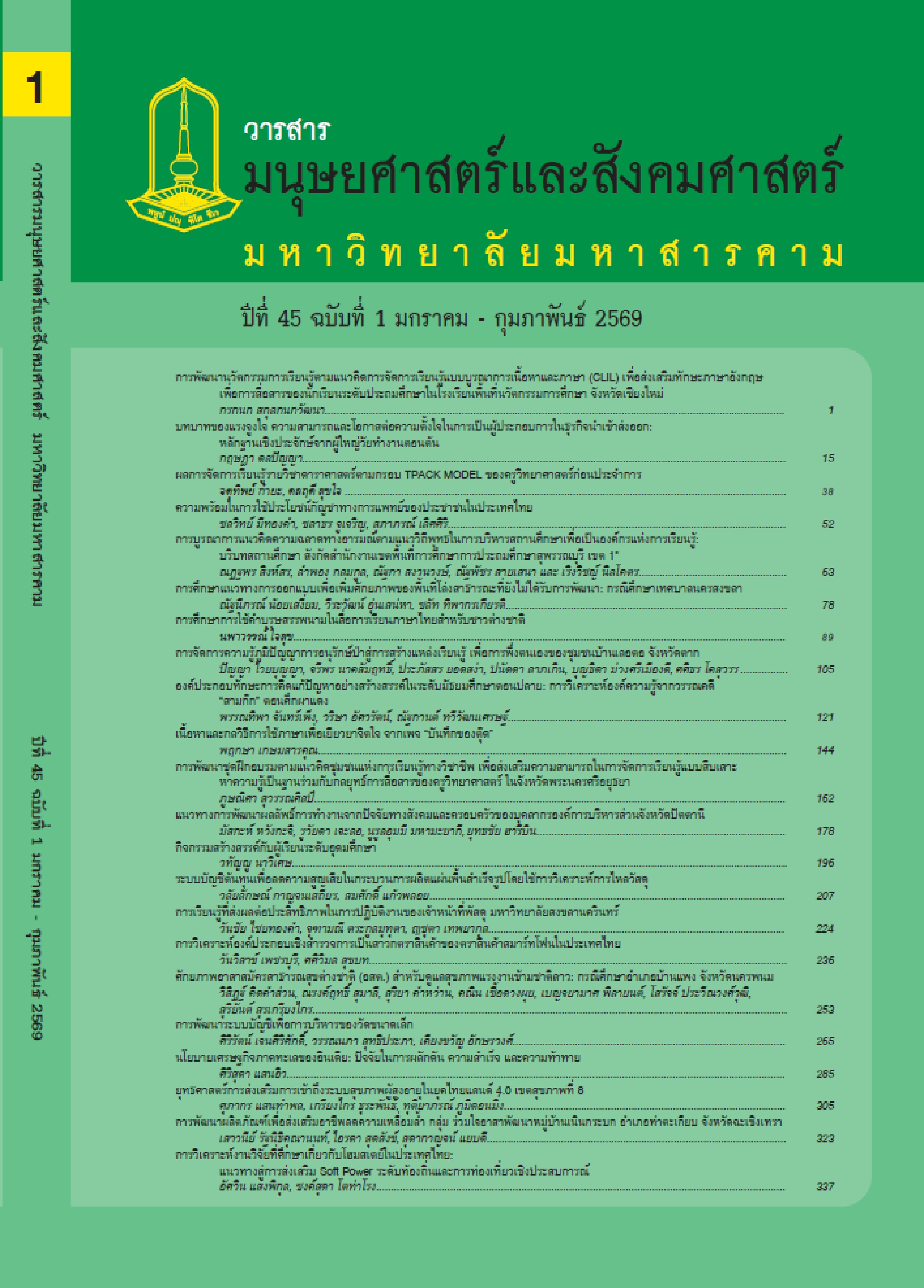
Main Article Content
Abstract
Abstract
This research article aims to study the content and strategies for using language to heal the mind from the page “Ban-thuk-khong-tut”. By studying the messages posted on the Facebook fan page “Ban-thuk-khong-tut” during the period 1 October 2022 – 30 September 2023, totaling 191 messages posted. The results of the study found that the author presented content to heal the mind in 3 ways: 1) Content on using love to heal the mind Divided into self-love and love from others. 2) Content on using Dhamma principles to heal the mind. 3) Content about living life to heal the mind. The content is an important healing substance for the mind that stimulates and acts as a compass, pointing out the value of oneself and those around us. Adjusting the way of thinking createsSupport is confident in your physical and mental strength to fight against various problems and obstacles in order to live a valuable life. and have long-term happiness
Strategies for using language to heal the mind Found the use of 8 language strategies: 1) strategies for repeating words, 2) strategies for using English words, 3) strategies for using ugliness, 4) strategies for using vulgar words, 5) strategies for using antonyms, 6) strategies for using sentences. Questions 7) Conversation strategies 8) StrategiesUsing pronouns instead These language strategies can reduce the gap to reach your fan page. And it plays an important role in helping to heal the mind and convey meaning clearly and firmly, helping to heal mental wounds and be happy in life
Keywords: Content, Language strategies, Heal the mind, Facebook fan page “Ban-thuk-khong-tut”
Article Details
References
กรมสุขภาพจิต กระทรวงสาธารณสุข. (2565). สถานการณ์โรคจิตเวชคนไทย ปี พ.ศ. 2565 : การเฝ้าระวังโรคจิตเวชและปัญหาสุขภาพจิต จากคลังข้อมูลสุขภาพ (Health data center: HDC). คลังความรู้สุขภาพจิต กรมสุขภาพจิต. เข้าถึง 9 มิถุนายน 2565, https://dmh-elibrary.org/items/show/1480.
กรมสุขภาพจิต กระทรวงสาธารณสุข. (2561). คู่มือการปฏิบัติงานทีมช่วยเหลือเยียวยาจิตใจผู้ประสบภาวะวิกฤต (Mental Health Crisis Assesment and Treatment Team : MCATT). เข้าถึง 9 มิถุนายน 2565, https://mhso.dmh.go.th/fileupload/20201006154069894.pdf.
กัลยาณี แนวเล็ก. (2560). เรื่อง (ไม่) ลับ ฉบับคุณช่า บันทึกของตุ๊ด. เข้าถึง 14 พฤษภาคม 2565 ,https://www.trueplookpanya.com/plookfriends/blog/content/detail/56455.
จันทิมา แสงแพรและพระมหาจักรพล อาจารสุโภ. (2564). หลักธรรมกับการเยียวยาจิตใจต่อภาวะซึมเศร้าของผู้สูงอายุ. วารสารพุทธมัคค์ ปีที่ 6 ฉบับที่ 2 (2564) เดือนกรกฎาคม – ธันวาคม 2564. หน้า 218 - 227.
จุไรรัตน์ ลักษณะศิริ. (2543). ภาษากับการสื่อสาร. นครปฐม : มหาวิทยาลัยศิลปากร.
ชมพูนุท ศรีจันทร์นิล. (2552). จิตวิทยาแนวพุทธ : แนวทางเพื่อการเยียวยาและพัฒนาจิตใจมนุษย์. วารสารวิชาการ มหาวิทยาลัยหอการค้าไทย ปีที่ 29 ฉบับที่ 4 เดือนตุลาคม - ธันวาคม 2552. หน้า 188 - 208.
ปรีชา ช้างขวัญยืน. (2560). ปรีชาวิทรรศน์มุมมองภาษาไทย. กรุงเทพฯ: โรงพิมพ์แห่งจุฬาลงกรณ์มหาวิทยาลัย.
ภาสกร จิตรใคร่ครวญ. (2553). เทคโนโลยีของสื่อใหม่และการนำเสนอตัวตนต่อสังคมกับพฤติกรรมการสื่อสารบนเครือข่ายสังคมออนไลน์. วิทยานิพนธ์ปริญญา นิเทศศาสตรมหาบัณฑิต จุฬาลงกรณ์มหาวิทยาลัย.
ราชบัณฑิตสถาน. (2556). พจนานุกรม ฉบับราชบัณฑิตยสถาน พุทธศักราช 2554 พิมพ์ครั้งที่ 2. กรุงเทพฯ : นานมีบุ๊คพับลิเคชั่นส์ จำกัด.
ศิริวรรณ เจียรชัชวาลวงศ์ และคณะ (2560), การสื่อสารเพื่อสร้างแรงบันดาลใจตนเองของคนพิการ.วารสารวิชาการ สถาบันเทคโนโลยีแห่งสุวรรณภูมิ, ปีที่ 5 ฉบับที่ 5 เดือนกรกฏาคม - ธันวาคม 2560. หน้า 298 - 312.
ศุนิสา ทดลา. (2542). รูปแบบพฤติกรรมการสื่อสารในห้องสนทนาบนเครือข่ายอินเทอร์เน็ต. วิทยานิพนธ์ปริญญานิเทศศาสตร์มหาบัณฑิต สาขาวิชาการสื่อสารมวลชน ภาควิชาการสื่อสารมวลชน คณะนิเทศศาสตร์ จุฬาลงกรณ์มหาวิทยาลัย.
สิริวรรณ นันทจันทูล. (2543). การเขียนเพื่อการสื่อสาร 2. กรุงเทพฯ:มหาวิทยาลัยเกษตรศาสตร์.
