
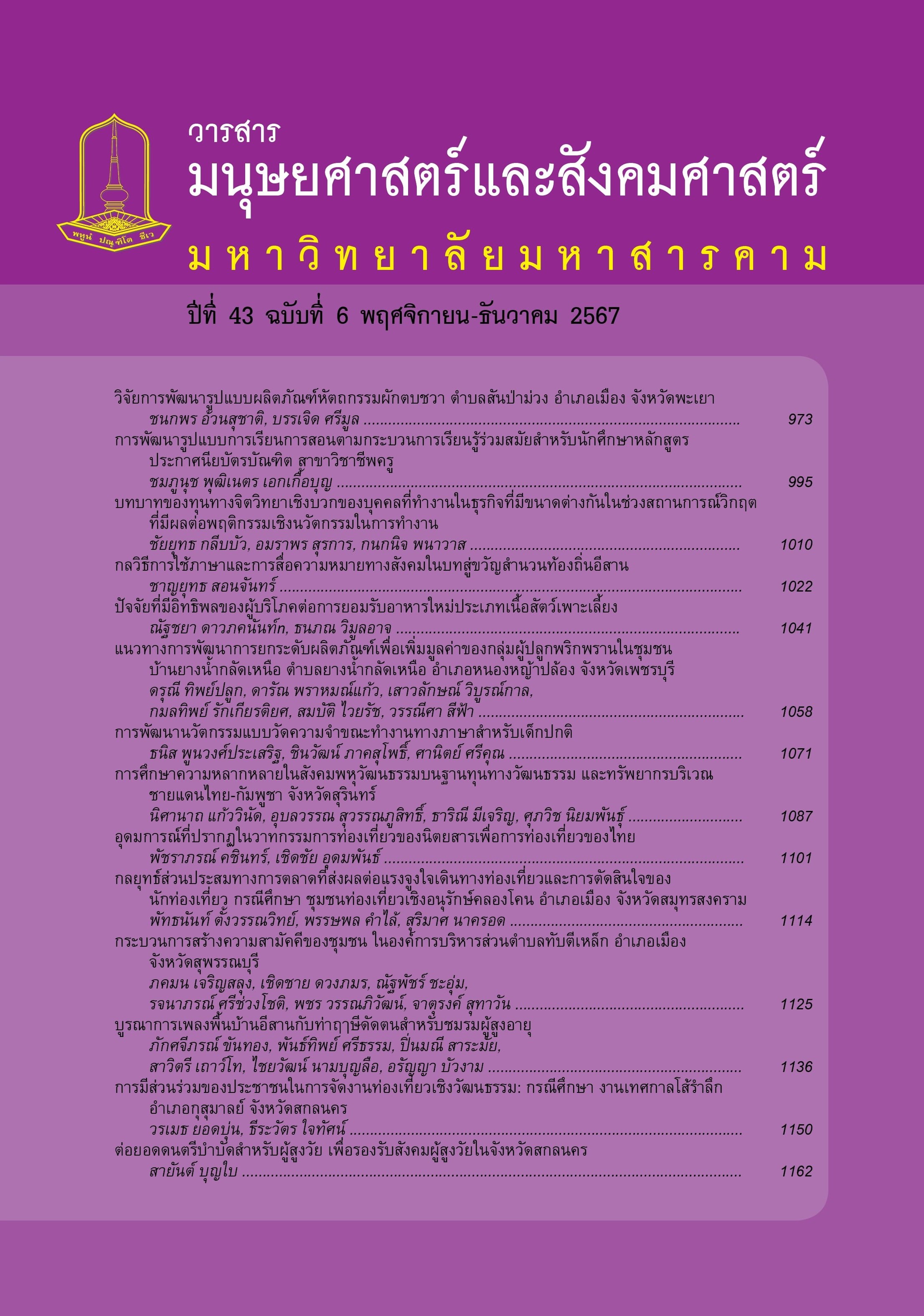
การมีส่วนร่วมของประชาชนในการจัดงานท่องเที่ยวเชิงวัฒนธรรม : กรณีศึกษา งานเทศกาลโส้รำลึก อำเภอกุสุมาลย์ จังหวัดสกลนคร
Article Sidebar
Main Article Content
บทคัดย่อ
การวิจัยครั้งนี้มีวัตถุประสงค์ 1) เพื่อศึกษาการมีส่วนร่วมของประชาชนในการจัดงานเทศกาลโส้รำลึก อำเภอกุสุมาลย์ จังหวัดสกลนคร 2) เพื่อศึกษาปัญหาและอุปสรรคต่อการมีส่วนร่วมของประชาชนในการจัดงานเทศกาลโส้รำลึก อำเภอกุสุมาลย์ จังหวัดสกลนคร และ 3) เพื่อให้แนวทางและข้อเสนอแนะต่อการมีส่วนร่วมในการจัดงานท่องเที่ยวเชิงวัฒนธรรมครั้งต่อไป โดยใช้ระเบียบวิธีวิจัยเชิงคุณภาพซึ่งมีเทคนิควิจัยที่สำคัญ ได้แก่ การสังเกต และการสัมภาษณ์เชิงลึกผู้ให้ข้อมูลสำคัญ จำนวน 25 คน
ผลการศึกษาพบว่า การมีส่วนร่วมของประชาชนในการจัดงานเทศกาลโส้รำลึก โดยภาครัฐและประชาชนเข้ามามีส่วนร่วมทั้ง 4 ด้าน ได้แก่ 1) ด้านการมีส่วนร่วมในการค้นหาปัญหาและสาเหตุของปัญหา โดยจะเห็นได้จากที่ภาครัฐและภาคประชาชนได้มีการจัดประชุม เพื่อรับฟังปัญหาจากทุกภาคส่วน 2) ด้านการมีส่วนร่วมในการวางแผนดำเนินกิจกรรม โดยจะเห็นได้จากการจัดประชุมวางแผนเพื่อจัดตั้งคณะกรรมการดำเนินงานจัดงานเทศกาลโส้รำลึกของแต่ละฝ่าย 3) ด้านการลงทุนและปฏิบัติงาน โดยจะเห็นได้จากแต่ละหน่วยงานมีการจัดตั้งงบประมาณ เพื่อใช้ในการจัดงานเทศกาลโส้รำลึก ภาครัฐและภาคเอกชนเข้ามามีส่วนร่วมในการแต่งกายด้วยชุดพื้นเมืองชาวไทโส้ การรำบวงสรวงพระอรัญอาสา การเดินขบวนวิถีชีวิตชนเผ่าไทโส้ และ 4) ด้านการติดตามและประเมินผลงาน โดยจะเห็นได้จาก หน่วยงานภาครัฐที่มีการจัดทำแบบประเมินความพึงพอใจในการจัดงานเทศกาลโส้รำลึกจากประชาชนที่มาร่วมงาน
ปัญหาและอุปสรรคต่อการมีส่วนร่วมของประชาชนในการจัดงานเทศกาลโส้รำลึก เช่น งบประมาณไม่เพียงพอ การติดต่อประสานงานไม่มีประสิทธิภาพ การประชาสัมพันธ์ไม่ทั่วถึง กิจกรรมภายในงานมีแต่กิจกรรมเดิม ๆ การไม่ให้ความสำคัญกับผู้มาแสดงพิธีกรรมภายในงาน และข้อเสนอแนะแนวทางในการจัดงานท่องเที่ยวเชิงวัฒนธรรมครั้งต่อไป ได้แก่ 1) ทางคณะกรรมการควรวางแผนการเบิกจ่ายงบประมาณค่าใช้จ่ายในการจัดงาน 2) การแก้ไขปัญหาในการติดต่อประสานงานที่ไม่เป็นระบบ โดยกำหนดหน้าที่และระเบียบ มีการจัดประชุมเป็นประจำ 3) นำเทคโนโลยีเข้ามาช่วยในการส่งเสริมกิจกรรม โดยการไลฟ์สด 4) ควรเพิ่มกิจกรรมใหม่ ๆ ภายในงาน เช่น การประกวดแข่งขันขบวนสวยงาม โดยมีถ้วยรางวัลพร้อมเงินรางวัล เพื่อดึงดูดให้มีผู้คนเข้ามาร่วมงานมากขึ้น 5) เพื่อให้การประชาสัมพันธ์ในการจัดงานเทศกาลมีประสิทธิภาพมากขึ้น ควรพัฒนาเนื้อหาที่น่าสนใจบนเพจ เช่น วิดีโอสร้างสรรค์ รูปภาพที่น่าสนใจ และข้อมูลที่ชัดเจนในการจัดงานเทศกาลโส้รำลึก
Article Details
เอกสารอ้างอิง
กิตติศักดิ์ อุตส่าห์การ, รวิภา ธรรมโชติ. (2566). การมีส่วนร่วมของชุมชนในการอนุรักษ์ฟื้นฟูพื้นที่ป่าชายเลน
ในกรุงเทพมหานคร. วารสารนวัตกรรมและการจัดการ, 8(1), 94-105.
โกวิทย์ พวงงาม. (2545). การปกครองท้องถิ่นไทย หลักการและมิติใหม่ในอนาคต. สำนักพิมพ์วิญญูชน.
คณะกรรมการบริหารงานอำเภอแบบบูรณาการ. (2566). แผนพัฒนาอำเภอกุสุมาลย์ 5 ปี พ.ศ. 2566 – 2570.
อำเภอกุสุมาลย์ จังหวัดสกลนคร.
ชัยชนะ สีละมุน, สุรวุฒิ สายบุตร และ สุเทพ ความรัมย์. (2566). การมีส่วนร่วมของประชาชนในการ
พัฒนาการท่องเที่ยวเชิงวัฒนธรรมของชุมชนบ้านร่อนทอง ตำบลร่อนทอง อำเภอสตึก จังหวัดบุรีรัมย์. วารสารราชภัฏสุรินทร์วิชาการ, 2(1), 19-30.
สุภางค์ จันทวานิช. (2553). วิธีการวิจัยเชิงคุณภาพ (พิมพ์ครั้งที่ 18). สำนักพิมพ์แห่งจุฬาลงกรณ์
มหาวิทยาลัย.
สุรจิตร ยนต์ตระกูล, สมชาย ลำดวน และ ศาสตรา เหล่าอรรคะ. (2558). รูปแบบการจัดงานบุญประเพณีโดย
การมีส่วนร่วมของชุมชนเพื่อส่งเสริมการท่องเที่ยวทางวัฒนธรรม. วารสารวิชาการและวิจัยสังคมศาสตร์. 10(29), 31-38.
TAT REVIEW MAGAZINE. (2561). การท่องเที่ยวหรืออุตสาหกรรมท่องเที่ยวเป็นเรื่องใกล้ตัวกว่าที่คิด.
https://tatreviewmagazine.com/article/community-based-tourism/
ผู้ให้สัมภาษณ์ (รหัสผู้ให้ข้อมูลสำคัญ)
GS01. (2567). นายกองค์การบริหารส่วนจังหวัด. สัมภาษณ์, 16 กุมภาพันธ์ 2567.
GS02. (2567). นายอำเภอแห่งหนึ่ง. สัมภาษณ์, 19 กุมภาพันธ์ 2567.
GS04. (2567). ประธานสภาวัฒนธรรมอำเภอแห่งหนึ่ง. สัมภาษณ์, 19 กุมภาพันธ์ 2567.
GS06. (2567). นายกองค์การบริหารส่วนแห่งหนึ่ง. สัมภาษณ์, 19 กุมภาพันธ์ 2567.
GS10. (2567). ผู้อำนวยกองการศึกษาแห่งหนึ่ง. สัมภาษณ์, 16 กุมภาพันธ์ 2567.
GS12. (2567). ผู้อำนวยกองการศึกษาแห่งหนึ่ง. สัมภาษณ์, 20 กุมภาพันธ์ 2567.
GS16. (2567). ผู้อำนวยกองการศึกษาแห่งหนึ่ง. สัมภาษณ์, 9 กุมภาพันธ์ 2567.
GP02. (2567). ประชาชนในพื้นที่. สัมภาษณ์, 9 กุมภาพันธ์ 2567.
GP05. (2567). ประชาชนในพื้นที่. สัมภาษณ์, 20 กุมภาพันธ์ 2567.
GP06. (2567). ประชาชนในพื้นที่. สัมภาษณ์, 16 กุมภาพันธ์ 2567.
