
TEXTILE PRODUCT DEVELOPMENT THROUGH NATURAL DYEING, CLEAN TECHNOLOGY, AND LOCAL WISDOM USING PARTICIPATORY ACTION RESEARCH: A CASE STUDY OF BAN DONG HAT NAK WOMEN’S SEWING GROUP, CHIANG MAI PROVINCE
Article Sidebar
Main Article Content
Abstract
This research aimed to develop textiles and textile products through the application of science and technology and to transfer knowledge to the community in the areas of natural dyeing and textile surface design based on local materials and indigenous wisdom. The study employed a Participatory Action Research (PAR) approach in collaboration with the Ban Dong Hat Nak Women’s Sewing Development Group in Sop Tia Subdistrict, Chom Thong District, Chiang Mai Province, Thailand. Established in 2002, the group consists of 29 members. The research was conducted in two phases: the Exploratory Phase and the Development Phase. Data were collected through market observations of textile and apparel products across both online and offline channels, as well as in-depth interviews with community representatives. The data were analyzed using thematic analysis.
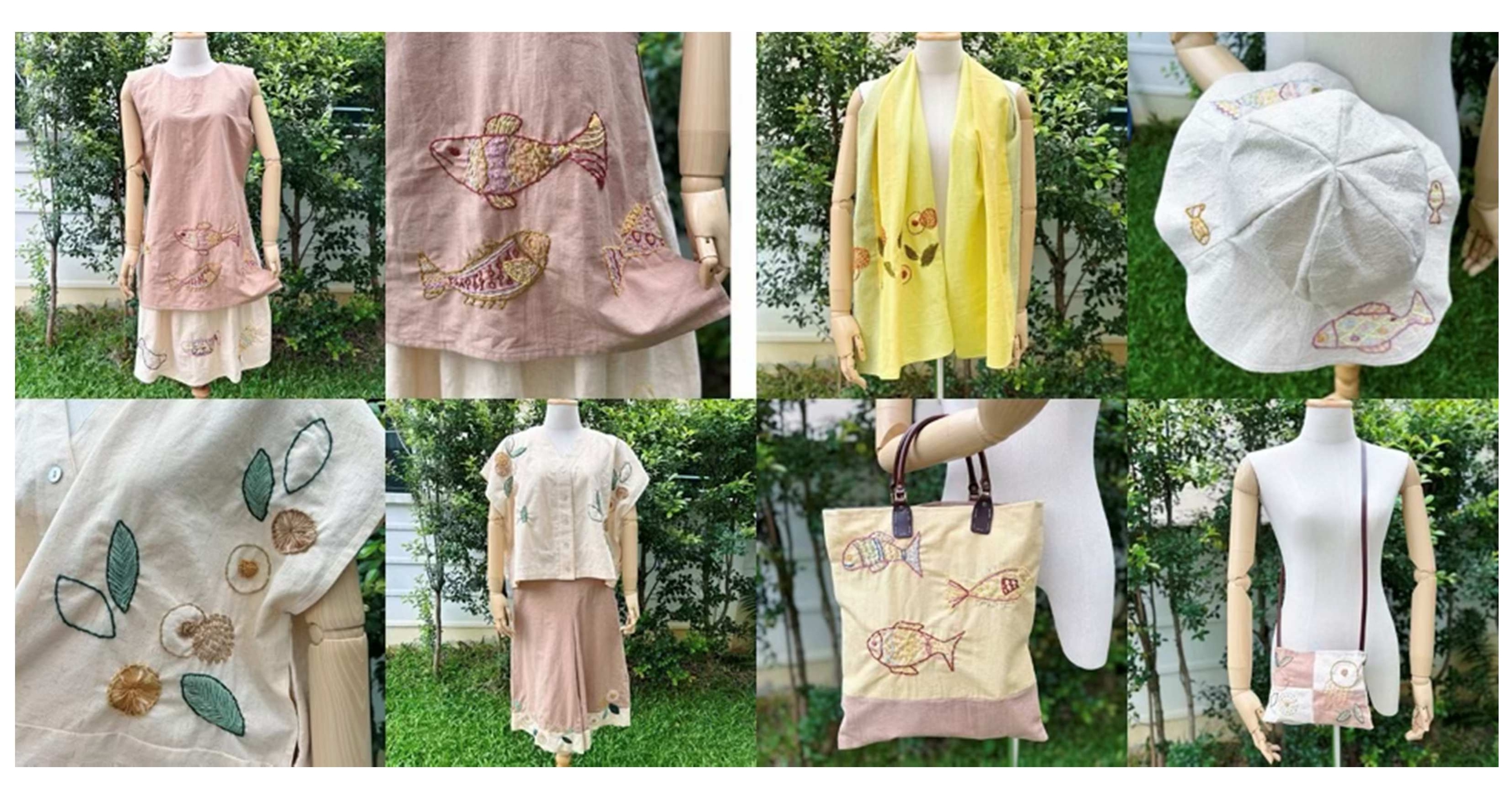
The findings revealed that the community possessed strong expertise in textile production and embroidery-based surface decoration. However, limitations were identified in raw material sourcing and product identity. Market analysis indicated that successful products often combined local identity with contemporary design. These findings led to the development of textile product prototypes using locally available natural materials and the transfer of knowledge to community members. In addition, a clean technology system for natural dyeing, including water circulation and wastewater treatment systems, was developed to promote sustainable production. The study demonstrates that integrating science and technology with local wisdom through community participation can enhance product quality, strengthen product identity, and support sustainable community development.
Downloads
Article Details
References
คลินิกเทคโนโลยี. (2565). การย้อมสีธรรมชาติ. มหาวิทยาลัยเทคโนโลยีราชมงคลล้านนา.
จันทร์เพ็ญ อินทรประเสริฐ. (2555). พันธุ์ไม้และสีย้อมธรรมชาติ (Plants and Natural Dyes). คณะวิทยาศาสตร์ มหาวิทยาลัยอุบลราชธานี.
เชียงใหม่นิวส์. (2566). 2 ทศวรรษ OTOP ยกระดับสินค้าชุมชนเชียงใหม่ ทะลุหมื่นล้าน. สืบค้นเมื่อวันที่ 18 มิถุนายน 2569 จาก https://www.chiangmainews.co.th/news/3042504/
ไทยรัฐออนไลน์. (2566, 4 ตุลาคม). OTOP Midyear 2023 ยอดจำหน่าย 9 วัน ทะลุ 447 ล้าน ผ้าและเครื่องแต่งกายขายดีสุด. ไทยรัฐออนไลน์, https://www.thairath.co.th/news/politic/2730233
นวลแข ปาลิวนิช. (2542). ความรู้เรื่องผ้าและเส้นใยฉบับปรับปรุงใหม่. ซีเอ็ดยูเคชั่น.
บุษราภรณ์ มหัทธนชัย, ชนินทร์ มหัทธนชัย, เสรี ปานซาง, กาญจนา ทองบุญนาค, จิตราภรณ์ ธาราพิทักษ์วงศ์ และทิวาวัลย์ ต๊ะการ. (2563). โครงการวิจัยเรื่อง การพัฒนาระบบฐานข้อมูลในการใช้ประโยชน์จากพืชท้องถิ่นเพื่อการย้อมสีธรรมชาติ ภายใต้โครงการอนุรักษ์พันธุกรรมพืชอันเนื่องมาจากพระราชดาริโครงการวิจัยนี้ได้รับทุนสนับสนุนจากมหาวิทยาลัยราชภัฏเชียงใหม่ และการสนับสนุนจากโครงการอนุรักษ์พันธุกรรมพืชอันเนื่องมาจากพระราชดำริ สมเด็จพระเทพรัตนราชสุดาฯสยามบรมราชกุมารี. โครงการอนุรักษ์พันธุกรรมพืชอันเนื่องมาจากพระราชดำริ สมเด็จพระเทพรัตนราชสุดาฯ สยามบรมราชกุมารี (อพ.สธ.)
ประภากร สุคนธมณี. (2562). สีสันจากในสวน. สาขาวิชาศิลปะสิ่งทอ ภาควิชาประยุกต์ศิลปศึกษา คณะมัณฑนศิลป์ มหาวิทยาลัยศิลปากร.
มหาวิทยาลัยเทคโนโลยีราชมงคลล้านนา เชียงราย. (2564). โครงการวิจัยเรื่อง เชื่อมคน เชื่อมคราฟท์ ด้วยงานปัก. มหาวิทยาลัยเทคโนโลยีราชมงคลล้านนา เชียงราย.
วินัย อุดมทรัพย์. (2555). การใช้สีธรรมชาติของพืชย้อมผ้า. Asian Creative Architecture, Art and Design, 2(1), 73 – 82.
สายสวาท กุลวัฒนาพร. (2546). การย้อมฝ้ายด้วยสีธรรมชาติ. วิทยาศาสตร์และเทคโนโลยี, 18(3), 97 - 101.
สำนักส่งเสริมการมีส่วนร่วมของประชาชน กรมส่งเสริมคุณภาพสิ่งแวดล้อม. (2557). คู่มือส่งเสริมการผลิตที่เป็นมิตรต่อสิ่งแวดล้อม ประเภทสิ่งทอขนาดเล็ก. กรมส่งเสริมคุณภาพสิ่งแวดล้อม.
อปท.นิวส์. (2566). OTOP ปี 65 ยอดขาย 2.4 แสนล้านบาท พช.ลุยต่อสร้างมูลค่าเพิ่ม/ส่งเสริมการตลาด. สืบค้นเมื่อวันที่ 8 พฤษภาคม 2569 จาก https://www.opt-news.com/public/upload/magazine/magazine47766b9c3e09f7160e987ebbb025b7f1pdf.pdf
อภิชาติ สนธิสมบัติ. (2545). กระบวนการทางเคมีสิ่งทอ. ซีเอ็ดยูเคชั่น.
Aaker. D. A. & Joachimsthaler. E. (2000). Brand Leadership. Simon & Schuster Ltd.
