
APPLICATION DEVELOPMENT TO PROMOTE 21st CENTURY SKILLS UNDER NEW NORMAL SITUATION FOR EARLY CHILHOOD
Article Sidebar
Main Article Content
Abstract
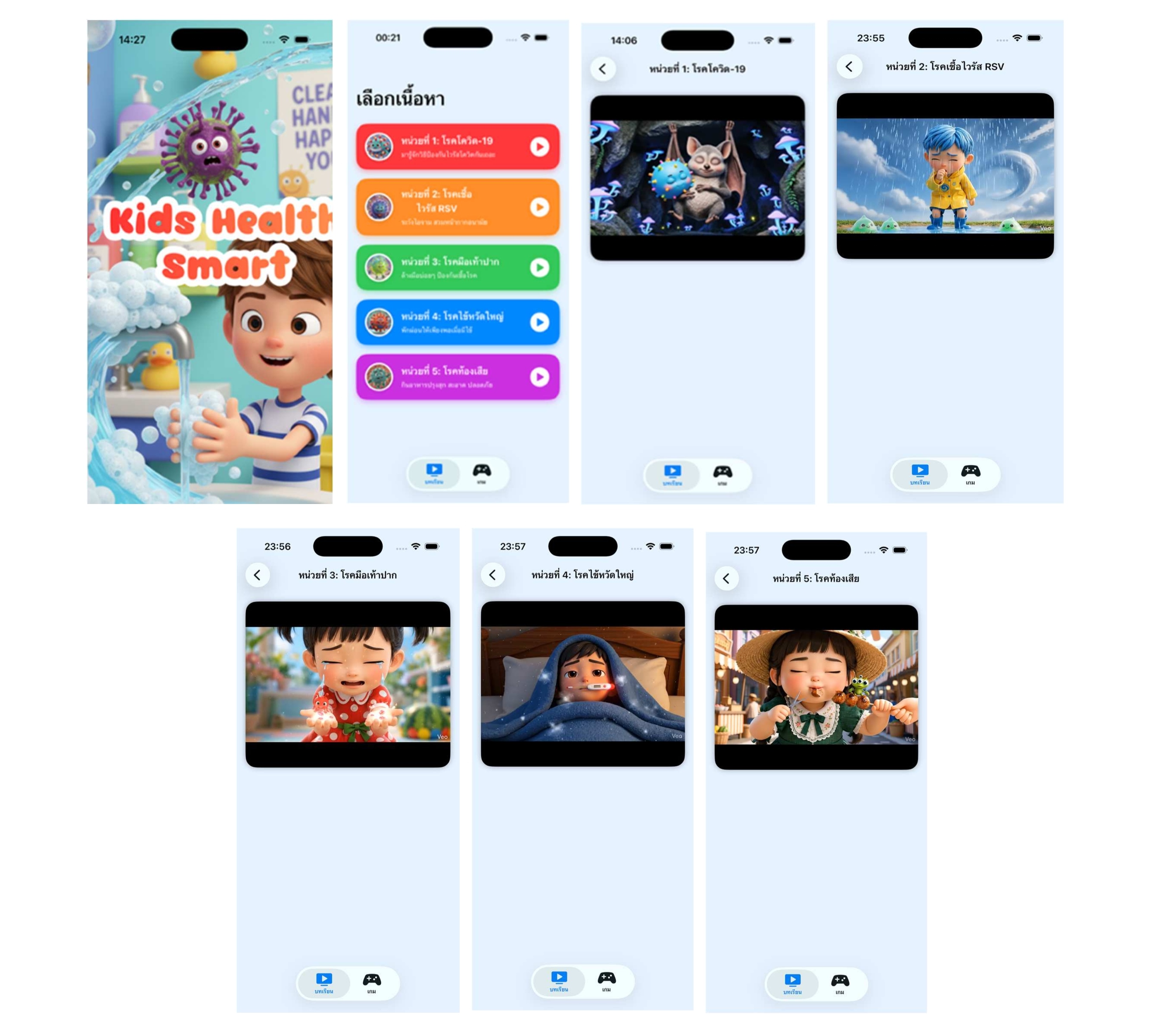
This research aimed to 1) develop an innovative application to promote 21st-century skills under the new normal situation for early childhood children and 2) examine the effects of implementing the innovative application to promote 21st-century skills under the new normal situation for early childhood children. The research methodology was conducted in two phases. Phase 1 involved the development of the innovative application for promoting 21st-century skills under the new normal situation for early childhood children. The key informants consisted of five experts with specialized knowledge and experience in digital media and technology, early childhood education, and curriculum and instruction. They were selected through purposive sampling. The research instrument was an application efficiency evaluation form. The data were analyzed using the mean and standard deviation. Phase 2 examined the effectiveness the innovative application to promote 21st-century skills under the new normal situation for early childhood children. The population consisted of 38 early childhood children aged 5–6 years who were enrolled in Kindergarten Level 3 during the first semester of the 2024 academic year at Porncharoen Kindergarten School, Phoncharoen District, Bueng Kan Province, under the Bueng Kan Primary Educational Service Area Office. The research instruments consisted of a knowledge test and a 21st-century skills assessment. The collected data were analyzes using percentage, mean, and standard deviation. The research findings revealed that: 1) the developed innovative application to promote 21st-century skills under the new normal situation for early childhood children consisted of five learning units. The overall evaluation of the application was at the highest level (=4.64, S.D.=0.10), indicating that for the application was appropriate for practical implementation. And 2) the results of implementing the innovative application showed that early childhood children’s knowledge of the new normal situation was 73.03% (
2=14.61,
2=2.91), which was higher than before implementing the application at 40.00% (
1=8.00,
1=2.70). Additionally, their 21st-century skills after implementing the application
2=4.07,
2=0.42 were higher than before implementing the application
1=2.23,
1=0.38.
Downloads
Article Details
References
กระทรวงศึกษาธิการและองค์การยูนิเซฟ. (2563). แนวทางปฏิบัติสำหรับสถานศึกษาเพื่อป้องกันและควบคุมการแพร่ระบาดของโรคโควิด-19 (COVID-19). องค์การยูนิเซฟ ประเทศไทย.
บุญชม ศรีสะอาด. (2556). การวิจัยเบื้องต้น. พิมพ์ครั้งที่ 9. สุวีริยาสาส์น.
ปริญญา ไทยลา, อังคณา อ่อนธานี และจักรกฤษณ์ จันทะคุณ. (2565). เด็กปฐมวัยกับการส่งเสริมการเรียนรู้แบบใหม่ในวิถี New Normal. วารสารวิชาการคณะมนุษยศาสตร์และสังคมศาสตร์ มหาวิทยาลัยราชภัฏเทพสตรี. 13(1), 187 - 201.
ไพศาล วรคำ. (2561). การวิจัยทางการศึกษา. พิมพ์ครั้งที่ 9. ตักสิลาการพิมพ์.
พรทิพย์ วิไลวรรณ และกิตติศักดิ์ สิงห์สูงเนิน. (2564). การพัฒนาเกมพลิกป้ายจับคู่สำหรับเด็กปฐมวัยด้วยแอปอินเวนเตอร์. วารสารวิจัยและนวัตกรรมวิทยาศาสตร์และเทคโนโลยี. 2(1), 27 - 37.
ศาสดา สรรค์สิกขากุล, ชนิดา แสนคำ, ชาญวิทย์ ตั้งสิริวรกุล และสุพจน์ จันทร์วิพัฒน์. (2566). การพัฒนาแอปพลิเคชันเกมมือถือสำหรับเด็กปฐมวัยเพื่อส่งเสริมทักษะทางด้านการฟัง และออกเสียงคำศัพท์ภาษาอังกฤษ. วารสารพัฒนาเทคนิคศึกษา, 36(128), 17 – 28.
ศุภางค์จิต กัลยาแก้ว, เอกศักดิ์ เฮงสุโข, ฉัตรชนก เฮงสุโข และมรุต กัลยาแก้ว. (2568). สภาพปัจจุบัน สภาพที่พึงประสงค์ และประเมินความต้องการจำเป็นของการจัดการศึกษาในสถานการณ์ชีวิตวิถีใหม่สำหรับเด็กปฐมวัย. วารสารสังคมศาสตร์และวัฒนธรรม. 9(9), 197 - 207.
Battelle for Kids. (2019). Partnership for 21st Century Learning (P21): 21st Century Learning for Early Childhood Framework. Retrieved January 10, 2022 from https://static.battelleforkids.org/documents/p21/P21EarlyChildhoodFramework.pdf
Dong, C., Cao, S. & Li, H. (2020). Young Children’s Online Learning during COVID-19 Pandemic: Chinese Parents’ Beliefs and Attitudes. Children and Youth Services Review, 118, 105440. doi: http://doi.org/10.1016/j.childyouth.2020.105440
Qaiser, Z. (2019). Early Childhood Education and Care and the Use of Digital Media in Informal Environments. Berkeley Review of Education, 9(2). doi: https://doi.org/10.5070/B89242103
Hirsh-Pasek, K., Zosh, J. M., Golinkoff, R. M., Gray, J. H., Robb, M. B. & Kaufman, J. (2015). Putting Education in Educational Apps: Lessons from the Science of Learning. Psychological Science in the Public Interest, 16(1), 3 - 34. doi: http://doi.org/10.1177/1529100615569721
Koopman, C. (2019). How We Become Our Data: A Genealogy of the Informational Person. University of Chicago Press.
Likert, R. (1932). A Technique for The Measurement of Attitudes. Archives of Psychology, 22(140), 1 – 55.
Marsh, J., Plowman, L., Yamada-Rice, D. & Bishob, J. (2015). Exploring Play and Creativity in Pre-schoolers Use of Apps. Report for Early Years Practitioners. Technology and Play Project. Retrieved January 10, 2022 from https://www.researchgate.net/publication/282701607_Exploring_Play_and_Creativity_in_Pre-Schoolers'_Use_of_Apps_Report_for_Early_Years_Practitioners
Neumann, M. M. (2018). Using Tablets and Apps to Enhance Emergent Literacy Skills in Young Children. Early Childhood Research Quarterly, 42, 239 – 246. doi: https://doi.org/10.1016/j.ecresq.2017.10.006
Papadakis, S. (2020). Apps to Promote Computational Thinking Concepts and Coding Skills in Children of Preschool and Pre-primary School Age. Mobile Learning Applications in Early Childhood Education, 101 – 121. doi: https://doi.org/10.4018/978-1-7998-1486-3.ch006
Papert, S. (1991). Situating Constructionism in I. Harel & S. Papert (eds.). Constructionism (1–11). Ablex Publishing.
UNESCO. (2021). Education in a Post-COVID World: Nine Ideas for Public Action. Retrieved January 10, 2022 from https://unesdoc.unesco.org/ark:/48223/pf0000373717
Ussainova, G., Seitmuratov, A., Issayeva, G., Shamsudinova, G. & Zhanseitova, L. (2025). Redesigning Instructional Design with an AI-incorporated ADDIE Model for 21st Century Education. Journal of Curriculum Studies Research, 7(2), 498 – 521. doi: https://doi.org/10.46303/jcsr.2025.31
