DESIGN AND DEVELOPMENT OF MASCOTS TO ENHANCE IDENTITY BY STUDYING THE CORPORATE IDENTITY AND EXPERIMENTING WITH THE USE OF STEEL MATERIALS FOR ENVIRONMENTAL SUSTAINABILITY AT KING MONGKUT’S UNIVERSITY OF TECHNOLOGY THONBURI BANG KHUN THIAN CAMPUS
Article Sidebar
Main Article Content
Abstract
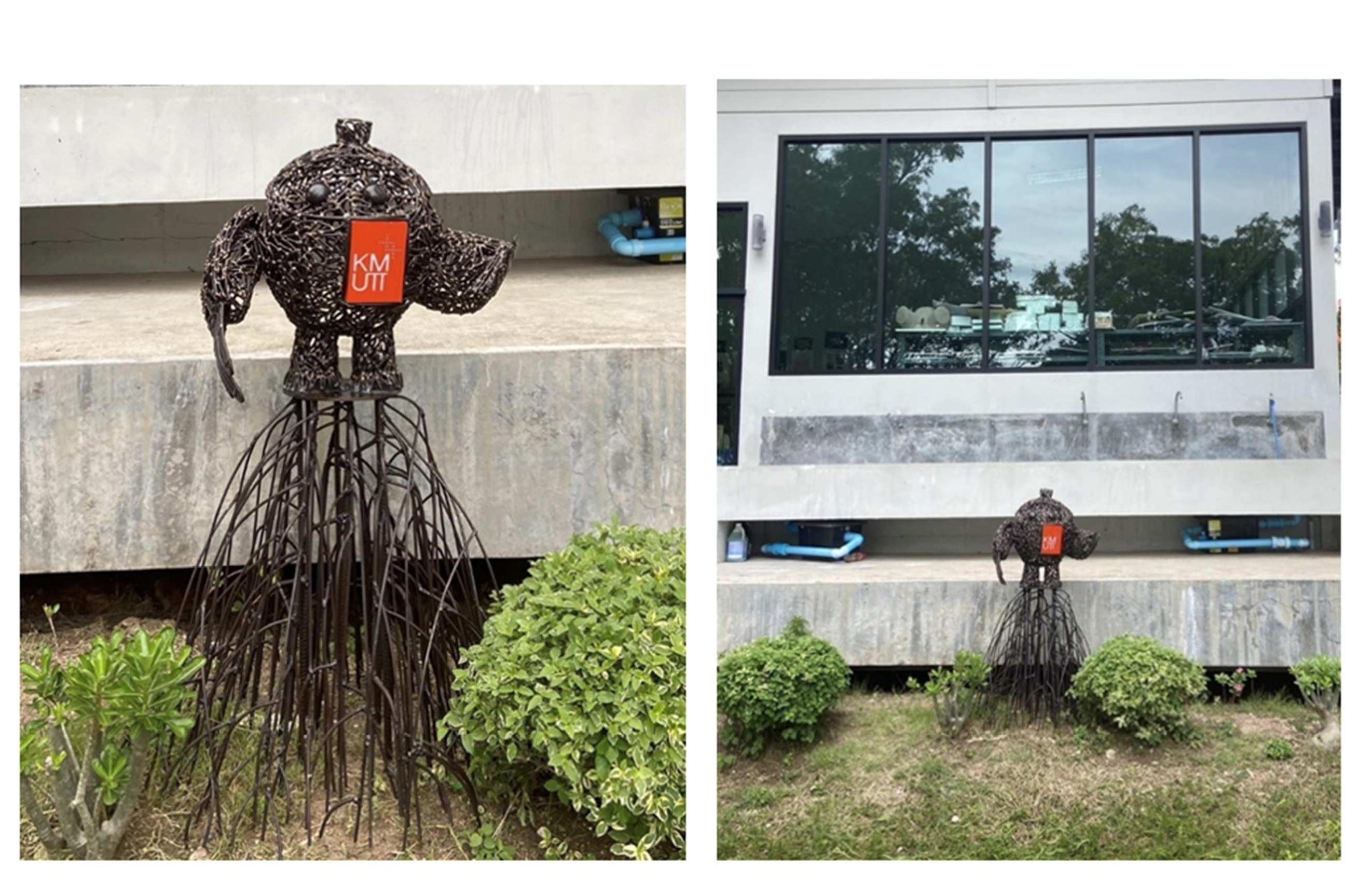
This study aimed to design and develop a mascot that embodies the corporate identity of King Mongkut’s University of Technology Thonburi (KMUTT), Bang Khun Thian Campus, with an emphasis on material durability and sustainability. The research also evaluated the perception and satisfaction of the target audience regarding the developed mascot. The researcher has adopted the idea of designing a mascot to enhance recognition and reflect the organization's unique personality: the character O-RO (Orange Robot), which represents education in science and technology combined with structural lines of mangrove tree roots, and the campus's unique spatial layout, are closely linked to the mangrove ecosystem. The design process then focused on abstracting the physical characteristics of the mangrove prop roots, particularly their distinctive radiating configuration and structural in supporting the tree trunk. These lines were reduced and reorganized in accordance with the principles of visual art to create an artistic structure characterized by abstract beauty while retaining the essence of nature. The transformation of the graceful shape from tree roots into a strong steel-bar structure reflects the combination of “nature” and “technology”, which constitutes the main identity of KMUTT Bang Khun Thian Campus. The sample comprised 80 stakeholders from the Bang Khun Thian Campus. The research instruments included a visual arts creative process and a questionnaire assessing participants’ perceptions. The design process began with an analysis of the campus’s spatial identity, using the “Mangrove Root”—a symbol of coastal ecosystem resilience and stability—as the primary source of inspiration to translate organic forms into artistic lines. To address the durability concerns associated with traditional mascot materials such as resin or foam, the study utilized "2-khun steel rods" (approximately 6 mm), selected for their ductility, durability, and ability to be shaped into complex, root-like structures. The resulting mascot, a robot named "O-RO" (Orange Robot), was fabricated using electric arc welding with stainless steel electrodes. The base was designed to reflect ecological connectivity by integrating CNC plasma-cut steel plates and LED lighting systems to enhance visual prominence. The results indicated that the "O-RO" mascot effectively represents the identity of KMUTT Bang Khun Thian Campus. The evaluation results indicated that participants expressed high levels of satisfaction with 85–95% selecting either “Strongly Agree” or “Agree” across all evaluation criteria. The highest rating were given to clarity of corporate identity, the suitability of the steel material in conveying both strength and flexibility, and the quality of craftsmanship. However, participants suggested adjusting the LED light intensity to achieve greater visual harmony with the overall sculpture. In summary, the use of steel rods in mascot creation not only ensures environmental durability but also serves as an innovative medium for communicating the concept of sustainability and enhancing corporate’s creative image.
Downloads
Article Details
References
คะเนย์ วรรณโท. (2554). คู่มือการเชื่อมโลหะ 2. สถาบันพัฒนาอุตสาหกรรมเครื่องจักรกลและโลหะการ กรมส่งเสริมอุตสาหกรรม กระทรวงอุตสาหกรรม.
จุฑามาศ ศรีรัตนา. (2561). เศรษฐกิจสร้างสรรค์กับไทยแลนด์ 4.0. วารสารเกษมบัณฑิต, 19(ฉบับพิเศษ), 59 – 68.
ปรียนันท์ ประยูรศักดิ์, ศุภวรรณ อภิชาตไตรสรณ์, กฤษณพร ประสิทธิ์วิเศษ, วิภาวี วลีพิทักษ์เดช และสุทิตา จุลกนิษฐ์. (2566). การสื่อสารการตลาดของมาสคอตน้องเหน่อเพื่อส่งเสริมแบรนด์ จังหวัดสุพรรณบุรี. วารสารสังคมศาสตร์และวัฒนธรรม, 7(5), 391 - 404.
มหาวิทยาลัยเทคโนโลยีพระจอมเกล้าธนบุรี. (2565). คู่มืออัตลักษณ์องค์กร มหาวิทยาลัยเทคโนโลยี พระจอมเกล้าธนบุรี. สืบค้นเมื่อวันที่ 31 มกราคม 2566 จาก https://www.kmutt.ac.th/wp-content/uploads/pdf/CI_KMUTT-2022.pdf
วิจิตร พงษ์บัณฑิต. (2542). การหลอมละลาย และการปรับปรุงทางโลหะวิทยาของอะลูมิเนียมผสมกลุ่ม Al-Si-Cu-mg alloys LM25. เทคโนโลยีการหล่อโลหะ ศูนย์เทคโนโลยีโลหะและวัสดุแห่งชาติ.
วิธิตาแอนิเมชั่น. (2564). มาสคอตคืออะไร? ช่วยส่งเสริมภาพลักษณ์ของธุรกิจได้อย่างไร?. สืบค้นเมื่อวันที่ 30 มกราคม 2565 จาก https://vithita.com/mascot/
สถาบันพัฒนาวิสาหกิจขนาดกลางและขนาดย่อม. (2555). อัตลักษณ์ไทย ทุนความคิด ทุนสร้างสรรค์: ผลการสำรวจศึกษาและสังเคราะห์อัตลักษณ์ไทย 4 ภูมิภาค. มหาวิทยาลัยธรรมศาสตร์.
