
Sufficiency Economy Philosophy: A Way towards Business Sustainability
Article Sidebar
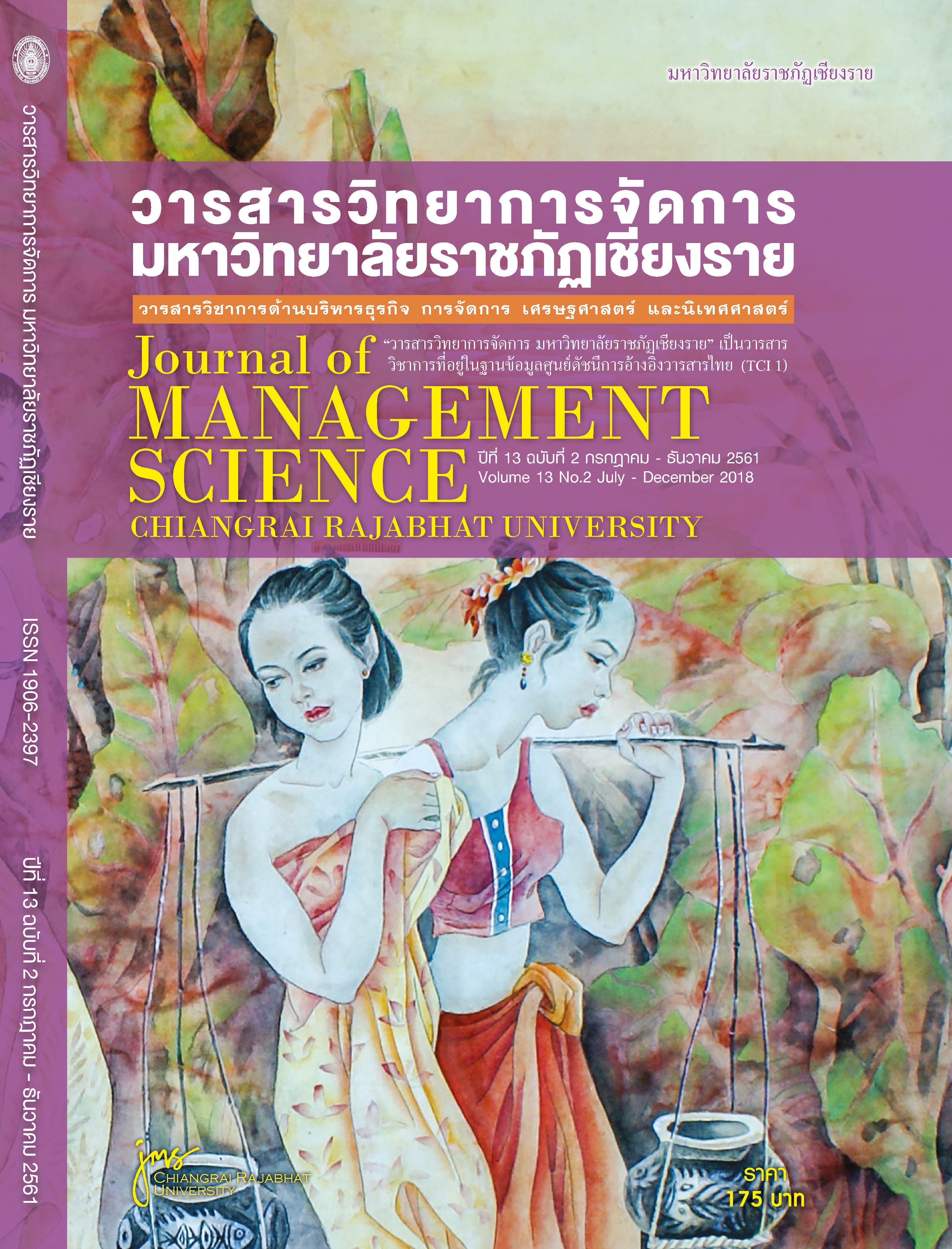
เผยแพร่แล้ว:
ม.ค. 14, 2019
Main Article Content
บทคัดย่อ
-
Article Details
รูปแบบการอ้างอิง
จีนะบุญเรือง ศ. (2019). Sufficiency Economy Philosophy: A Way towards Business Sustainability. วารสารวิทยาการจัดการ มหาวิทยาลัยราชภัฏเชียงราย, 13(2), 1–13. สืบค้น จาก https://so03.tci-thaijo.org/index.php/jmscrru/article/view/122701
ประเภทบทความ
บทความวิชาการ
ทัศนะและข้อคิดเห็นของบทความที่ปรากฏในวารสารฉบับนี้เป็นของผู้เขียนแต่ละท่าน ไม่ถือว่าเป็นทัศนะและความรับผิดชอบของกองบรรณาธิการ
เอกสารอ้างอิง
Avery, G. (2005). Leadership for sustainable futures: Achieving success in a competitive world. Edward Elgar Publishing.
Buranapin, S., & Ratthawatankul, T. (2015). PHILOSOPHY OF SUFFICIENCY ECONOMY AND BUSINESS SUSTAINABILITY: A FRAMEWORK FOR OPERATIONAL IMPLICATIONS. Journal of Business and Behavioral Sciences, 27(1), 115-141.
Elkington, J. (1994). Towards the sustainable corporation: Win-win-win business strategies for sustainable development. California management review, 36(2), 90-100.
Kantabutra, S. (2005). Applying Sufficiency Economy Philosophy in business organizations: A case of Sa Paper Preservation House. (Unpublished manuscript) Bangkok: Sufficiency Economy Unit, Office of National Economic and Social Development Board, Thailand.
Kantabutra, S. (2006). Relating vision-based leadership to sustainable business performance: A Thai perspective. Kravis Leadership Institute Leadership Review, 6 (Spring): 37-53.
Kantabutra, S. & Gayle C. Avery, (2011) "Sustainable leadership at Siam Cement Group", Journal of Business Strategy, Vol. 32 Issue: 4, pp.32-41.
Kusumavalee, S. (2005). Applying Sufficiency Economy Philosophy in business organizations: A case of Siam Cement Group. (Unpublished manuscript) Bangkok: Sufficiency Economy Unit, Office of National Economic and Social Development Board, Thailand.
Mongsawad, P. & Thongpakde, N. (2016). Sufficiency Economy Philosophy: A holistic approach to economic development and mainstream economic thought. Asian Social Review, 12(7), 134-142.
National Economic and Social Development Board (NESDB). (2004). What is Sufficiency Economy?
Nuttavuthisit, K. (2005). Applying Sufficiency Economy Philosophy in business organizations: A case of Pranda Jewelry. (Unpublished manuscript) Bangkok: Sufficiency Economy Unit, Office of National Economic and Social Development Board, Thailand.
Office of the Royal Development Project Board. (2017). 47 Sufficiency economy learning center. Retrieved 16 October, 2017, from http://www.rdpb.go.th/Knowleged Center
Piboolsravut, P. (2004). Sufficiency economy. ASEAN Economic Bulletin, 21(1), 127- 134.
Pope, J., Annandale, D., & Morrison-Saunders, A. (2004). Conceptualising sustainability assessment. Environmental impact assessment review, 24(6), 595-616.
Puntasen, A., Premchuen, S. & Keitdejpunya, P. (2003). Application of the royal thought about the Sufficiency Economy in SMEs. Bangkok: Thailand Research Fund.
Roger,P.P., Jalal, K.F., & Boyd, J.A. (2008). Sustainable development indicators. An introduction to sustainable development. London, UK: Earthscan.
Suwanraks, R. (2000). Summary of discussion: The 1999 TDRI Year-end conference. TDRI Quarterly Review, 15(1): 6-17.
Thongpakde, N. (2005). Thailand’s Economic Development and the Philosophy of Sufficiency Economy. Unpublished.
Willard, B. (2012). The new sustainability advantage: seven business case benefits of a triple bottom line. New Society Publishers.
Wilson, M. (2003). Corporate sustainability: What is it and where does it come from? Ivey Business Journal Online, March.
Wibulswasdi, C., Piboolsravut, P., & Pootrakool., K. (2012). Sufficiency economy philosophy and development. Bangkok: Project to support the “Sufficiency Economy” Drive in Educational Institutions and to Young People. The Crown Property Bureau.
United Nations Development Programme (UNDP). (2007). Thailand human development report 2007: sufficiency economy and human development. Bangkok: UNDP.
Buranapin, S., & Ratthawatankul, T. (2015). PHILOSOPHY OF SUFFICIENCY ECONOMY AND BUSINESS SUSTAINABILITY: A FRAMEWORK FOR OPERATIONAL IMPLICATIONS. Journal of Business and Behavioral Sciences, 27(1), 115-141.
Elkington, J. (1994). Towards the sustainable corporation: Win-win-win business strategies for sustainable development. California management review, 36(2), 90-100.
Kantabutra, S. (2005). Applying Sufficiency Economy Philosophy in business organizations: A case of Sa Paper Preservation House. (Unpublished manuscript) Bangkok: Sufficiency Economy Unit, Office of National Economic and Social Development Board, Thailand.
Kantabutra, S. (2006). Relating vision-based leadership to sustainable business performance: A Thai perspective. Kravis Leadership Institute Leadership Review, 6 (Spring): 37-53.
Kantabutra, S. & Gayle C. Avery, (2011) "Sustainable leadership at Siam Cement Group", Journal of Business Strategy, Vol. 32 Issue: 4, pp.32-41.
Kusumavalee, S. (2005). Applying Sufficiency Economy Philosophy in business organizations: A case of Siam Cement Group. (Unpublished manuscript) Bangkok: Sufficiency Economy Unit, Office of National Economic and Social Development Board, Thailand.
Mongsawad, P. & Thongpakde, N. (2016). Sufficiency Economy Philosophy: A holistic approach to economic development and mainstream economic thought. Asian Social Review, 12(7), 134-142.
National Economic and Social Development Board (NESDB). (2004). What is Sufficiency Economy?
Nuttavuthisit, K. (2005). Applying Sufficiency Economy Philosophy in business organizations: A case of Pranda Jewelry. (Unpublished manuscript) Bangkok: Sufficiency Economy Unit, Office of National Economic and Social Development Board, Thailand.
Office of the Royal Development Project Board. (2017). 47 Sufficiency economy learning center. Retrieved 16 October, 2017, from http://www.rdpb.go.th/Knowleged Center
Piboolsravut, P. (2004). Sufficiency economy. ASEAN Economic Bulletin, 21(1), 127- 134.
Pope, J., Annandale, D., & Morrison-Saunders, A. (2004). Conceptualising sustainability assessment. Environmental impact assessment review, 24(6), 595-616.
Puntasen, A., Premchuen, S. & Keitdejpunya, P. (2003). Application of the royal thought about the Sufficiency Economy in SMEs. Bangkok: Thailand Research Fund.
Roger,P.P., Jalal, K.F., & Boyd, J.A. (2008). Sustainable development indicators. An introduction to sustainable development. London, UK: Earthscan.
Suwanraks, R. (2000). Summary of discussion: The 1999 TDRI Year-end conference. TDRI Quarterly Review, 15(1): 6-17.
Thongpakde, N. (2005). Thailand’s Economic Development and the Philosophy of Sufficiency Economy. Unpublished.
Willard, B. (2012). The new sustainability advantage: seven business case benefits of a triple bottom line. New Society Publishers.
Wilson, M. (2003). Corporate sustainability: What is it and where does it come from? Ivey Business Journal Online, March.
Wibulswasdi, C., Piboolsravut, P., & Pootrakool., K. (2012). Sufficiency economy philosophy and development. Bangkok: Project to support the “Sufficiency Economy” Drive in Educational Institutions and to Young People. The Crown Property Bureau.
United Nations Development Programme (UNDP). (2007). Thailand human development report 2007: sufficiency economy and human development. Bangkok: UNDP.
