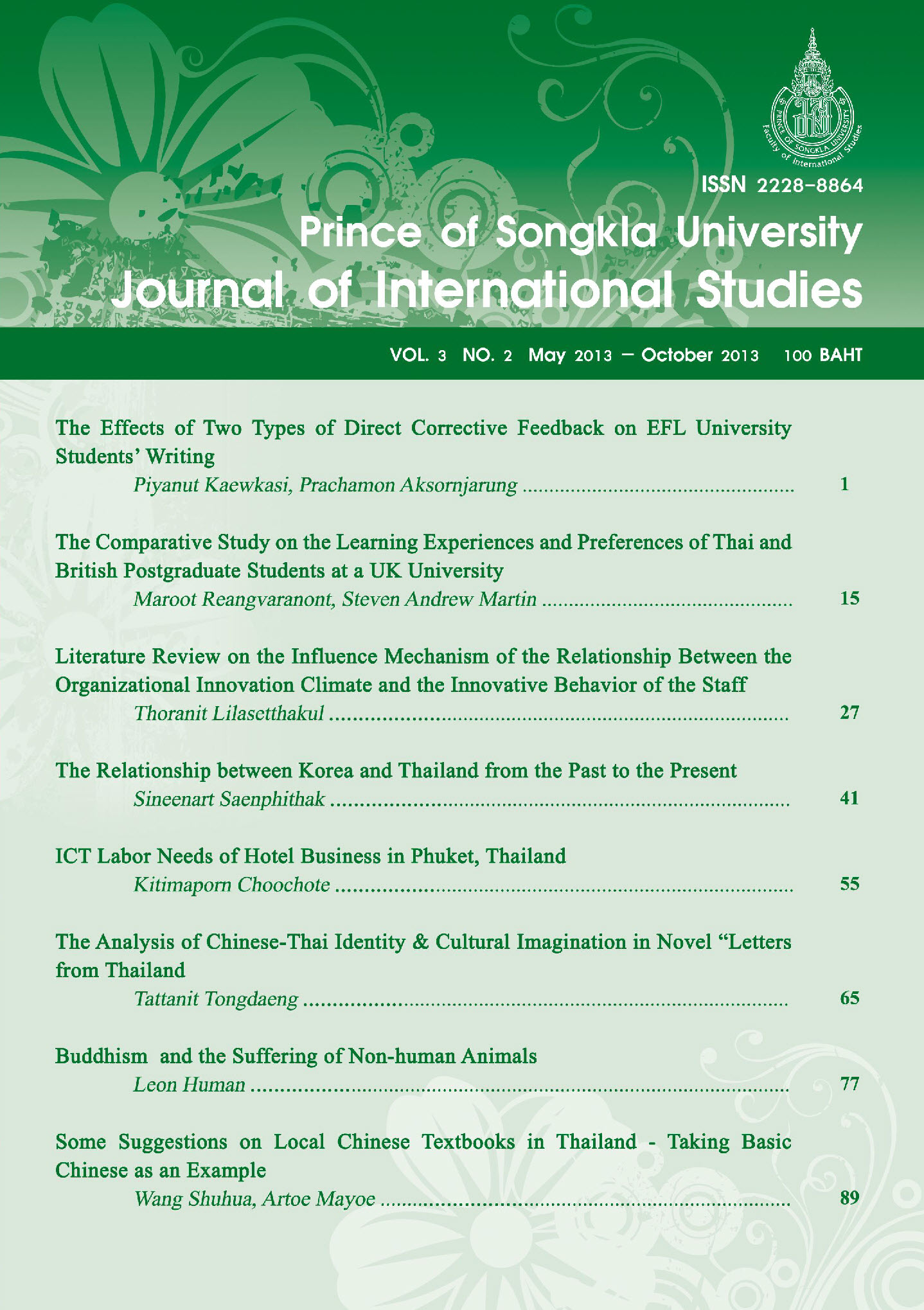
สรุปงานวิจัยด้านการศึกษากลไกที่ส่งผลกระทบต่อความสัมพันธ์ระหว่างบรรยากาศสร้างสรรค์และพฤติกรรมสร้างสรรค์ของบุคลากรในองค์กร
Article Sidebar
Main Article Content
บทคัดย่อ
เพื่อเป็นการกระตุ้นให้หน่วยงานทั้งภาครัฐและภาคเอกชนได้ตื่นตัวที่จะพัฒนาบรรยากาศ สร้างสรรค์ในองค์กรของตน อันจะนําไปสู่การได้มาซึ่งความได้เปรียบทางการแข่งขัน และจะสามารถ เข้าร่วมแข่งขันในตลาดการค้าในภูมิภาคเอเชียตะวันออกเฉียงใต้ได้อย่างมั่นคง บทความฉบับนี้ ได้ทําการสรุปผลงานวิจัยสําคัญที่เกี่ยวข้องกับกลไกที่ส่งผลกระทบต่อความสัมพันธ์ระหว่างบรรยากาศ สร้างสรรค์ในการทํางานและพฤติกรรมสร้างสรรค์ของบุคลากรในองค์กร บทความฉบับนี้ยังได้ทําการ อภิปรายถึงปัจจัยหลายด้านที่ทําหน้าที่เป็นสื่อกลางเชื่อมโยงความสัมพันธ์ระหว่างตัวแปรทั้งสอง หรือเป็นปัจจัยที่สามารถทําให้ความสัมพันธ์ระหว่างตัวแปรทั้งสองเป็นไปในเชิงบวกมากขึ้น ทั้งนี้ยังได้เสนอแนวคิดซึ่งอาจจะเป็นมุมมองใหม่ๆ ที่น่าสนใจต่อการศึกษาวิจัยในประเด็นที่เกี่ยวข้อง ต่อไปในอนาค
Article Details
ข้อความและความคิดเห็นที่แสดงในบทความ เป็นแนวคิดของผู้เขียน มิใช่ความรับผิดชอบของกองบรรณาธิการ และคณะผู้จัดทำแต่อย่างใด
บทความ ข้อมูล เนื้อหา รูปภาพ ฯลฯ ที่ได้รับการตีพิมพ์ในวารสารวิเทศศึกษา ถือเป็นลิขสิทธิ์ของวารสารวิเทศศึกษา หากบุคคลหรือหน่วยงานใดต้องการนำทั้งหมดหรือส่วนหนึ่งส่วนใดไปเผยแพร่ต่อหรือเพื่อกระทำการใด ๆ จะต้องได้รับอนุญาตเป็นลายลักษณ์อักษรจากวารสารวิเทศศึกษา ก่อนเท่านั้น
เอกสารอ้างอิง
Amabile T. M. (1993). Motivational synergy: Toward new conceptualizations of intrinsic and extrinsic motivation in the workplace. Human Resource Management Review, 3: 185-201.
Amabile T. M., Conti R., Coon H., Lazenby J. & Herron M. (1996). Assessing the work enviornment for creativity. Academy of Management Journal, 39(5): 1154-1184.
Amabile T. M. (1997). Motivating creativity in organizations: On doing what you love and what you do. California Management Review, 40(1): 39-58.
Amabile T. M. (2004). Leader behaviors and the work environment for creativity: Perceived leader support. The Leadership Quarterly, (15): 5-32.
Anderson N., West M. A. (1996). The Team Climate Inventory: Development of the TCI and its Applications in Teambuilding for Innovativeness. European Journal of Work and Organizational Psychology, 5: 53-66.
Anderson N., West M. A. (1998). Measuring climate for work group innovation: Development and validation of the Team Climate Inventory. Journal of Organizational Behavior, 19, 235-258.
Bandura A. (1986). Social foundations of thought and action: A social cognitive theory. New Jersey: Englewood Cliffs.
Bear M., Frese M. (2003). Innovation is not enough: Climate for initiative and Psychological safety, process innovations, and firm performance. Journal of organizational behavior, 24(1): 45-68.
Conger J. A., Kanungo R. N. (1988). The empowerment process: Integrating theory and practice. Academy of Management Review, 13: 471-482.
Edmondson A. (1999). Psychological safety and learning behavior in work teams. Administrative science quarterly, (44): 350-383.
Ekavll G. (1996). Organizational climate for creativity and innovation. European Journal of Work and Organizational Psychology, 5: 105-123.
George J. M., Brief A. P. (1992). Feeling good-doing good: A conceptual analysis of the mood at work organizational spontaneity relationship. Psychological Bulletin, 112: 310-329.
George J. M., Zhou J. (2002). Understanding when bad moods foster creativity and good ones don't: The role of context and clarity of feelings. Journal of Applied Psychology, 87: 687-697.
George J. M., Zhou J. (2007). Dual tuning in a supportive context: Joint contributions of positive mood, negative mood, and supervisory behaviors to employee. Academy of Management Journal, 50(3): 605-622.
Gist M. E., Mitchell T. R. (1992). Self-efficacy: A theoretical analysis of its determinants and malleability. Academy of Management Review, 17: 183-211.
Gong Y. P., Huang J. C. & Farh J. L. (2009). Employee learning orientation, transformational leadership, and employee creativity: The mediating role of employee creative self-efficacy. Academy of Management Journal, 52(4): 765-778.
Madjar N., Oldham G. R & Pratt M. G. (2002). There's no place like home? The contributions of work and nonwork creativity support to employees' creative performance. Academy of Management Journal, 45: 757-767.
Madjar N., Oldham G. R. (2002). Preliminary tasks and creative performance on a subsequent task: Effects of time on preliminary tasks and amount of information about the subsequent task. Creativity Research Journal, 14: 239-251.
May D. R., Gilson R. L. & Harter L. M. (2004). The psychological conditions of meaningfulness, safety and availability and the engagement of the human spirit at work. Journal of Occupational and Organizational Psychology, 77: 11-37.
Oldham G. R., Cummings A. (1996). Employee Creativity: Personal and Contextual Factors at Work. Academy of Management Journal, 39(3): 607-634.
Scott S.G. & Bruce R.A. (1994). Determinants of innovation behavior: A path model of individual innovation in the workplace. Academy of Management Journal, 37: 580-607.
เฉินกว๋อฉวน. (2008). ความสามารถของคนในการศึกษาเรียนรู้ภายใต้สิ่งแวดล้อมที่เปลี่ยนแปลงชับซ้อน: แนวคิด รูปแบบ การวัดและผลกระทบ. วิทยาการจัดการแห่งประเทศจีน, 16(1). 147-157.
