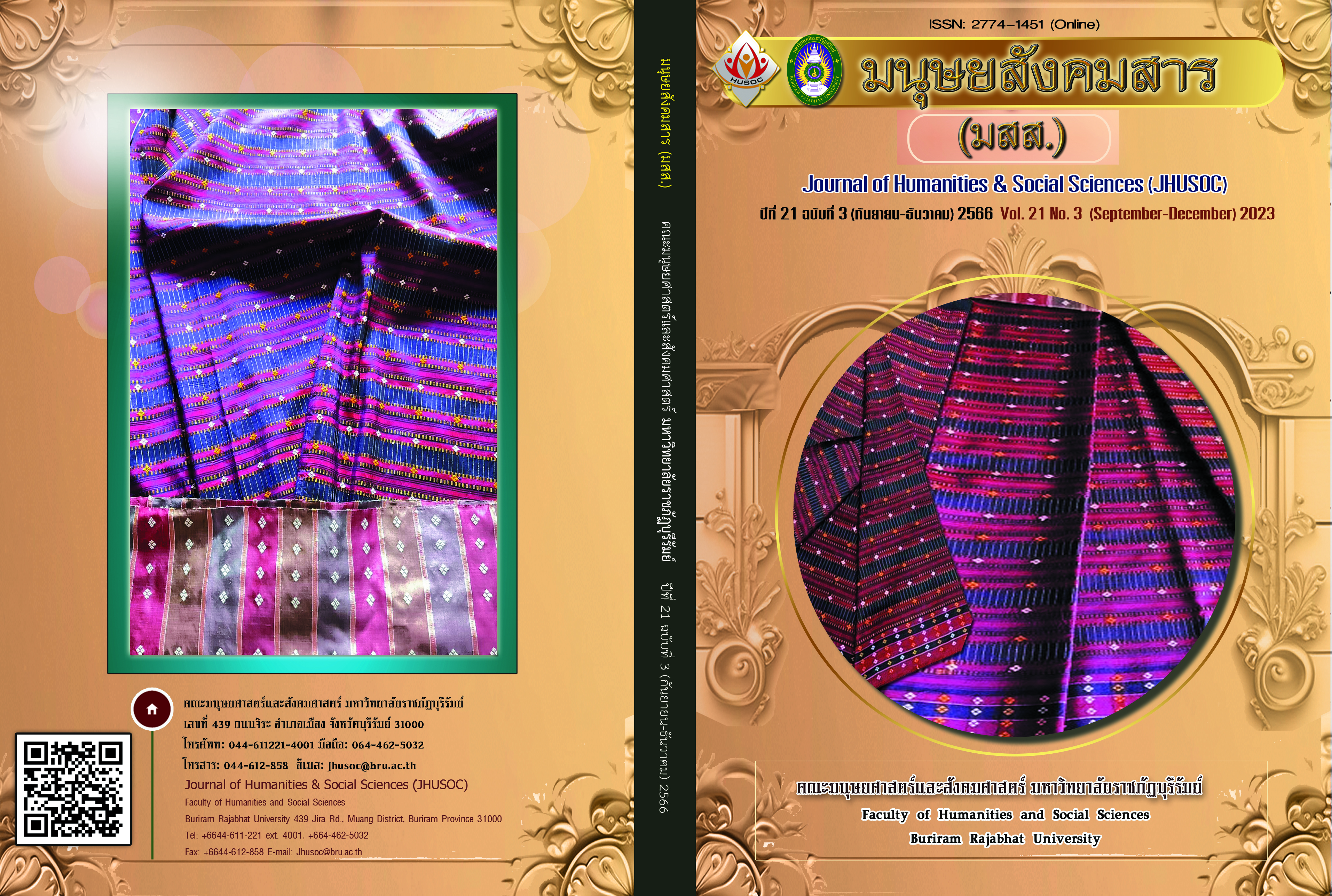
กระบวนการถ่ายทอดภูมิปัญญาการทอผ้าซิ่นทิวมุกจกดาว แบบเจ้าเมืองอุบลราชธานี
DOI:
https://doi.org/10.14456/jhusoc.2023.28คำสำคัญ:
กระบวนการถ่ายทอดภูมิปัญญา, ชุมชนที่ยั่งยืน, ผ้าซิ่นทิวมุกจกดาวบทคัดย่อ
การพัฒนากระบวนการถ่ายทอดภูมิปัญญาการทอผ้าซิ่นทิวมุกจกดาวแบบเจ้าเมืองอุบลราชธานี โดยกลุ่มสตรีผู้สูงอายุสืบสานภูมิปัญญามีปรากฏในบ้านหนองบ่อ จังหวัดอุบลราชธานี หากไม่ถ่ายทอดไว้อาจเลือนหาย ผู้มีส่วนร่วมเป็นสตรีผู้สูง อายุ 5 คน รวบรวมข้อมูลโดย บันทึกการสนทนากลุ่ม การสัมภาษณ์และการบันทึกการจัดเวทีการระดมความคิด ใช้การวิเคราะห์เนื้อหา การศึกษาพบว่า พื้นที่เป้าหมายมีประเด็นปัญหาการขาดผู้สืบทอดการทอผ้าซิ่น ทุกฝ่ายที่เกี่ยวข้องเกิดความเข้าใจร่วมกัน จึงกำหนดเป้าหมายการปฏิบัติงานที่สามารถถ่ายโอนทักษะทำให้ได้กระบวนการและทดลองใช้กับนักศึกษา คณะครุศาสตร์ 16 คน พบว่า นักศึกษามีความรู้ ทัศนคติและทักษะ ก่อนและหลังการใช้กระบวนการแตกต่างกัน อย่างมีนัยสำคัญทางสถิติที่ระดับ .01 โดยกระบวน มี 2 รูปแบบ คือ 1) การถ่ายทอดโดยผู้สูงอายุสาธิตก่อน และผู้เรียนลงมือปฏิบัติตามจริง และ 2) การบันทึกความรู้เป็นลายลักษณ์อักษร ได้สรุปและรายงานผลโดยจัดเวทีคืนข้อมูลแก่ชุมชนและเผยแพร่ผ่านเครือข่ายชุมชน
เอกสารอ้างอิง
Auksang, D. (2009). The knowledge management process for local wisdom about organically-Dyed “Mudmee” Thai Silk. KKU Research Journal (Graduate Studies), 9(4), 135-147. [in Thai]
Chaiyasit, K., Siwan, Y., & Sommai, J. (2015). The development of the traditional silk weaving wisdom process among Thai Kui people in Southern Isan. Journal of Education and Social Development, 11(1), 246-257. [in Thai]
Department of Community Development. (2004). Developer's guide. On organizing a participatory learning Process. Bangkok Blog. [in Thai]
Dewey, J., & McDermott, E. W. (1973). The philosophy of John Dewey. Putnam Sons. Education Council Secretariat Ministry of Education. (2008). Handbook for the Recruitment and Selection of Thai wisdom. 21st Century Company Limited.
Mcmillan, J. H., & Schumacher, S. (2010). Participants, Subfects, and sampling for quantitative designs. In Research in Education Evidence-Base inquiry. Pearson Education.
Pattangway, T., & Nilsingkhon, J. (2014). Independent studies by computer Kangbon Chai Badan Lop Buri. https://sites.google.com/site/chaibadanbon/home/keiyw-kab-
Phasukyud, P. (2007). Knowledge management (KM), learning organization (LO) powered. Yaimai.
Rabinowitz, P. (2013). Intervention research with communities: A gateway to tools. http://ctb.ku.edu/table-ofcontents/evaluate//intervention-research/main
Samanchat, S. (2020). Weaving and patterns of the rulers of Ubon. Journal of Isan Arts and Cultere, 1(1), 79-95. [in Thai]
Wansiri, N. (2007). Social and culture anthropology: Theories in social and culture anthropology (Complete Version). Xpernet. [in Thai]
Wongchaum, S. (2011). Country development planning. Petchrung Printing Center. [in Thai]
ดาวน์โหลด
เผยแพร่แล้ว
รูปแบบการอ้างอิง
ฉบับ
ประเภทบทความ
สัญญาอนุญาต
ลิขสิทธิ์ (c) 2023 มนุษยสังคมสาร (มสส.) คณะมนุษยศาสตร์และสังคมศาสตร์ มหาวิทยาลัยราชภัฏบุรีรัมย์

อนุญาตภายใต้เงื่อนไข Creative Commons Attribution-NonCommercial 4.0 International License.
เนื้อหาและข้อมูลในบทความที่ลงตีพิมพ์ในวารสารทดสอบระบบ ThaiJo2 ถือเป็นข้อคิดเห็นและความรับผิดชอบของผู้เขียนบทความโดยตรงซึ่งกองบรรณาธิการวารสาร ไม่จำเป็นต้องเห็นด้วย หรือร่วมรับผิดชอบใดๆ
บทความ ข้อมูล เนื้อหา รูปภาพ ฯลฯ ที่ได้รับการตีพิมพ์ในวารสารทดสอบระบบ ThaiJo2 ถือเป็นลิขสิทธิ์ของวารสารทดสอบระบบ ThaiJo2 หากบุคคลหรือหน่วยงานใดต้องการนำทั้งหมดหรือส่วนหนึ่งส่วนใดไปเผยแพร่ต่อหรือเพื่อกระทำการใดๆ จะต้องได้รับอนุญาตเป็นลายลักอักษรจากวารสารทดสอบระบบ ThaiJo2 ก่อนเท่านั้น