
HOW CHINESE REDUPLICATION REPRESENTS MEANING AMONG THAI LEARNERS OF CHINESE
Article Sidebar
Main Article Content
Abstract
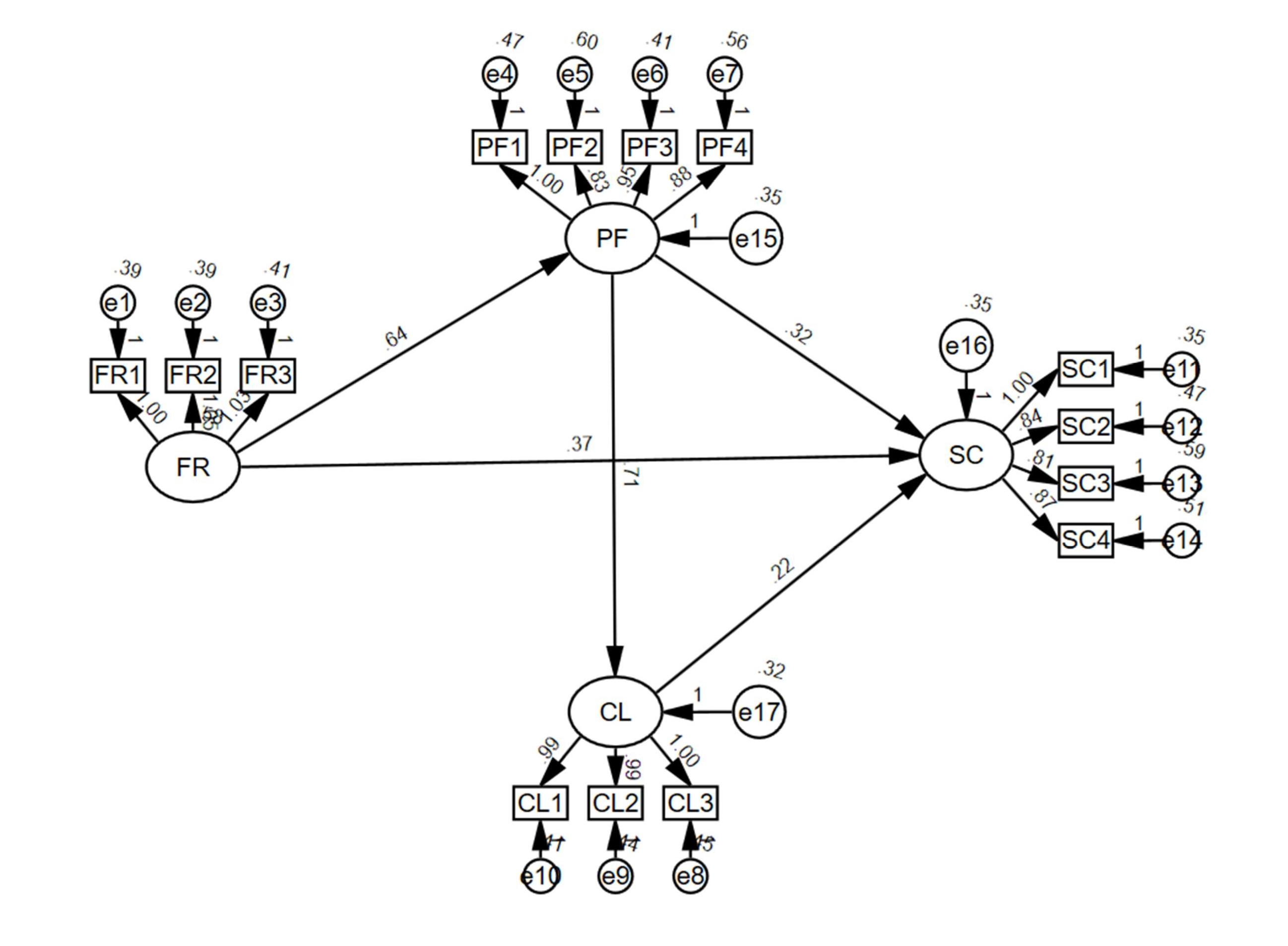
Despite extensive linguistic discussions on Chinese reduplication, limited empirical research has examined how reduplication structures influence semantic processing efficiency and meaning representation among second-language learners. This study therefore investigated how Chinese reduplication forms represent meaning through structural and cognitive mechanisms among Thai learners of Chinese. The objectives of this study were to 1) establish a theoretical framework explaining the relationship between Chinese reduplication structures and semantic functions, 2) examine whether different reduplication forms influence semantic comprehension efficiency, and 3) investigate the cognitive mechanisms underlying the relationship between linguistic form and semantic comprehension. A mixed-method research design integrating theoretical analysis, experimental investigation, and structural equation modeling was adopted. The population consisted of Thai secondary school students learning Chinese as a second language in Bangkok, Thailand. A total of 179 participants were selected using purposive sampling based on established inclusion criteria, including at least one year of Chinese language learning experience and basic Chinese reading ability. Data analysis included descriptive statistics, repeated measures ANOVA, reliability analysis, exploratory factor analysis, confirmatory factor analysis, Pearson correlation analysis, and structural equation modeling using SPSS and AMOS. The findings for Objective 1 demonstrated that Chinese reduplication structures systematically correspond to distinct semantic functions. The findings for Objective 2 revealed that different reduplication structures significantly influenced semantic comprehension efficiency, with simpler forms producing higher accuracy and faster reaction times than more complex forms. The findings for Objective 3 indicated that form recognition significantly improved processing fluency, which subsequently enhanced semantic comprehension. SEM results showed that form recognition had a significant positive effect on processing fluency and semantic comprehension, while processing fluency significantly influenced semantic comprehension. Overall, the study concludes that Chinese reduplication forms contribute to semantic representation by facilitating cognitive processing efficiency through systematic structural patterns.
Downloads
Article Details
References
Alter, A. L. & Oppenheimer, D. M. (2009). Uniting the Tribes of Fluency to Form a Metacognitive Nation. Personality and Social. Psychology Review, 13(3), 219 – 235.
Bybee, J. (2010). Language, Usage and Cognition. Cambridge University Press.
Hair, J. F., Black, W. C., Babin, B. J. & Anderson, R. E. (2019). Multivariate Data Analysis. 8th edition. Cengage Learning.
Hart, S. G. & Staveland, L. E. (1988). Development of NASA-TLX. In P. A. Hancock & N. Meshkati (eds.). Human Mental Workload. Elsevier.
Jiang, N. (2000). Lexical Representation and Development in a Second Language. Applied Linguistics, 21(1), 47 – 77.
Khashimova, S. A. (2022). On the Concept of Reduplication in Linguistics. Int. J. Curr. Sci. Res. Rev, 5(05), 1659 - 1664.
Liu, C. S. L. (2013). Reduplication of Adjectives in Chinese: A Default State. Journal of East Asian Linguistics, 22(2), 101 - 132.
Lu, Y. & Muller, S. (2026). Deliminative Verbal Reduplication in Mandarin Chinese. Journal of Linguistics, 1 - 38.
Melloni, C. & Basciano, B. (2018). Reduplication Across Boundaries: The case of Mandarin. The lexeme in Descriptive and Theoretical Morphology, 4, 325.
Rayner, K. (1998). Eye Movements in Reading and Information Processing. Psychological Bulletin, 124(3), 372 – 422.
Reber, R., Schwarz, N. & Winkielman, P. (2004). Processing Fluency and Aesthetic Pleasure: Is Beauty in the Perceiver’s Processing Experience? Personality and Social Psychology Review, 8(4), 364 – 382.
Taft, M. (2004). Morphological Decomposition and the Reverse Base Frequency Effect. The Quarterly Journal of Experimental Psychology Section A, 57(4), 745 – 765
Wang, S. P. (2005). Corpus-based Approaches and Discourse Analysis in Relation to Reduplication and Repetition. Journal of Pragmatics, 37(4), 505 - 540.
Xiao, R. & McEnery, T. (2004). Aspect in Mandarin Chinese: A Corpus-based Study. John Benjamins.
Xie, Z. (2020). Two Types of Verb Reduplications in Mandarin Chinese. Studies in Chinese Linguistics, 41(1), 73 - 108.
