ENHANCING MORALITY AND TRANSPARENCY IN LOCAL ADMINISTRATIVE ORGANIZATION MANAGEMENT: A CASE STUDY OF NAKHA SUBDISTRICT ADMINISTRATIVE ORGANIZATION, MUEANG UDON THANI DISTRICT, UDON THANI PROVINCE
Article Sidebar
Main Article Content
Abstract
This research aimed to examine 1) the situation of promoting morality and transparency in administration and 2) personnel’s opinions on factors affecting morality and transparency in administration, in the case of Na Kha Subdistrict Administrative Organization, Mueang Udon Thani District, Udon Thani Province. A mixed-method approach was employed, combining both quantitative and qualitative methods. Data were collected through document analysus, questionnaires, in-depth interviews with key informants, and observation.
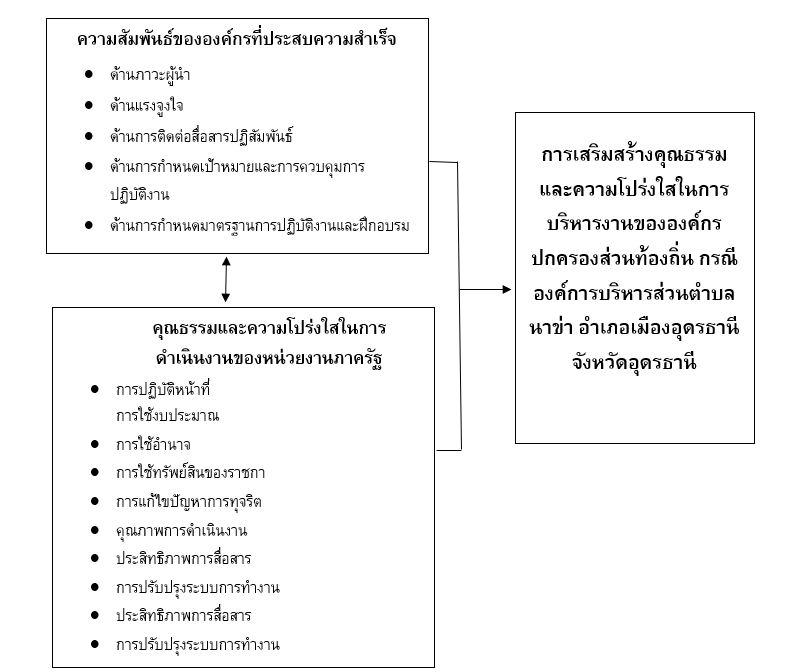
The findings indicated that the situation of promoting morality and transparency within the administration of Na Kha Subdistrict Administrative Organization, Mueang Udon Thani District, Udon Thani Province could be categorized into key dimensions, as follows: 1) in terms of leadership, administrators adhere to the ethical principles of morality and transparency by driving the No Gift Policy, providing channels for public opinions, promoting an open and accountable organizational culture, conducting ethics training, and maintaining regular communication with the public. This contributed to a high ITA score of 95-84 in the 2024 ITA assessment. 2) In terms of motivation, ethics training and reward systems were used to encourage personnel, alongside performance evaluations linked to salary increases, and promote cooperation and positive competition to create a good working atmosphere. 3) In terms of communication and interaction, the organization developed internal and external communication networks, clearly separated target groups, and regularly reviewed content to ensure communication effectiveness, transparency and accessibility 4) In terms of goal setting and work control, performance evaluations were conducted twice a year, supported by an MOU system between supervisors and subordinates, along with project monitoring committee, with standardized performance indicators. 5) In terms of work standards and training, policies and budget support were in place, focusing on developing personnel with strong ethical awareness, legal knowledge, and practical skills with annual performance indicators established. The analysis of opinions on factors affecting ethics and transparency in management revealed that overall perceptions were at a high level. Motivation and work standards were ranked highest, followed by communication and interaction, while leadership was ranked lowest. It is recommended that agencies should increase shared channels for information access, as existing channels are divided across different departments, highlighting the need for a unified platform where information can be accessed centrally.
Downloads
Article Details
References
กีรติกาญจน์ เจตน์ธนานันท์, รษิกา เอี่ยมเกิด และธีรพงษ์ บุญรักษา. (2566). รู้เท่าทัน ITA: เครื่องมือบริหารความเสี่ยงด้านการทุจริตขององค์กรภาครัฐไทย. วารสารมหาวิทยาลัยคริสเตียน, 29(4), 132 - 148.
คณะกรรมการป้องกันและปราบปรามการทุจริตแห่งชาติ. (2565). คู่มือการจัดทำแผนปฏิบัติการป้องกันการทุจริตเพื่อยกระดับคุณธรรมและความโปร่งใส สำหรับองค์กรปกครองส่วนท้องถิ่น (พ.ศ. 2566–2570). สำนักงาน ป.ป.ช.
คณะกรรมาธิการกิจการองค์กรอิสระตามรัฐธรรมนูญ วุฒิสภา. (2566). ทำอย่างไรให้ ITA น่าเชื่อถือเป็นที่ยอมรับของเจ้าหน้าที่รัฐและประชาชน. สำนักงานเลขาธิการวุฒิสภา.
คเณศ นามนัย, ฬิฏา สมบูรณ์ และเริงวิชญ์ นิลโคตร. (2567). การส่งเสริมระบบการบริหารจัดการที่มีประสิทธิภาพตามหลักธรรมาภิบาล ของสถานศึกษาสังกัดสำนักงานเขตพื้นที่การศึกษามัธยมศึกษาชลบุรี ระยอง. วารสารมหาจุฬานาครทรรศน์, 11(11), 85 - 95.
ปนัดดา ทองเย็น, ธัญลักษณ์ กิ่งมณี และรจนาภรณ์ ศรีช่วงโชติ (2566). การเสริมสร้างแรงจูงใจในการปฏิบัติงาน: ด้านคุณธรรม จริยธรรม ของบุคลากรสำนักงานพัฒนาชุมชน จังหวัดกาญจนบุรี. วารสารวิจัยสังคมและปริทัศน์, 46(2), 81 – 98.
มาริษา สุจิตวนิช และสหรัฐ อ่อนดี. (2565). ปัจจัยที่ส่งผลต่อประสิทธิภาพการสื่อสารในองค์กรของสำนักงานอธิบดีสถาบันบัณฑิตพัฒนศิลป์. รายงานสืบเนื่องจากการประชุมวิชาการระดับชาติครั้งที่ 14 (สาขาวิชานิเทศศาสตร์) ระหว่างวันที่ 7- 8 กรกฎาคม 2565 ณ มหาวิทยาลัยราชภัฏนครปฐม, 3.
ราชกิจจานุเบกษา. (2560). รัฐธรรมนูญแห่งราชอาณาจักรไทย พุทธศักราช 2560. เล่มที่ 134 ตอนที่ 40 ก. 1 – 90. 6 เมษายน 2560.
ราชกิจจานุเบกษา. (2561). ประกาศ เรื่อง ยุทธศาสตร์ชาติ (พ.ศ. 2561–2580). เล่มที่ 135 ตอนที่ 82 ก. 1 - 71. 13 ตุลาคม 2561.
วิษณุ คชรัตน์. (2564). แนวทางการพัฒนาคุณธรรมและความโปร่งใสของหน่วยงานภาครัฐ: กรณีศึกษา องค์การบริหารส่วนตำบลบางขันแตก จังหวัดสมุทรสงคราม. [วิทยานิพนธ์ปริญญามหาบัณฑิต, มหาวิทยาลัยรามคำแหง]. https://www3.ru.ac.th/mpa-abstract/index.php/abstractData/viewIndex/493
วุฒิพร ประทุมพงษ์ และวัลลภา อารีรัตน์. (2557). ปัจจัยทางการบริหารที่ส่งผลต่อประสิทธิผลของโรงเรียนขนาดเล็ก สังกัดสำนักงานเขตพื้นที่การศึกษาประถมศึกษาอุดรธานี เขต 3. วารสารศึกษาศาสตร์ ฉบับวิจัยบัณฑิตศึกษา มหาวิทยาลัยขอนแก่น, 8(2), 152 – 161.
สำนักงานคณะกรรมการป้องกันและปราบปรามการทุจริตแห่งชาติ. (2566). คู่มือการประเมินคุณธรรมและความโปร่งใสในการดำเนินงานของหน่วยงานภาครัฐ ประจำปีงบประมาณ พ.ศ. 2566. กรังด์ปรีซ์ อินเตอร์เนชั่นแนล.
สำนักงานคณะกรรมการป้องกันและปราบปรามการทุจริตแห่งชาติ. (2567). รายงานผลการประเมินคุณธรรมและความโปร่งใสในการดำเนินงานขององค์กรปกครองส่วนท้องถิ่น: องค์การบริหารส่วนตำบล นาข่า ปีงบประมาณ พ.ศ. 2567 (Integrity and Transparency Assessment). สืบค้นเมื่อ 10 มิถุนายน 2568 จาก https://itas.nacc.go.th/report/rpt0306?Year=2024&AssessmentId=602&OrgCode=38010801
อวยชัย รางชัยกุล. (2566). ภาวะผู้นำเชิงคุณธรรม: กระบวนการขับเคลื่อนองค์กรไป สู่เป้าหมายอย่างยั่งยืน. วารสารสหวิทยาการนวัตกรรมปริทรรศน์, 6(2), A136 - A148.
