
DECENTRALIZATION AND REGULATORY CONSIDERATIONS IN THE NAGA FLAG FESTIVAL: CHALLENGES AND DEVELOPMENTAL APPROACHES
Article Sidebar
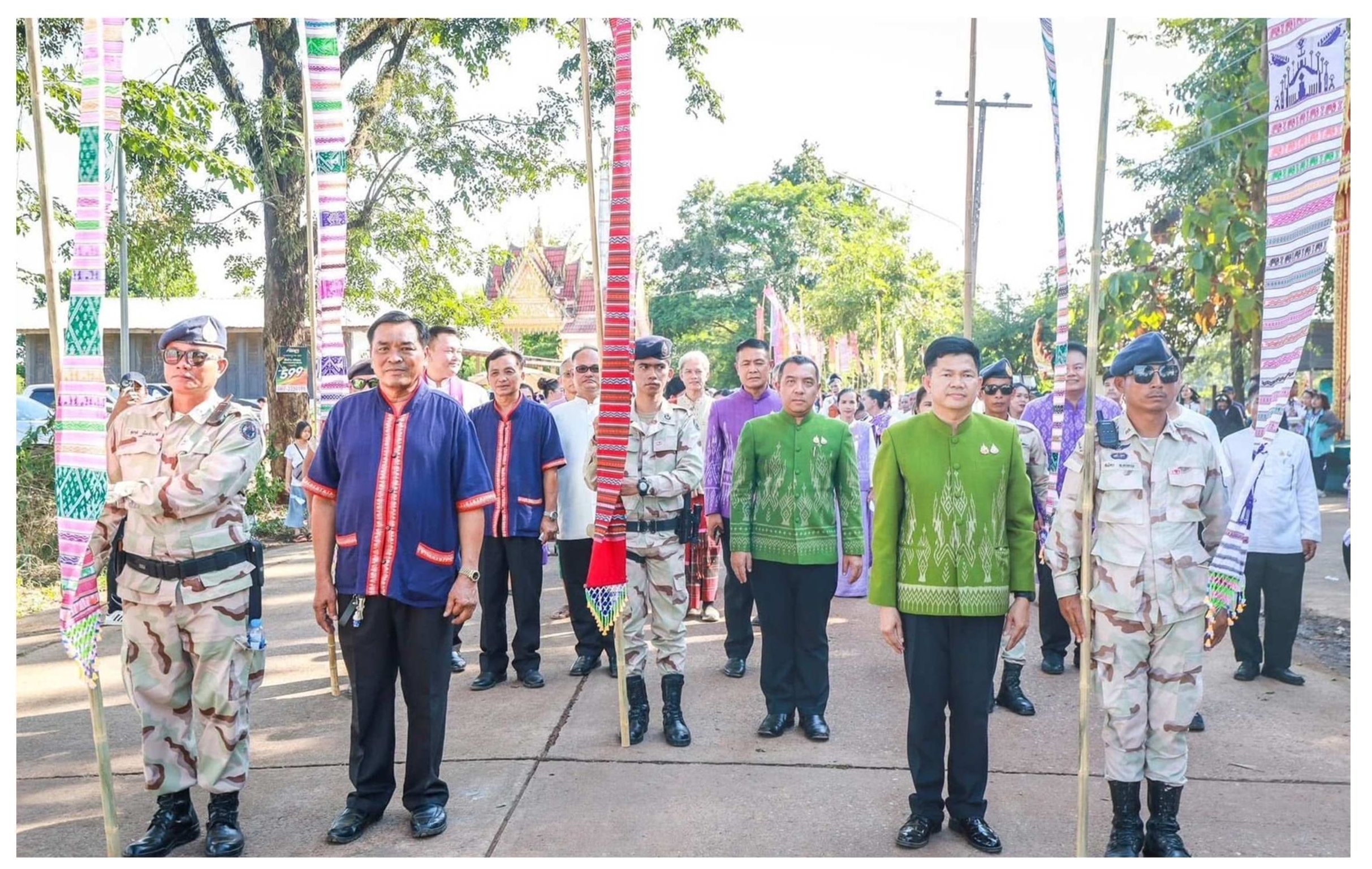
Main Article Content
Abstract
The objectives of this research were to examine the problems and regulatory considerations involved in organizing the Naga Flag Festival and to propose development guidelines. This qualitative study employed purposive sampling. The research was conducted in a study site in Bueng Kan Province with 20 key informants comprising 10 local government personnel, 1 event organizer, 1 entrepreneur, 3 community leaders, 3 local residents, and 2 festival participants. Data were collected through focus group discussions using a structured interview guide, analyzed by content analysis, and presented in descriptive narrative form. The findings revealed that regulations related to organizing the Naga Flag Festival had significant impacts across several dimensions, with three main issues identified: 1) regulations that did not align with the community’s cultural context, such as requirements regarding the use of sacred sites and event permits; 2) rigid law enforcement leading to delays and uncertainties; and 3) limited community participation due to government laws and policies, resulting in conflicts between local authorities and stakeholders. The proposed development guidelines are as follows: 1) revise regulations to be more flexible and consistent with the local cultural context; 2) promote understanding and collaboration among agencies through meetings and community consultations; and 3) enhance community participation at all stages of festival organization, including opportunities for citizens to propose improvements to relevant regulations and measures.
Downloads
Article Details
References
กรมส่งเสริมวัฒนธรรม. (2566). รายงานประจำปี 2566: การอนุรักษ์และส่งเสริมวัฒนธรรมท้องถิ่น. กระทรวงวัฒนธรรม.
เชิงชาญ จงสมชัย. (2558). ทิศทางการปฏิรูปการกระจายอำนาจและการปกครองท้องถิ่นหลังการรัฐประหาร 2557. วารสารสังคมศาสตร์ มหาวิทยาลัยนเรศวร, 11(1), 29 - 31.
ภิรมย์พร ไชยยนต์. (2557). การกระจายอำนาจการปกครองท้องถิ่น: ศึกษากรณีการปกครองตนเองตามเจตนารมณ์ของประชาชนในระดับจังหวัด. [วิทยานิพนธ์นิติศาสตรมหาบัณฑิต, สถาบันบัณฑิตพัฒนบริหารศาสตร์]. http://libdcms.nida.ac.th/thesis6/2557/b186353.pdf
ราชกิจจานุเบกษา. (2564). ระเบียบกระทรวงมหาดไทย ว่าด้วยการเบิกค่าใช้จ่ายในการจัดงาน การจัดกิจกรรมสาธารณะ การส่งเสริมกีฬา และการแข่งขันกีฬาขององค์กรปกครองส่วนท้องถิ่น พ.ศ. 2564. เล่มที่ 138 ตอนพิเศษ 251 ง. 1 – 11. 15 ตุลาคม 2564.
สำนักงานศิลปากรที่ 9. (2565). การประเมินผลกระทบของกฎหมายโบราณสถานต่อกิจกรรมทางวัฒนธรรมของชุมชนท้องถิ่นในภาคตะวันออกเฉียงเหนือของประเทศไทย. กระทรวงวัฒนธรรม.
สิทธิชัย ระหาญนอก. (2564). พลวัตวัฒนธรรมการใช้ธุงกับประเพณีประดิษฐ์บนพื้นที่พระธาตุยาคู. [วิทยานิพนธ์ศิลปศาสตรมหาบัณฑิต, มหาวิทยาลัยมหาสารคาม]. https://khoon.msu.ac.th/_dir/fulltext/2022/09/Sitthichai_Rhahnnok64.pdf
Salim, A., Irwan, I. & Iskandar, K. (2024). The Impact of Public Administration on Cultural Policy and Creative Industries. Journal Social Civilecial, 2(2), 78 - 86. doi: https://doi.org/10.71435/610499
Nguyễn, T. (2022). Cultural Regulations and the Sustainability of Local Festivals in Vietnam: A Policy Perspective. Asian Cultural Studies, 29(1), 45 - 67.
Pholsena, V. (2023). Cultural Tourism and Local Festivals in Northeastern Thailand: Economic and Social Impacts. Journal of Thai Cultural Studies, 12(1), 78 - 102.
Sato, H. & Yamamoto, K. (2019). Cultural Policy and Local Festivals in Japan. Japan Cultural Studies Review, 18(3), 112 - 134.
Smith, J. (2022). Decentralization and Community Development: Lessons from Southeast Asia. International Journal of Policy Studies, 15(3), 134 - 159.
Wong, J. & Tang, P. (2021). Decentralization and Cultural Festivals in Southeast Asia. Asian Cultural Policy Journal, 12(1), 45 - 67.
