AI กับอนาคตการเผยแผ่พุทธธรรม : ศักยภาพและแนวทางการสื่อสารในยุคดิจิทัล
AI กับอนาคตการเผยแผ่พุทธธรรม : ศักยภาพและแนวทางการสื่อสารในยุคดิจิทัล
คำสำคัญ:
ปัญญาประดิษฐ์, การเผยแผ่พุทธธรรม, การสื่อสาร, ยุคดิจิทัลบทคัดย่อ
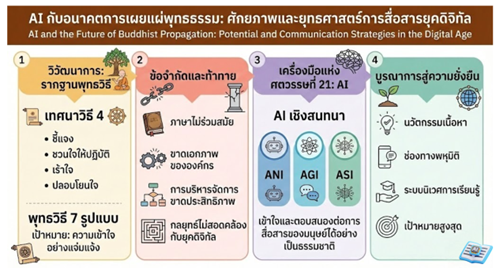
AI กับอนาคตการเผยแผ่พุทธธรรม : ศักยภาพและแนวทางการสื่อสารในยุคดิจิทัล" สำรวจวิวัฒนาการของการเผยแผ่พระพุทธศาสนา เริ่มต้นจากวิธีการสอนที่หลากหลายของพระพุทธเจ้า เช่น เทศนาวิธี 4 ที่เน้นการชี้แจง ชวนใจให้ปฏิบัติ เร้าใจ และปลอบชโลมใจ รวมถึง พุทธวิธีการสอนธรรม 7 รูปแบบ ที่มีจุดมุ่งหมายเพื่อความเข้าใจอย่างแจ่มแจ้ง จากนั้น เอกสารได้วิเคราะห์สถานการณ์การเผยแผ่พุทธธรรมของคณะสงฆ์ไทยในปัจจุบัน ซึ่งพบข้อจำกัดสำคัญ อาทิ ภาษาที่ไม่ร่วมสมัย การขาดเอกภาพขององค์กร การบริหารจัดการที่ไม่มีประสิทธิภาพ และกลยุทธ์ที่ไม่สอดคล้องกับยุคดิจิทัล เพื่อแก้ไขปัญหานี้ เอกสารได้นำเสนอแนวคิดของ ปัญญาประดิษฐ์ (AI) ตั้งแต่ความหมาย ความสามารถในระดับต่าง ๆ (ANI, AGI, ASI) และประเภทตามหน้าที่การทำงาน โดยเฉพาะอย่างยิ่ง AI เชิงสนทนา ซึ่งสามารถเข้าใจและตอบสนองต่อการสนทนาของมนุษย์ เพื่อเป็นเครื่องมือสำคัญในการประยุกต์ใช้เทคโนโลยีที่ทันสมัยกับการเผยแผ่พุทธธรรมในศตวรรษที่ 21 โดยเน้นการสร้างเนื้อหาที่กระชับ ชัดเจน และมีคุณค่าผ่านช่องทางดิจิทัลที่หลากหลาย เพื่อให้เข้าถึงกลุ่มเป้าหมายในยุคออนไลน์ พร้อมทั้งส่งเสริมการเรียนรู้และปฏิบัติธรรมผ่านระบบ E-Learning เพื่อให้พระพุทธศาสนาสามารถสืบทอดและสร้างคุณค่าได้อย่างยั่งยืนในยุคดิจิทัล
เอกสารอ้างอิง
กวิทธิ์ ศรีสัมฤทธิ์ และวิทยาธร ท่อแก้ว. (2567). เทคโนโลยีปัญญาประดิษฐ์กับบทบาทการสื่อสารในงานการปกครองท้องถิ่น. วารสารสังคมศาสตร์และวัฒนธรรม, 8(8), 200–211.
กานต์ กาญจนพิมาย. (2567). บทบาทพระครูอภิรักษ์ธีรคุณกับการพัฒนาสังคมในจังหวัดสุรินทร์. วารสารมนุษยศาสตร์และสังคมศาสตร์ มหาวิทยาลัยราชภัฏสุรินทร์, 26(1), 149-162.
จุไรรัตน์ ลักษณะศิริ และบาหยัน อิ่มสำราญ. (2548). ภาษากับการสื่อสาร. กรุงเทพฯ: พี.เพรส.
ธนชนันณ์ สุระบัญชาการ, สิริวัฒน์ ศรีเครือดง และมั่น เสือสูงเนิน. (2566). วิวัฒนาการของปัญญาประดิษฐ์ AI จาก Chatbot สู่ ChatGPT. วารสาร มจร มนุษยศาสตร์ปริทรรศน์, 9(2), 329-339.
พระเทพเวที (ประยุทธ์ ปยุตฺโต). (2535). พจนานุกรมพุทธศาสน์ ฉบับประมวลศัพท์ (พิมพ์ครั้งที่ 6). กรุงเทพฯ: มหาจุฬาลงกรณราชวิทยาลัย.
พระครูนรนาถเจติยาภิรักษ์ (สมพงศ์ ญาณธีโร). (2561). รูปแบบการเผยแผ่พระพุทธศาสนาเชิงรุกของพระธรรมทูตสายอินเดีย-เนปาลตามหลักพุทธจิตวิทยา. (วิทยานิพนธ์ปริญญาพุทธศาสตรดุษฎีบัณฑิต). กรุงเทพฯ: มหาวิทยาลัยมหาจุฬาลงกรณราชวิทยาลัย.
พระครูวินัยธรวรรธนา ญาณวโร และปาณจิตร สุกุมาลย์. (2565). การบูรณาการหลักพุทธวิธีการสอนในการสอนสังคมศึกษา. วารสาร มจร อุบลปริทรรศน์, 7(1), 979-980.
พระครูสุทธิวรญาณ. (2564). ปัญญาประดิษฐ์ (AI): วิถีการเผยแผ่แห่งอนาคต. วารสาร มจร การพัฒนาสังคม, 6(3), หน้า 163-173.
พระมหาสมชาย กลิ่นจันทร์. (2559). การเผยแผ่พระพุทธศาสนา: การพัฒนารูปแบบและวิธีการเชิงรุกของคณะสงฆ์ไทย. (วิทยานิพนธ์ปริญญาปรัชญาดุษฎีบัณฑิต). มหาสารคาม: มหาวิทยาลัยมหาสารคาม.
พระรุ่งโรจน์ กาวิลาวรรณ. (2562). การพัฒนาคู่มือการจัดการเรียนรู้โดยใช้พุทธวิธีการสอนของนักเรียนชั้นมัธยมศึกษาตอนต้น โรงเรียนพระปริยัติธรรม. (วิทยานิพนธ์ปริญญาศึกษาศาสตรมหาบัณฑิต). เชียงใหม่: มหาวิทยาลัยเชียงใหม่.
วนิดา ชุลิกาวิทย์,มนต์เทียน มนตราภิบูลย์,พระมหาวุฒิชัย ธมฺมวิชฺโช,พระนิโรธ ชุติชโย (มหารชัน), และพระมหาพิพัฒน์ ปวฑฺฒโน. (2566). พลวัตการเผยแผ่พระพุทธศาสนาในศตวรรษที่ 21. วารสารธรรมเพื่อชีวิต, 29(2), 59-72.
วรรณา สุติวิจิตร. (2541). พุทธวิธีสอนในระดับประถมศึกษา. (พิมพ์ครั้งที่ 2). กรุงเทพฯ: คณะศึกษาศาสตร์ มหาวิทยาลัยเกษตรศาสตร์.
วรรษิดา บุญญาณเมธาพร. (2567). การสื่อสารในสังคมพหุวัฒนธรรม. กรุงเทพฯ: สำนักพิมพ์จุฬาลงกรณ์มหาวิทยาลัย.
วราพร ดำจับ. (2560). การสื่อสารในยุคดิจิทัล. วารสารสหศาสตร์ศรีปทุม ชลบุรี, 3(1), 45-50.
วศิน อินทสระ. (2534). พุทธวิธีในการสอน. กรุงเทพฯ: โรงพิมพ์มหามกุฏราชวิทยาลัย.
วิกานดา พรสกุลวานิช. (2565). สื่อใหม่และการจัดการการสื่อสาร. กรุงเทพฯ: สำนักพิมพ์มหาวิทยาลัยธรรมศาสตร์.
สำนักงานส่งเสริมเศรษฐกิจดิจิทัล. (2562). การคาดการณ์อนาคตเทคโนโลยีดิจิทัลประเทศไทย 2035. เข้าถึงได้จากhttps://www.depa.or.th/storage/app/media/file/Second%20Deliverable%20RevVer%20TH%20V12%20140819%20FIN.pdf
เอมิการ์ ศรีธาตุ. (2559). พฤติกรรมการใช้และการรับรู้อิทธิพลของสื่อดิจิทัลต่อเจเนอเรชั่นวายและเจเนอเรชั่นแซดในเขตกรุงเทพมหานครและปริมณฑล. (วิทยานิพนธ์ปริญญาศิลปศาสตรมหาบัณฑิต). กรุงเทพฯ: สถาบันบัณฑิตพัฒนบริหารศาสตร์. เข้าถึงได้จาก http://libdcms.nida.ac.th/thesis6/2559/b197555.pdf
DIA Thailand. (ม.ป.ป.). AI ปัญญาประดิษฐ์ นิยาม ความหมาย. เข้าถึงได้จากhttps://www.dia.co.th/articles/what-is-artificial-intelligence/
Amazon Web Services. (ม.ป.ป.). Conversational AI คืออะไร. เข้าถึงได้จากhttps://aws.amazon.com/th/what-is/conversational-ai/
Insaard, S., & Amornrit, P. (2024). Assessing digital competency among Thai citizens: A comprehensive study in the post-Covid-19 era. Journal of Education and Learning, 13(5) , 159-177.
Lewis, E. (2023). Harnessing the power of AI in local government: Improving services and empowering communities. from https://fccma.org/2023/11/harnessing-the-power-of-ai-in-local-government-improving-services-and-empoweringcommunities
ดาวน์โหลด
เผยแพร่แล้ว
รูปแบบการอ้างอิง
ฉบับ
ประเภทบทความ
สัญญาอนุญาต
ลิขสิทธิ์ (c) 2026 วารสารภาษา ศาสนา และวัฒนธรรม

อนุญาตภายใต้เงื่อนไข Creative Commons Attribution-NonCommercial-NoDerivatives 4.0 International License.