“แซ่” สัญลักษณ์ความเป็นจีนของชาวไทยเชื้อสายจีนในสังคมไทย
“แซ่” สัญลักษณ์ความเป็นจีนของชาวไทยเชื้อสายจีนในสังคมไทย
คำสำคัญ:
แซ่, สัญลักษณ์ความเป็นจีน, ชาวไทยเชื้อสายจีน, สังคมไทยบทคัดย่อ
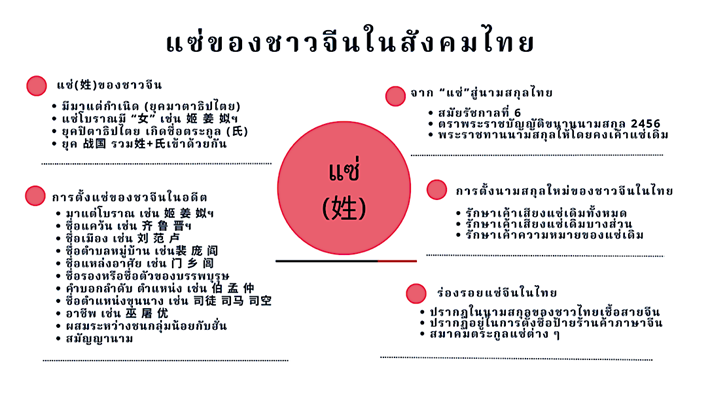
“แซ่” เป็นสัญลักษณ์สำคัญทางวัฒนธรรมที่สะท้อนถึงรากเหง้า ความเป็นมา และชาติกำเนิดของชาวจีนในสังคมไทย โดยทำหน้าที่เป็นเครื่องบ่งชี้ความสัมพันธ์ทางเครือญาติ การสืบเชื้อสายและการธำรงอัตลักษณ์ร่วมของชุมชนไทยเชื้อสายจีนในประเทศไทย การคงอยู่ของแซ่มีบทบาทสำคัญในการยึดโยงกลุ่มชาติพันธุ์ให้มีความเข้มแข็ง และส่งเสริมการรักษาขนบธรรมเนียมประเพณีจีนให้สืบต่อไปยังลูกหลาน แม้ว่าการใช้นามสกุลตามแบบไทยจะเข้ามาแทนที่แซ่ดั้งเดิม แต่แซ่ยังคงปรากฏในรูปแบบเสียงอ่านหรือเป็นส่วนหนึ่งของนามสกุลที่ตั้งขึ้นใหม่ แสดงให้เห็นถึงการปรับตัวของชาวจีนโพ้นทะเลในสังคมไทย ขณะเดียวกันก็ยังรักษาอัตลักษณ์ดั้งเดิมของตนไว้ได้อย่างกลมกลืน
เอกสารอ้างอิง
ขจัด บุรุษพัฒน์. (2515). นโยบายผสมกลมกลืนของรัฐบาลไทยต่อชาวจีน. วารสารสังคมศาสตร์, 9(1), 11-34.
ถาวร สิกขโกศล. (2560). แซ่อึ๊งและสายสกุลอาจารย์ป๋วย. กรุงเทพฯ : มหาวิทยาลัยธรรมศาสตร์.
มติชน. (9 กุมภาพันธ์ 2567). 10 แซ่ของชาวจีนที่มีใช้มากที่สุดในประเทศไทย. แหล่งที่มา : https://www.matichon.co.th/social/news_4416699 (20 October 2025)
วนิดา เจริญสุข. (2532). นามสกุลของคนไทยเชื้อสายจีน : การวิเคราะห์ทางอรรถศาสตร์ชาติพันธุ์. (วิทยานิพนธ์ปริญญามหาบัณฑิต). กรุงเทพมหานคร : บัณฑิตวิทยทาลัย จุฬาลงกรณ์มหาวิทยาลัย.
สกินเนอร์,จี.วิลเลี่ยม.(2564). สังคมจีนในประเทศไทย: ประวัติศาสตร์เชิงวิเคราะห์ (พิมพ์ครั้งที่ 3). กรุงเทพฯ : มติชน.
สหสมาคมตระกูลไทย.(มปป.) “สมาคมตระกูลแซ่ต่างๆ”. เข้าถึงได้จาก http://www.zonglianthai.com/index.php?langtype=th&pageid=th_18 (25 October 2025)
สำนักพระราชวัง กรมราชเลขานุการในพระองค์. (2560). ชื่อและชื่อสกุลที่พระบาทสมเด็จพระปรมินทรมหาภูมิพลอดุลยเดช บรมนาถบพิตร พระราชทาน พุทธศักราช 2489 - 2559 เล่ม 2. กรุงเทพฯ : อมรินทร์พริ้นติ้งแอนด์พับลิชชิ่ง จำกัด.
HANDIAN. (n.d.). SHUO WEN JIE ZI [说文解字]. Retrieved form https://www.zdic.net/hans/说文解字
HANDIAN. (n.d.). TONGZHI [通志]. Retrieved form https://www.zdic.net/hant/通志
He Xiaoming. (2003). Names and Chinese culture [姓名与中国文化]. Beijing, China: People’s Publishing House.
Pan Shaohong. (2010). Migration and the development of Chinese clan associations in Thailand since 1945 [移民与1945年以来泰国华人宗亲组织的发展]. Journal of Shantou University, 26(1), 35-41
Quanzhou Overseas Chinese History Museum. (2008). How overseas Chinese occupational associations were formed [海外华侨业缘社团是如何产生的]. Retrieved from https://www.qzhqg.com/qszs/831.htm
Xu Junyuan., Zhang, Zhanjun., & Shi Yuxin. (1991). Chinese surnames (2nd ed.) [中国人的姓氏(第二版)]. Hong Kong: Nanyue Publishing House.
Zhang Gang. (2004). An explanation of Dao surnames [说明道姓]. Beijing, China: All-China Federation of Industry and Commerce Press.
The Central People’s Government of the People’s Republic of China. (2021). Release of the “2020 national name report” [《二〇二〇年全国姓名报告》发布]. Retrieved from http://www.gov.cn/xinwen/2021-02/08/content_5585906.htm
ดาวน์โหลด
เผยแพร่แล้ว
รูปแบบการอ้างอิง
ฉบับ
ประเภทบทความ
สัญญาอนุญาต
ลิขสิทธิ์ (c) 2026 วารสารภาษา ศาสนา และวัฒนธรรม

อนุญาตภายใต้เงื่อนไข Creative Commons Attribution-NonCommercial-NoDerivatives 4.0 International License.