
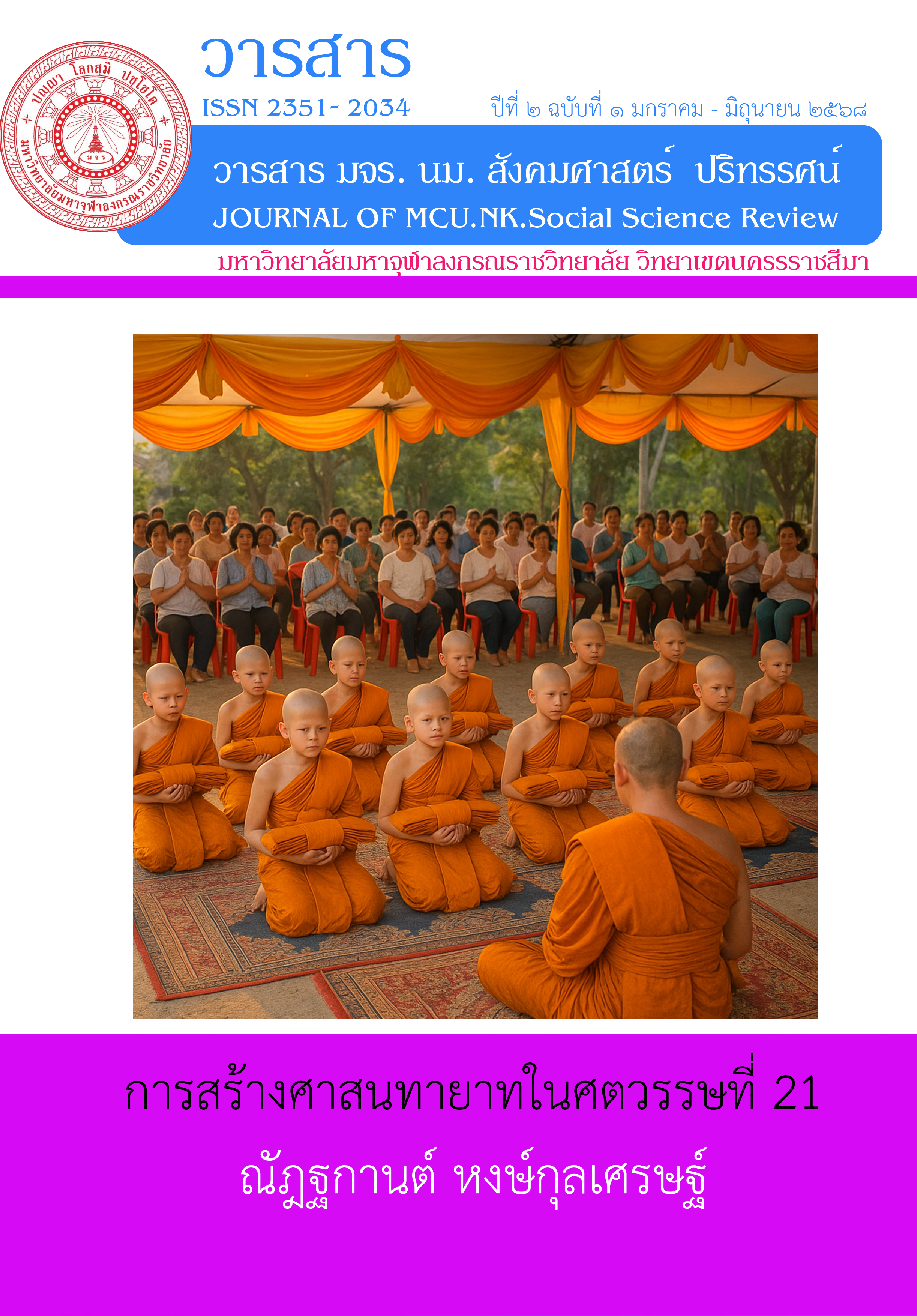
การสร้างศาสนทายาทในศตวรรษที่ ๒๑
Article Sidebar
Main Article Content
บทคัดย่อ
พระพุทธศาสนาเจริญรุ่งเรืองในประเทศไทย มีอิทธิพลต่อการขัดเกลาประชาชนในสังคมไทยโดยพระภิกษุ สามเณรเป็นกลไกสำคัญเผยแผ่พระพุทธศาสนาสืบต่อคำสอนของพระพุทธเจ้า ปัจจุบันแนวโน้มพระภิกษุ สามเณรในประเทศไทยปี พ.ศ. 2568 มีแนวโน้มลดลงต่อเนื่อง แม้ภาพรวมจำนวนพระภิกษุ สามเณรยังมีจำนวนมาก แต่ถ้าว่า พระภิกษุ สามเณร ส่วนมากอาศัยอยู่วัดใหญ่ในเมือง ส่วนวัดเล็กนอกเมืองมีพระภิกษุ สามเณรอาศัยอยู่น้อยมาก วัดนอกเขตอำเภอเมืองส่วนมากจำนวนพระภิกษุ สามเณรต่ำกว่า ๑๐ รูป และจังหวัดใหญ่ประเทศไทยมีพระภิกษุ สามเณรอาศัยอยู่มาก ได้แก่ กรุงเทพมหานคร รองลงมาจังหวัดนครราชสีมา และจังหวัดบุรีรัมย์ สาเหตุผลพระภิกษุ สามเณร อาศัยอยู่วัดในเมืองใหญ่ เนื่องจากมีปัจจัยสนับสนุนการศึกษาเล่าเรียน สิ่งอำนวยประโยชน์ต่อการสืบต่อพระพุทธศาสนา ส่วนวัดในอำเภอเล็กๆ ชุมชนห่างไกล มีพระภิกษุ สามเณรอาศัยอยู่น้อยมาก เพราะขาดปัจจัยฯลฯ วัดหนึ่งๆ ต่ำกว่า 5 รูป นอกจากนี้ พระภิกษุจำนวนมากเป็นพระภิกษุผู้สูงอายุ พระภิกษุอายุน้อยกับเณรมีจำนวนน้อย เข้าขั้นวิกฤติ พระภิกษุอายุน้อยส่วนมากบวชระยะสั้น ภาระสืบต่อพระพุทธศาสนาตกอยู่กับพระภิกษุสูงอายุ สามเณรจำนวนหนึ่งบวชเรียน ปฏิบัติธรรม เพื่อให้เกิดการสร้างศาสนทายาทสืบต่อพระพุทธศาสนาอย่างเป็นระบบ เริ่มต้นสนับสนุนเยาวชนบวชเรียน สนับสนุนให้สามเณรบวชเรียนต่อเป็นพระภิกษุ สร้างศาสนทายาททรงไว้ซึ่งพระไตรปิฎก เผยแผ่พระพุทธศาสนาในสถานการณ์ศตวรรษที่ ๒๑ เกิดกระบวนการสืบต่อพระพุทธศาสนาในประเทศไทย ขยายการศึกษาคณะสงฆ์ให้กระจายตัวครอบคลุมวัดทุกตำบล ปรับรูปแบบกิจกรรมการศึกษาคณะสงฆ์ เพิ่มจำนวนศาสนทายาท ช่วยพัฒนาคุณภาพชีวิตช่วงครองสมณเพศหรือแม้ลาสิกขา สามารถใช้ความรู้พัฒนาคุณภาพชีวิตตนเองและสังคม ช่วยสืบทอดคำสอนพระพุทธศาสนา
Article Details
เอกสารอ้างอิง
กลุ่มคลังข้อมูลสถิติ กองสถิติพยากรณ์ สำนักงานสถิติแห่งชาติ.สถิติบุคลากรและศาสนสถานทางศาสนาในประเทศไทย สถิติบุคลากรและศาสนสถานทางศาสนาในประเทศไทย. [ออนไลน์], แหล่งที่มา: https://ittdashboard.nso.go.th/preview.php?id_project=56 [3 มกราคม 2568].
ขุ.ธ. (ไทย)25/122/69 หมายถึง พระไตรปิฎกเล่มที่ 25 สุตตันตปิฎก ขุททกนิกาย ธัมมบท [6.พิฬารปทกเสฏฐิวัตถุ เรื่องพิฬารปทกเศรษฐี]ภาษาไทย เล่ม 25 ข้อ 122 หน้า 69 ฉบับมหาจุฬาลงกรณราชวิทยาลัย. 2539.
จำนงค์ อดิวัฒนสิทธิ์ (2538).พฤติกรรมการบวชของคนไทย. กรุงเทพฯ : คณะสังคมศาสตร์ มหาวิทยาลัยเกษตรศาสตร์ วิทยาเขตบางเขน.
ชมรมธรรมธารา.ศาสนทายาท (บาลีวันละคำ 3,631). [ออนไลน์], แหล่งที่มา: https://dhamtara.com/?p=21872 [4 มกราคม 2568].
ท่านพ่อลี ธัมมธโร.ญาติของพระศาสนา. [ออนไลน์], แหล่งที่มา: https://www.dhammathai.org/monktalk/dbview.php?No=528 [4 มกราคม 2568].
พระมหาสมัย จินฺตโฆสโก.สามเณรตัวน้อย เติมศาสนทายาท. [ออนไลน์], แหล่งที่มา: https://www.thairath.co.th/news/local/bangkok/2716534?gallery_id=1 [4 มกราคม 2568].
ประภาส แก้วสวรรค์. (2562). “พิธีถวายทุนศาสนทายาทสืบสานและเผยแผ่พระพุทธศาสนาภายใต้กองทุนส่งเสริมการเผยแผ่พระพุทธศาสนาเฉลิมพระเกียรติ 80 พรรษา พุทธศักราช 2562”. วารสารสายตรงศาสนา. 16(5) 33-37.
ผู้จัดการออนไลน์.ชาวเน็ตชื่นชม! สามเณร 10 ขวบ ท่องปาฏิโมกข์ ผ่านใช้เวลาแค่ 45 นาที. [ออนไลน์], แหล่งที่มา: https://mgronline.com/onlinesection/detail/9660000076574 [3 มกราคม 2568].
พระณัฐวุฒิ พันทะลี. (2563). การเปลี่ยนแปลงทางสังคมในศตวรรษที่ 21. วารสารวิชาการพระพุทธศาสนาเขตลุ่มแม่น้ำโขง. 3(2) 44-55.
พระมหาวุฑณ์ สุวุฑฒิโก (บุญเสนอ). (2564). รูปแบบการจัดการเรียนรู้เพื่อสร้างศาสนทายาทสำหรับคณะสงฆ์ไทย. วารสารครุศาสตร์ปริทรรศน์ฯ. 8(1) 324-335.
สมเด็จพระมหาสมณเจ้า กรมพระปรมานุชิตชิโนร. (2515). พระปฐมสมโพธิกถา. กรุงเทพฯ : โรงพิมพ์ธรรมบรรณาคาร.
สำนักงานพระพุทธศาสนาแห่งชาติ (2564).ข้อมูลพื้นฐานทางพระพุทธศาสนาประจำปี พ.ศ. 2564. กรุงเทพฯ : กลุ่มเทคโนโลยีสารสนเทศ สำนักงานเลขานุการกรม สำนักงานพระพุทธศาสนาแห่งชาติ.
