
SARANIYADHAMMA 6: THE DRIVING FORCE OF GRASSROOTS POLITICS
Article Sidebar
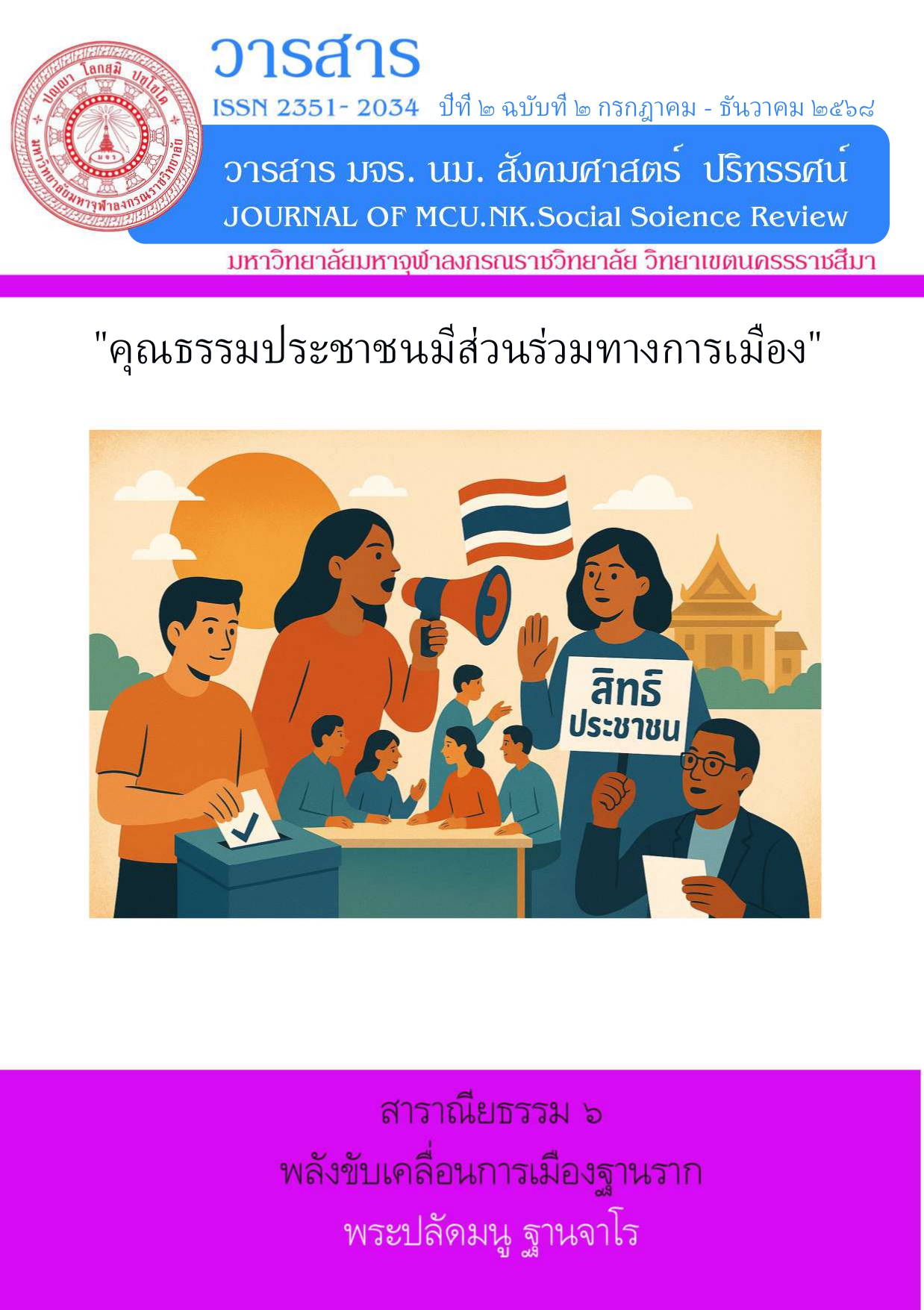
Main Article Content
Abstract
This academic article focuses on the significance of applying the six principles of Saraniyadhamma as a driving force for grassroots politics, especially at the local level. Local politics serves as a crucial mechanism that provides citizens with close political participation, encouraging them to recognize their rights and duties in society, strengthening their civic consciousness, and enabling them to take part in decision-making related to local administrative policies. As a result, people are able to choose suitable representatives, clearly understand political processes, and closely monitor and scrutinize the work of their elected officials—something that is often more difficult in national politics, where citizens may feel more distant. The study found that local-level participation forms the foundation for creating political equality and long-term political stability at the national level. Moreover, if local politicians and community members lack the application of moral principles in political administration, conflicts and confrontations tend to arise quickly—often more intensely than in national politics. Local politicians and residents constitute the grassroots political base of the country; therefore, they must establish a democratic foundation and conduct political activities in accordance with the six principles of Saraniyadhamma: Mettakaya-kamma (benevolent bodily actions), Mettavaci-kamma (benevolent speech), Mettamano-kamma (benevolent thoughts), Sadharana-bhogi (sharing and mutual generosity), Silasamaññata (common adherence to moral discipline), and Ditthisamaññata (shared right views). These moral principles cultivate unity within communities, strengthening the political foundation at the grassroots level and enabling the development of a fully democratic political system at the national level.
Article Details
References
(ม.มู. (ไทย) 12/492/531-532 หมายถึง พระไตรปิฎกเล่มที่ 12 สุตตันตปิฎก มัชฌิมนิกาย มูลปัณณาสก์
(5. จูฬยมกวรรค) 8. โกสัมพิยสูตร ภาษาไทย เล่ม 12 ข้อ 492 หน้า 531-532 ฉบับมหาจุฬาลงกรณราชวิทยาลัย. 2539
กัลยาณมิตรเพื่อนแท้สำหรับคุณ. “สาราณียธรรม 6 (วิธีสร้างความสามัคคี 6 ประการ). [ออนไลน์].แหล่งที่มา: https://kalyanamitra.org/th/article_detail.php?i=15409 [22 ตุลาคม 2567].
เชษฐา ทองยิ่ง. “พระมหากษัตริย์ไทยกับการวางรากฐานการปกครองระบอบประชาธิปไตย. [ออนไลน์], แหล่งที่มา: https://parliamentmuseum.go.th/2564/ar64-king-democracy.html [30 ตุลาคม 2567].
พระครูธรรมธรบุญเที่ยง พุทฺธสาวโก (ลักษณ์พลวงค์). (2564) “การบูรณาการหลักพุทธธรรมกับการสื่อสารทางการเมืองเพื่อเสริมสร้างความสมานฉันท์”. ตามหลักสูตรปริญญาปรัชญาดุษฎีบัณฑิต สาขาวิชารัฐศาสตร์. บัณฑิตวิทยาลัย : มหาวิทยาลัยมหาจุฬาลงกรณราชวิทยาลัย.
พระมหาวิเศษ กนฺตธมฺโม. (2562). การจัดการความขัดแย้งตามหลักสาราณียธธรรม, วารสารสหวิทยาการนวัตกรรมปริทรรศน์. 2(1) 32-37.
พระสมุห์สันติ สุจิณฺโณ (พรมสงฆ์) (2567). “วิเคราะห์ความสัมพันธ์ของหลักสาราณียธรรมเพื่อสร้างความสามัคคี”. วิทยานิพนธ์หลักสูตรปริญญาพุทธศาสตรมหาบัณฑิต สาขาวิชาพระพุทธศาสนา.บัณฑิตวิทยาลัย : มหาวิทยาลัยมหาจุฬาลงกรณราชวิทยาลัย.
ศราวุธ ขันธวิชัยและคณะ. (2564). การมีส่วนร่วมทางการเมืองของชุมชนในศตวรรษที่ 21, วารสาร มจร อุบลปริทรรศน์. 6(1) 704
สมเด็จพระพุทธโฆษาจารย์ (ป.อ.ปยุตโต). (2564). พจนานุกรมพุทธศาสตร์ ฉบับประมวลธรรม. พิมพ์ครั้ง
ที่ 43. กรุงเทพฯ : นายสนิท ตันติวัฒน์พานิช พิมพ์เผยแพร่เป็นธรรมทาน.
สำนักงานคณะกรรมการมาตรฐานการบริหารงานบุคคลส่วนท้องถิ่น. “การกระจายอำนาจการปกครองส่วนท้องถิ่นของประเทศไทยไทย. [ออนไลน์], แหล่งที่มา: http://www.local.moi.go.th/webst/decon.htm [22 ตุลาคม 2567].
เสกสรรค์ ไชยชาติและคณะ. (2565). การเคลื่อนไหวทางการเมืองของภาคประชาชน : ความหมาย ความสําคัญ บทบาทหน้าที่และรูปแบบยุทธวิธีที่มีผลต่อการเมืองไทย, วารสารรัฐศาสตร์ มหาวิทยาลัยมหามกุฏราชวิทยาลัย. 6(1) 140-141.
อัศว์ศิริ ลาปีอ. (2566). ความหลากหลายของกระบวนทัศน์ใหม่ในการเมืองฐานราก : ภาพสะท้อนมุมมองผู้ปฏิบัติการทางการเมืองท้องถิ่น จังหวัดสุราษฎร์ธานี, วารสารสำนักหอสมุด มหาวิทยาลัยทักษิณ. 12 68.
