TEMPLE MANAGEMENT FOR HAPPINESS
Article Sidebar
Main Article Content
Abstract
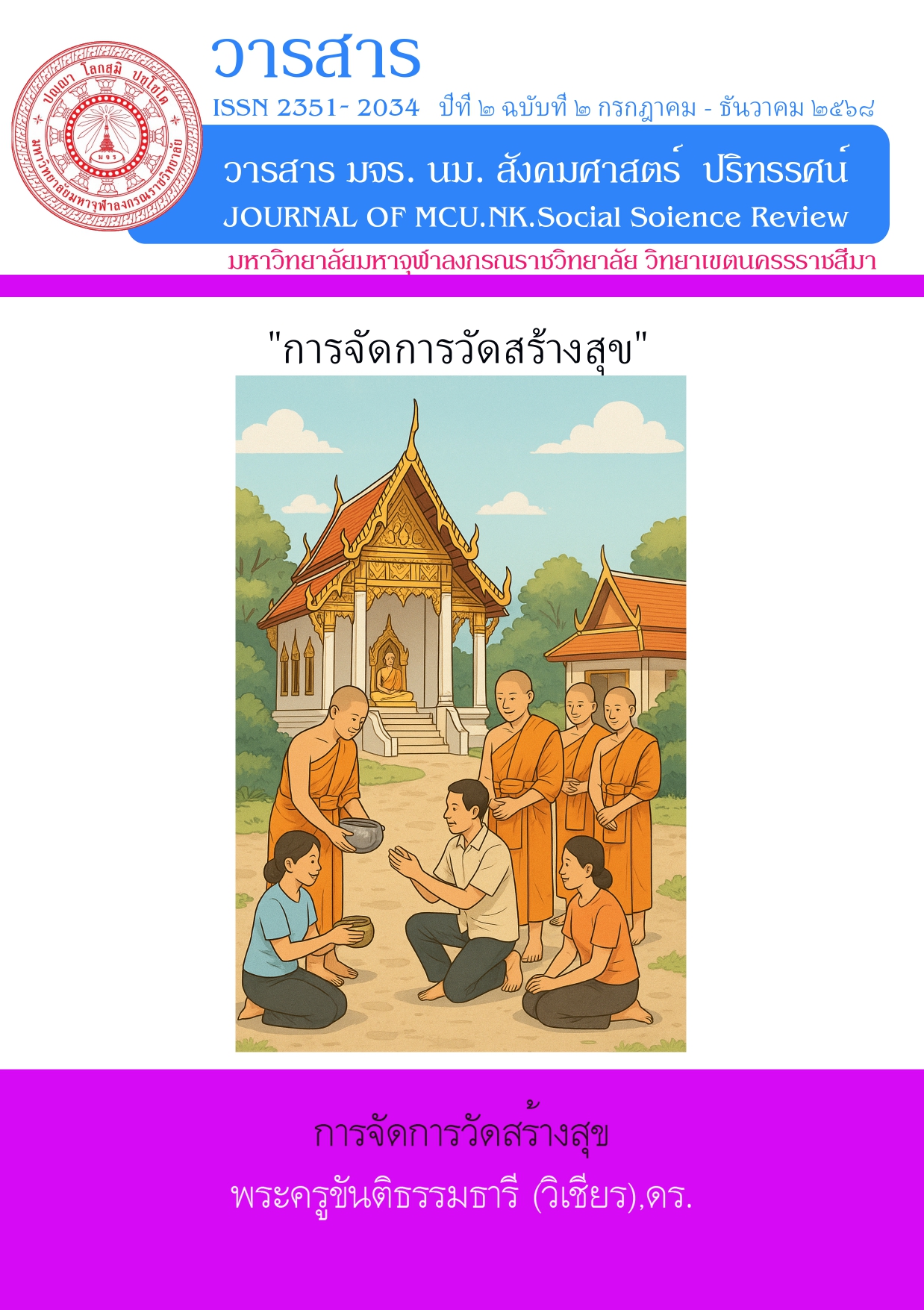
This academic article focuses on examining the management of “Happiness Temples” (Wat Sang Suk), based on the longstanding and significant role of temples and the Thai Sangha in Thai society—from before the establishment of the nation to the present day. Both Thais and foreigners acknowledge Thailand as a Buddhist country, and temples serve as the cultural and spiritual centers of their communities. Their architectural uniqueness, sacred Buddha images, surrounding landscapes, and distinctive local characteristics attract visitors from both within Thailand and abroad. The study found that temple development and management can promote temples as learning centers and elevate them as a form of soft power, increasing economic and tourism value while encouraging public participation in religious activities. This enables temples to become hubs for community income generation. The Thai Sangha has established the “Wat Pracharath Sang Suk” policy to enhance temple management so that temples may serve as sources of well-being for the people, driven by collaboration among temples, local communities, and government agencies to sustainably improve both temples and communities.
Additionally, temple management requires Buddhist principles, the abbot’s power, legal compliance, and support from community volunteers. The integration of the 5S management approach with Buddhist teachings enables temples to be managed as spaces that foster well-being in accordance with the concept of Sappaya 7. This model has gained recognition in both Thai and Foreigners . Effective temple management aligned with social conditions and the needs of local people helps temples develop distinctive identities and sustain happiness-generating activities for communities across generations, ultimately contributing to the sustainable well-being of Thai society.
Article Details
References
จตุพล ดวงจิตรและประยูร สุยะใจ. (2559). การบูรณาการหลักการบริหารเชิงพุทธในการส่งเสริมการจับเคลื่อมองค์กชุมชนในลุ่มน้ำแม่กลองตอนล่าง, วารสารการจัดการธุรกิจ มหาวิทยาลัยบูรพา คณะการจัดการและการท่องเที่ยว มหาวิทยาลัยบูรพา 67
เดลินิวส์ ออนไลน์. “หลวงพ่อพบโชค” วัดห้วยปลากั้ง เตรียมสร้างอุทยานธรรมฯ ศูนย์รวมพุทธศาสนาทุกนิกาย. [ออนไลน์], แหล่งที่มา: https://www.dailynews.co.th/news/2357202/ [13 ตุลาคม 2567 2567].
เทศบาลนครสงขลา. วันมาฆบูชา. [ออนไลน์], แหล่งที่มา: https://www.songkhlacity.go.th
/2020/news/detail/13742/data.html [13 ตุลาคม 2567 2567].
พระเทพปริยัติสุธี. เอกสารประกอบคำบรรยาย เรื่อง เจ้าอาวาส. [ออนไลน์], แหล่งที่มา: https://www.watmoli.com/wittaya-four/2448/ [13 ตุลาคม 2567 2567].
พระมหาชุติภัค อภินนฺโทและภัชรบถ ฤทธิ์เต็ม. (2565). สาธารณูปการวิถีพุทธ นนทบุรี :โครงการพัฒนาเครือข่ายองค์กรสุขภาวะวิถีพุทธเชิงสร้างสรรค์ สถาบันวิจัยพุทธศาสตร์มหาวิทยาลัยมหาจุฬาลงกรณ์ราชวิทยาลัยและสำนักสนับสนุนสุขภาวะองค์กร สำนักงานกองทุนสนับสนุนการสร้างเสริมสุขภาพ(สสส.), ฌ.
พระมหาสุทิตย์ อาภากโร(อบอุ่น)และคณะ. (2556). การพัฒนาระบบการบริหารจัดการและการสร้างเครือข่ายองค์กรพระพุทธศาสนาในประเทศไทย นนทบุรี :ศูนย์สร้างเสริมสุขภาวะองค์กร สำนักงานกองทุนสนับสนุนการสร้างเสริมสุขภาพ(สสส.), 3.
พระราชวรมุนี (พล อาภากโร ป.ธ.9, Ph.D.). การปฏิรูปกิจการ พระพุทธศาสนา. [ออนไลน์], แหล่งที่มา: https://www.posttoday.com/lifestyle/513959 [13 ตุลาคม 2567 2567].
วัด ประชา รัฐ สร้างสุข. หลักการทำงานโครงการวัด ประชา รัฐ สร้างสุข. [ออนไลน์], แหล่งที่มา: https://wat3579.com/blog/blog/detail/var/64s2f4w2v2 [12 ตุลาคม 2567 2567].
วิ.จู. (ไทย)7/442/383 หมายถึง พระไตรปิฎกเล่มที่ 07 วินัยปิฎกที่ 07 จุลวรรค ภาค 2 [5.เรื่องสิกขาบทเล็กน้อย]ภาษาไทย เล่ม 7 ข้อ 442 หน้า 383 ฉบับมหาจุฬาลงกรณราชวิทยาลัย 2539
สมเด็จพระพุทธโฆษาจารย์ (ป.อ.ปยุตโต). (2564). พจนานุกรมพุทธศาสตร์ ฉบับประมวลธรรม.พิมพ์ครั้งที่ 43. กรุงเทพฯ : นายสนิท ตันติวัฒน์พานิช พิมพ์เผยแพร่เป็นธรรมทาน.
สุธี ขวัญเงิน. (2559). หลักการจัดการ กรุงเทพฯ :ซีเอ็ดยูเคซั่น, 14.
