
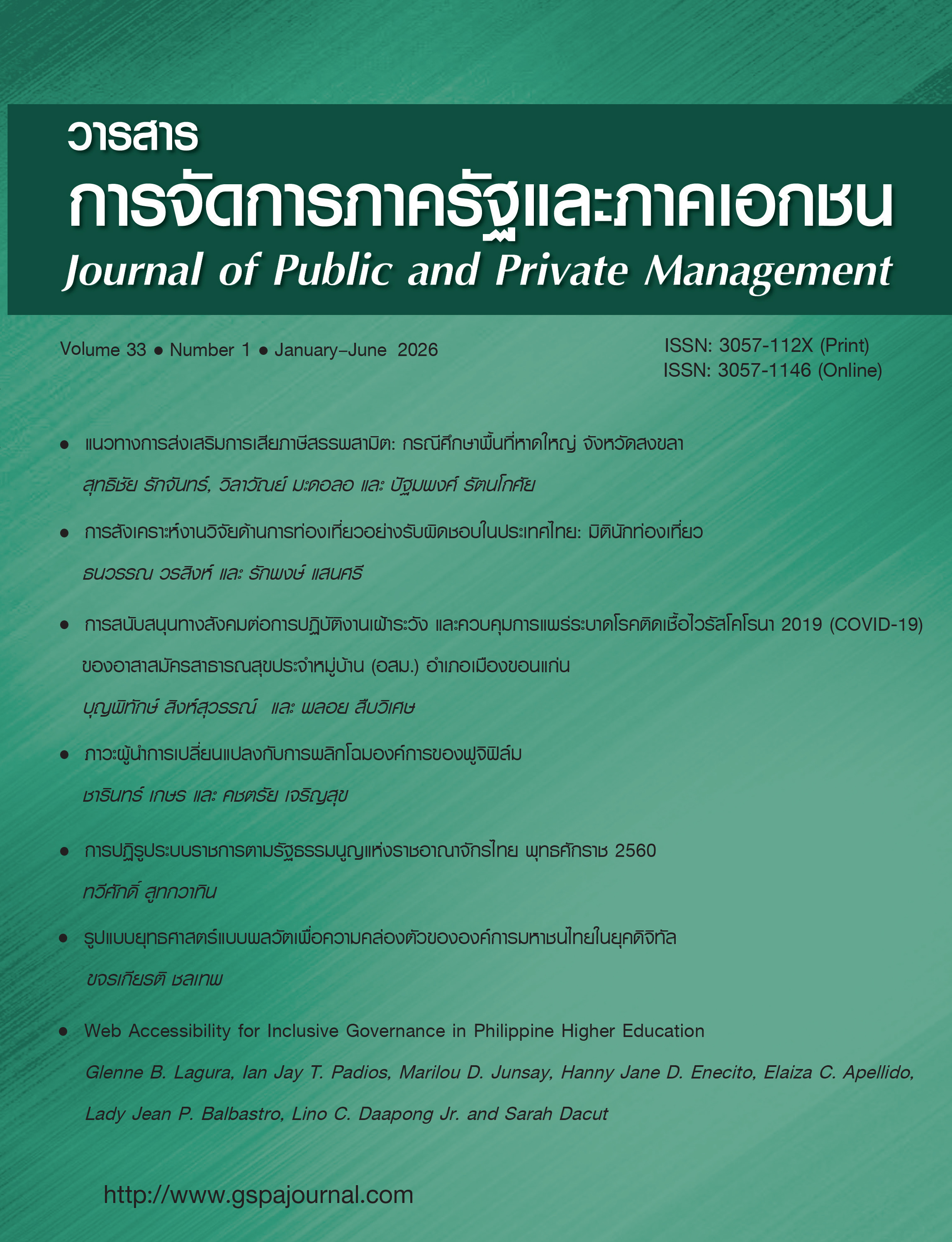
แนวทางการส่งเสริมการเสียภาษีสรรพสามิต: กรณีศึกษาพื้นที่หาดใหญ่ จังหวัดสงขลา
DOI:
https://doi.org/10.14456/ppm.2026.1คำสำคัญ:
ภาษีสรรพสามิต, นโยบายภาษี, การจัดเก็บภาษีบทคัดย่อ
งานวิจัยนี้มีวัตถุประสงค์เพื่อศึกษาปัญหาอุปสรรคในการเสียภาษีและแนวทางการส่งเสริมการเสียภาษีสรรพสามิตของสรรพสามิตพื้นที่สงขลา สาขาหาดใหญ่ การศึกษาครั้งนี้เป็นการศึกษาวิจัยเชิงคุณภาพ โดยใช้วิธีการศึกษาค้นคว้าและรวบรวมข้อมูลจากเอกสารที่เกี่ยวข้อง และเก็บข้อมูลจากการสัมภาษณ์กลุ่มตัวอย่าง คือ กลุ่มผู้เกี่ยวข้องกับการจัดเก็บภาษีและเสียภาษีสรรพสามิตของสรรพสามิตพื้นที่สงขลาสาขาหาดใหญ่
ผลการศึกษา สามารถแบ่งได้เป็น 5 ด้าน พบว่า 1. ด้านความรู้ความเข้าใจเกี่ยวกับภาษีสรรพสามิต ผู้ประกอบการแต่ละคนมีความรู้ความเข้าใจเกี่ยวกับภาษีสรรพสามิตที่แตกต่างกัน ผู้ประกอบการบางรายไม่สามารถเข้าถึงชุดข้อมูลมีความเข้าใจผิดว่าสินค้าของตนเองนั้นไม่ต้องเสียภาษีสรรพสามิต แต่โดยทั่วไปแล้วเข้าใจว่าเป็นภาษีเกี่ยวกับสินค้าฟุ่มเฟือยที่ไม่ได้มีความจำเป็นมาก 2. ด้านความสำคัญในการจัดเก็บภาษี ภาษีสรรพสามิตมีความสำคัญในการจัดเก็บ เนื่องจากมีการนำรายได้ส่วนนี้ส่งให้กับรัฐ เพื่อเป็นงบประมาณแผ่นดินที่รัฐจะนำมาพัฒนาคุณภาพชีวิตของประชาชนในประเทศในมิติการศึกษา มิติของการพัฒนาชุมชน และมิติของสาธารณสุข ภาษีสรรพสามิตจำเป็นต่อการจัดเก็บและควบคุมไม่ควรปล่อยให้เป็นเสรีกับสินค้าบางประเภท ภาษีสรรพสามิตไม่ได้เป็นแค่การจัดเก็บรายได้และจัดสรรงบประมาณแผ่นดินแต่ยังเป็นเครื่องมือสำคัญในการควบคุมพฤติกรรมของผู้บริโภค ซึ่งทั้งหมดนี้ล้วนมีส่วนสำคัญในการพัฒนาประเทศ 3. ด้านปัญหาและอุปสรรคในการเสียภาษีและจัดเก็บภาษี คือ ระยะทางในการเดินทางมายังสำนักงาน การเข้าไม่ถึงชุดข้อมูลที่มากพอของผู้ประกอบการเป็นภาระทางการเงินที่สำคัญสำหรับผู้ประกอบการ โดยเฉพาะธุรกิจขนาดเล็กและกลางซึ่งภาษีค่อนข้างสูง อีกทั้งวิธีการชำระภาษีมีความซับซ้อน เข้าใจยาก กอปรกับปัญหาอุปสรรคในการจัดเก็บภาษีสรรพสามิต คือ ผู้ประกอบการบางรายตั้งใจหลีกเลี่ยงภาษี หรือแจ้งรายรับต่ำกว่าที่ตัวเองได้รับจริง 4. ด้านข่าวสารการประชาสัมพันธ์ของสรรพสามิต ข่าวสารและการประชาสัมพันธ์ของสรรพสามิต มีน้อยมาก ไม่ค่อยเข้าถึงผู้ประกอบการ ความหลากหลายของกลุ่มผู้ประกอบการนั้นทำให้แต่ละกลุ่มอาจมีช่องทางการเข้าถึงข้อมูลที่แตกต่าง บางคนอาจรู้สึกว่าการสอบถามเจ้าหน้าที่เพียงพอแล้ว หรืออาจคิดว่าการเพิ่มข่าวสารประชาสัมพันธ์ผ่านสื่อต่าง ๆ นั้นสามารถเพิ่มมิติการรับรู้ข่าวสารและความเข้าใจเกี่ยวกับภาษีที่ถูกต้องมากขึ้น ซึ่งอาจจะเข้าใจง่ายกว่าการทำความเข้าใจกฎหมาย 5. ด้านการพัฒนาแนวทางการส่งเสริมการเสียภาษีสรรพสามิต การประสานความร่วมมือระหว่างภาครัฐ หัวหน้าชุมชน และผู้ประกอบการ ให้เจ้าหน้าที่ลงไปให้ชุดข้อมูลที่ถูกต้อง เพื่อดำเนินการไปตามขั้นตอนอย่างถูกกฎหมายพร้อมส่งเสริมให้ผู้ประกอบการมีความรู้ความเข้าใจในการเสียภาษีเพิ่มมากขึ้น ในส่วนของการนำเทคโนโลยีมาใช้ในการเก็บรวบรวมข้อมูลด้วยการสร้างแอพพลิเคชั่นเพื่ออำนวยความสะดวกทั้งต่อเจ้าหน้าที่และผู้ประกอบการ ซึ่งประหยัดเวลาในการเดินทางของผู้ประกอบการ อีกทั้งเจ้าหน้าที่ยังสามารถตรวจสอบได้ เพื่อจะได้ไปรับผิดชอบงานในส่วนอื่น ๆ ต่อไป ความสะดวกสบายในเรื่องเทคโนโลยีจะช่วยสนับสนุนให้ผู้ประกอบการเสียภาษีสรรพสามิตอย่างถูกต้องมากยิ่งขึ้น
Downloads
เอกสารอ้างอิง
Chantanusornsiri, W. (2024). Excise considers new green tax measures - Carbon levy planned for certain sectors. Bangkok Post. https://www.bangkokpost.com/business/general/2720023/excise-considers-new-green-tax-measures
Excise Department. (2021). The 5-year strategic plan of the Excise Department (B.E. 2564 - 2568). Division of Planning and Quality Development, Tax Office.
Panjaem, P. (2018). Guidelines for auditing excise tax: A case study of beverage products [Master’s Thesis, Faculty of Commerce and Accountancy, Thammasat University]. TU Digital Collections.
Patmasiriwat, D., & Watthanadamrong, P., & In-on, M. (2023). Excise tax and provincial economies. Journal of the Public Administration Association of Thailand, 3(6), 19–42. https://so10.tci-thaijo.org/index.php/paatj/article/view/326
Podong, R., & Treesirichote, T. (2020). Guidelines for human resource development in new collection methods at the Excise Department. Journal of the Association of Researchers, 25(1), 401–431. https://so04.tci-thaijo.org/index.php/jar/article/view/241599
Robkob, A., & Muenthaisong, K. (2022). The Effects of Taxpayer Requirements, Good Governance, and Technology Innovation on the Service Performance of the Revenue Department, Ministry of Finance. Hatyai Academic Journal, 20(1), 149–165. https://so01.tci-thaijo.org/index.php/HatyaiAcademicJournal/article/view/240000
Sirisanharan, S., Chattong, N., Pattana, T., Bunpot, N., & Tiantong, K. (2019). Comparative public finance: Case studies of Thailand, the United States, the United Kingdom, the Republic of Singapore, and the Republic of Korea. Journal of Integrated Social Sciences, 6(1), 257–299. https://so02.tci-thaijo.org/index.php/isshmu/article/view/192921
Sirisanharan, S., Wattho, N., Liangthanarerk, P. & Klinla-or, W. (2021). A comparative study of excise tax (sin tax) management: Revenue for sustainability, case studies of Thailand, Philippines, and Singapore. Journal of Quality of Life and Law, 17(2), 109–125. https://so05.tci-thaijo.org/index.php/QLLJ/article/view/256765
Suvanvihok, V., & Patmasiriwat, D. (2022). Provincial Economies and Inequality in Tax Collection. Journal of Applied Economics and Management Strategy, 9(1), 97–112. https://kuojs.lib.ku.ac.th/index.php/jaems/article/view/3640
Songkhla Provincial Excise Office. (2024). Official website of the Songkhla Provincial Excise Office. https://www.excise.go.th/songkhla/PEOPLE/INFOCENTER/index.htm
Thansettakij. (2024). Excise Department’s fiscal year 2024 revenue falls short of target by 74 billion baht. https://www.thansettakij.com/business/economy/610531
Wongsansri, P. (1991). Organization and management (4th ed.). Supha Printing.
ดาวน์โหลด
เผยแพร่แล้ว
เวอร์ชัน
- 2026-06-18 (2)
- 2026-06-05 (1)
รูปแบบการอ้างอิง
ฉบับ
ประเภทบทความ
สัญญาอนุญาต

อนุญาตภายใต้เงื่อนไข Creative Commons Attribution-NonCommercial-NoDerivatives 4.0 International License.

