
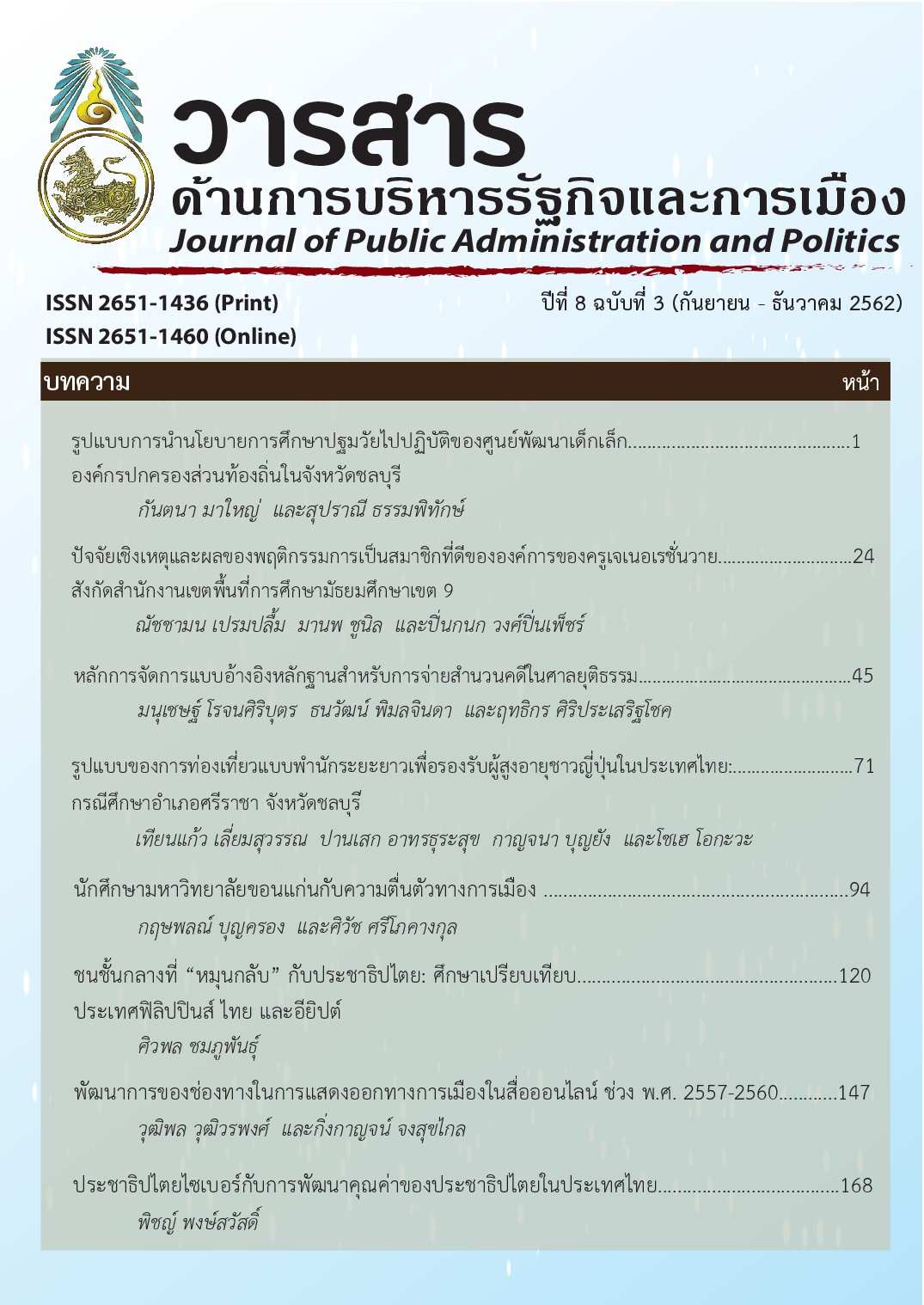
CYBER DEMOCRACY AND THE DEVELOPMENT OF DEMOCRATIC VALUES IN THAILAND
Article Sidebar
Main Article Content
Abstract
This research article aims to survey and make a comparative study of the meaning of cyber democracy from various academic works and actual activities in Thailand and the international one to search for a new meaning that is useful for the Thai case. The article also aims to study the role of internet technology and political activities in the Thai cyber space that leads to democratic development via the rise a new political institution. The research was conducted between 2017-2018 which was the last moment of the coup regime before the 2019 election. The research deployed literature review
The research founds that cyber democracy is a phenomenon in which democratic activities and movements appear on the internet world or the “cyber space”. Despite the fact that Thailand had been in an authoritarian regime, people had struggled to develop and utilize internet technology to make the cyber world having more democratic value. Internet technology helps promote expression of people opinion and gives people more chance to participate in deciding and proposing public policy.
This research suggests four elements to develop cyber democracy into a new political institution that helps improve the quality of democracy; i.e. 1) increasing people participation in the political regime, 2) enhancing civil rights and political freedom of the citizen; 3) building people-based cyber security; and 4) promoting a learning society that help develop democratic values.
Article Details
References
- MGR online. (2560 ข). ถอยดีกว่า... ไม่อ๊าววว ดีกว่า.. จบดรามา! ตำรวจยอมให้นั่งกระบะ-แค็บ ช่วงสงกรานต์. สืบค้นเมื่อ 18 เมษายน 2561, จาก https://mgronline.com/live/detail/ 9600000034988.
- Thawinee C. (2560). ขอคัดค้านการปิดสวนสาธารณะพระราม 3 เฉลิมพระเกียรติฯ. สืบค้นเมื่อ 18 เมษายน 2561, จาก https://www.change.org/p/การทางพิเศษแห่งประเทศไทย-ขอคัดค้านการปิดสวนสาธารณะพระราม-3-เฉลิมพระเกียรติฯ .
- กรุงเทพธุรกิจ. (2561). เครือข่ายนิสิตฯ ออกแถลงการณ์ปกป้อง "นิสิต มมส" เปิดโปงส่อทุจริตฉาว. สืบค้นเมื่อ 13 กุมภาพันธ์ 2561, จาก https:// www.bangkokbiznews.com/news/detail/792323.
- กานต์ ชีวสาธน. (2556). ปรากฏการณ์ล้อเลียนเสียดสีข่าวในรายการทีวีออนไลน์
“เจาะข่าวตื้น” (วิทยานิพนธ์). สาขาวิชานิเทศศาสตร์ คณะนิเทศศาสตร์ จุฬาลงกรณ์มหาวิทยาลัย, กรุงเทพฯ.
- ข่าวสด. (2561). ‘บิ๊กตู่’ ฉะพวกทุจริตอาหารกลางวันเด็ก ลั่นต้องสำนึกเรื่องงบประมาณบ้าง. สืบค้นเมื่อ 5 มิถุนายน 2561, จาก https://www.khaosod.co.th/politics/news_1174742.
- คณะกรรมาธิการทหาร วุฒิสภา. (2555). สื่อสังคมออนไลน์กับภัยคุกคามต่อความมั่นคงของชาติ. กรุงเทพฯ : คณะกรรมาธิการทหาร วุฒิสภา.
- ชาญชัย ชัยสุขโกศล. (2552). เทคโนโลยีกับการต่อสู้ทางการเมืองโดยไร้ความรุนแรง: ศึกษากรณีอินเทอร์เน็ตในประเทศไทย (วิทยานิพนธ์). สาขาวิชารัฐศาสตร์ คณะรัฐศาสตร์ จุฬาลงกรณ์มหาวิทยาลัย, กรุงเทพฯ.
- ณัฐกานต์ กูลณรงค์. (2551). การสื่อสารทางการเมืองบนเครือข่ายอินเตอร์เน็ตในช่วงการต่อต้านรัฐบาลทักษิณ (วิทยานิพนธ์). คณะรัฐศาสตร์และรัฐประศาสนศาสตร์ มหาวิทยาลัยเชียงใหม่, เชียงใหม่.
- ไทยรัฐออนไลน์. (2558). ชาวเน็ตแห่ต้าน ‘ซิงเกิล เกตเวย์’ แชร์ภาพไอคอน Wi-Fi ถูกกะลาครอบ. สืบค้นเมื่อ 18 เมษายน 2561, จาก https://www.thairath.co.th/content/528235.
- ไทยรัฐออนไลน์. (2559). ศาลรอลงอาญา 2 ปี ‘อานดี้ ฮอลล์’ หมิ่น ’เนเชอรัล ฟรุต’ ละเมิดก.ม.แรงงาน. สืบค้นเมื่อ 9 มีนาคม 2561, จาก https://www.thairath.co.th/content/728850.
- ไทยรัฐออนไลน์. (2560). ดีเอสไอแจ้งกองปราบเอาผิด ‘พระสนิทวงศ์’ ผิด ม.116 - พ.ร.บ.คอมพ์. สืบค้นเมื่อ 9 มีนาคม 2561, จาก https://www.thairath.co.th/content/873287.
- ไทยรัฐออนไลน์. (2561). ปปท.จ่อเอาผิด ผอ.ศูนย์ไร้ที่พึ่ง ‘โกง’เงินคนจนกับพวกอีก 5คน. สืบค้นเมื่อ 14 กุมภาพันธ์ 2561, จาก https://www.thairath.co.th/content/1203777.
- นิวัติ เนียมพลอย. (2556). ไซเบอร์กับการรักษาความปลอดภัยและการปฏิบัติการ. สืบค้นเมื่อ 15 มิถุนายน 2561, จาก https:// nniwat.wordpress.com/2013/11/08.
- ประกาศสำนักทะเบียนกลาง เรื่องจำนวนราษฎรทั่วราชอาณาจักร ตามหลักฐานการทะเบียนราษฎร ณ วันที่ 31 ธันวาคม 2561 (2562, 8 กุมภาพันธ์). ราชกิจจานุเบกษา, เล่ม 136 ตอนพิเศษ 36ง.
- ประชาไท. (2558). 'ภูเก็ตหวาน' ร้อง 'ประยุทธ์' สั่งกองทัพเรือถอนฟ้อง. สืบค้นเมื่อ 6 เมษายน 2561, จาก https://prachatai.com/journal/2015/01/57553.
- ประชาไท. (2559). ศาลยกฟ้องนักกิจกรรมด้านสิ่งแวดล้อม ปมโพสต์วิจารณ์เหมืองอัครา. สืบค้นเมื่อ 6 เมษายน 2561, จาก https://prachatai.com/journal/2016/11/69053.
- ประชาไท. (2560). นริศราวัลถ์ หลานสาวพลทหารวิเชียร เผยอัยการสั่งไม่ฟ้องคดี พ.ร.บ.คอมฯ. สืบค้นเมื่อ 6 เมษายน 2561, จาก https://prachatai.com/journal/2017/01/69766.
- พิชญ์ พงษ์สวัสดิ์. (2561). ประชาธิปไตยไซเบอร์: ข้อเสนอเพื่อการพัฒนาคุณค่าของระบอบประชาธิปไตยผ่านเครือข่ายอินเตอร์เน็ต. รายงานวิจัยฉบับสมบูรณ์. กรุงเทพฯ: สถาบันพระปกเกล้า.
- พิรงรอง รามสูต และนิธิมา คณานิธินันท์. (2547). การกำกับดูแลเนื้อหาอินเทอร์เน็ต. กรุงเทพฯ: สำนักงานกองทุนสนับสนุนงานวิจัย.
- มัทนา นันตา. (2556). เว็บไซต์ยูทูบ (ภาษาไทย) กับการสื่อสารความเกลียดชัง (วิทยานิพนธ์). สาขาวิชานิเทศศาสตร์ คณะนิเทศศาสตร์ จุฬาลงกรณ์มหาวิทยาลัย, กรุงเทพฯ.
- ยุทธพร อิสรชัย. (2544). อินเตอร์เน็ตกับการเมืองไทย (วิทยานิพนธ์). สาขาวิชาการปกครอง ภาควิชาการปกครอง คณะรัฐศาสตร์ จุฬาลงกรณ์มหาวิทยาลัย, กรุงเทพฯ.
- รัชนีกร ทองทิพย์. (2548). การใช้สื่ออินเตอร์เน็ตเพื่อสร้างพันธมิตรของขบวนการเคลื่อนไหวทางสังคมแนวใหม่ (วิทยานิพนธ์). คณะรัฐศาสตร์ จุฬาลงกรณ์มหาวิทยาลัย, กรุงเทพฯ.
- สาวตรี สุขศรี. (2555). ผลกระทบจากพระราชบัญญัติว่าด้วยการกระทำความผิดเกี่ยวกับคอมพิวเตอร์ พ.ศ. 2550 และนโยบายของรัฐกับสิทธิและเสรีภาพในการแสดงความคิดเห็น. กรุงเทพฯ: โครงการอินเทอร์เน็ตเพื่อกฎหมายประชาชน (iLaw) ในมูลนิธิอาสาสมัครเพื่อสังคม.
- สำนักงานคณะกรรมการกิจการกระจายเสียง กิจการโทรทัศน์ และกิจการโทรคมนาคมแห่งชาติ. (ม.ป.ป.). ผู้ใช้งานอินเตอร์เน็ตในประเทศไทย. สืบค้นเมื่อ 20 กันยายน 2562, จาก https://webstats.nbtc.go.th/netnbtc/INTERNETUSERS.php.
- สุธาสินี พลอยขาว. (2551). วัจนกรรมการแสดงความไม่พอใจในกระดานสนทนาทางอินเทอร์เน็ต (วิทยานิพนธ์). คณะอักษรศาสตร์ จุฬาลงกรณ์มหาวิทยาลัย, กรุงเทพฯ.
- สุวิชาภา อ่อนพึ่ง. (2554). ปัญหาการบังคับใช้พระราชบัญญัติว่าด้วยการกระทำความผิดเกี่ยวกับคอมพิวเตอร์ พ.ศ. 2550: ศึกษาความผิดเกี่ยวกับการเผยแพร่ข้อมูลอันกระทบต่อความมั่นคงแห่่งราชอาณาจักร (วิทยานิพนธ์). คณะนิติศาสตร์ จุฬาลงกรณ์มหาวิทยาลัย, กรุงเทพฯ.
- Barth, Thorsten D., and Schlegelmilch, Willi. (2014). Cyber democracy: The future of democracy?. In Elias G. Carayannis, David F. J. Campbell, and Marios Panagiotis Efthymiopoulos (Eds.), Cyber-development, Cyber-democracy and Cyber-defense: Challenges, opportunities and implications for theory, policy and practice (pp.195-206). New York: Springer.
- Bimber, Bruce. (1998). The internet and political mobilization: Research note on the 1996 election season. Social Science Computer Review, 16(4), pp. 394-404.
- Campbell, David F.J., and Carayannis, Elias G. (2014). Explaining and comparing quality of democracy in quadruple helix structures: The quality of democracy in the United States and in Australia, challenges and opportunities for development. In Elias G. Carayannis, David F. J. Campbell, and Marios Panagiotis Efthymiopoulos (Eds.), Cyber-development, Cyber-democracy and Cyber-defense: Challenges, opportunities and Implications for theory, policy and practice (pp.117-146). New York: Springer.
- Côté, François. (2004). Parliamentary institutions and cyber-democracy. Canadian Parliamentary Review, 27(3), pp.23-26.
- Dalton, Russell J. (2004). Democratic challenges, democratic choices: The Erosion of Political Support in Advanced Industrial Democracies. Oxford: Oxford University Press.
- Fajemisin, Joan Tirwyn. (2012). Cyber-democracy and its impact on politics. Humanities and Social Sciences Review, 1(3), pp.435-446.
- Filzmaier, Peter. (2002). Cyberdemocracy - an issue for civic education. Retrieved November 8, 2015, from https://www.demokratiezentrum.org/fileadmin/media/ pdf/filzmaier_cyberdemocracy.pdf.
- Hauben, Ronda, and Hauben, Michael. (1997). Netizens: On the history and impact of Usenet and the internet. Los Alamitos: Wiley-IEEE Computer Society Press.
- Lynch, Marc. (2013). Twitter Devolutions: How social media is hurting the Arab Spring. Retrieved November 8, 2015, from https://foreignpolicy.com/2013/02/07/twitter-devolutions/.
- Margolis, Michael. (2007). E-Government and democracy. In Russell J. Dalton, and Han-Dieter Klingemann (Eds.), The Oxford handbook of political behavior (pp.765-782). Oxford: Oxford University Press.
- Rheingold, H. (1993). The virtual community: Homesteading on the electronic frontier. Massachusetts: Addison-Wesley.
- Shapiro, Andrew L. (1999). The control revolution: How the internet is putting Individuals in charge and changing the world we know. New York: Public Affairs.
- The Economist. (2016). The post-truth world - yes, i’d lie to you. Retrieved December 20, 2019, from https://www.economist.com/ briefing/2016/09/10/yes-id-lie-to-you.
- Wilkinson, Francis. (2018). Democracy will die, maybe in Its sleep: A Q&A with political scientist David Runciman. Retrieved May 22, 2018, from https://www.bloomberg. com/view/articles/2018-05-22/democracy-s-death-narrated-by-david-runciman.
- World Wide Web Foundation. (2018). World wide web foundation. Retrieved February 11, 2018, from https://webfoundation.org/.
