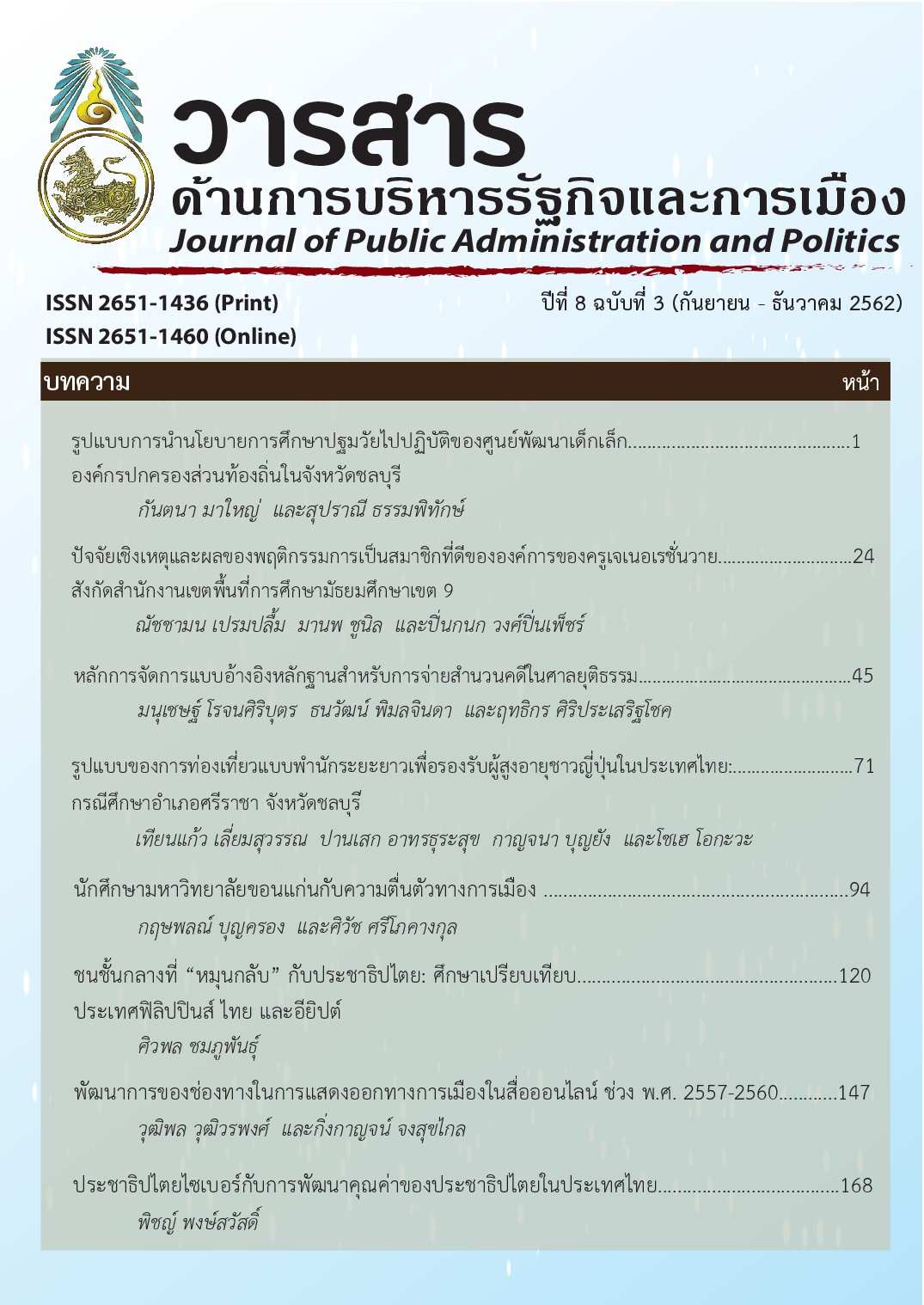
THE “REVOLT” MIDDLE CLASS AND DEMOCRACY: CASE STUDIES OF THE PHILIPPINES, THAILAND AND EGYPT
Article Sidebar
Published:
Dec 27, 2019
Keywords:
the middle class democracy democratic transition
Main Article Content
Abstract
This article aims to revisit the middle class’s role in democracy empirically and theoretically by comparing three case studies; the Philippines, Thailand and Egypt by documentary research. Theoretically, the previous studies showed that the middle class is one of the positive major forces in the democratization process. This article, however, found that, because of the political contingent actors as well as contingent democrats, the middle class’s role has revolted from democratic transition forces to anti-democratic forces.
Article Details
Section
Articles
References
- กปปส.ใน กทม.และหลายจังหวัดเริ่มต่อต้านการเลือกตั้งล่วงหน้า. (2561). สืบค้นเมื่อ มกราคม 2, 2561, จาก https://prachatai.com/journal/2014/01/51413
- ชัยวัฒน์ ม่านศรีสุข. (2558). ชนชั้นกลางกับการเปลี่ยนสู่ประชาธิปไตย: ข้อสังเกตเบื้องต้น” รัฐศาสตร์ 33 ปี. นนทบุรี: สาขาวิชารัฐศาสตร์ มหาวิทยาลัยสุโขทัยธรรมาธิราช.
- ดาวราย ลิ่มส่ายหั้ว. (2559). การเปลี่ยนผ่านสู่ประชาธิปไตยในอาหรับ: ศึกษาเปรียบเทียบอียิปต์และอิหร่าน. วารสารสังคมศาสตร์, 46(2), หน้า 109-129.
- ธร ปีติดล. (2560). คนชั้นกลาง (บน) ผู้ไม่คุ้นเคยกับประชาธิปไตย. สืบค้นเมื่อธันวาคม 29, 2560, จาก http://www.aftershake.net/?p=880
- นิธิ เอียวศรีวงศ์. (2560). คนชั้นกลางไทยกับประชาธิปไตย (1). สืบค้นเมื่อ มกราคม 10, 2561, จาก https://www.matichon.co.th/news/427692
- บัณฑิต จันทร์โรจนกิจ. (2560). การเมืองไทยร่วมสมัย. กรุงเทพฯ: สถาบันพระปกเกล้า.
- มูนีเราะฮ์ ยีดำ. (2555). ชนชั้นกลางและประชาธิปไตย: มุมมองเชิงเปรียบเทียบประเทศไทยและฟิลิปปินส์ (วิทยานิพนธ์). สาขาวิชาการปกครอง คณะรัฐศาสตร์ จุฬาลงกรณ์มหาวิทยาลัย, กรุงเทพฯ.
- วรวิทย์ เจริญเลิศ. (2536). ชนชั้นกลางกับเหตุการณ์พฤษภาทมิฬ: ฝ่ายประชาธิปไตยหรือรัฐปฏิการ. ใน สังศิต พิริยะรังสรรค์ และผาสุก พงษ์ไพจิตร (บรรณาธิการ), ชนชั้นกลางบนกระแสประชาธิปไตย (หน้า 140-142). กรุงเทพฯ: ศูนย์ศึกษาเศรษฐศาสตร์การเมือง
คณะเศรษฐศาสตร์ จุฬาลงกรณมหาวิทยาลัย.
- สังศิต พิริยะรังสรรค์ และผาสุก พงษ์ไพจิตร (บรรณาธิการ). (2536). ชนชั้นกลางบนกระแสประชาธิปไตยไทย. กรุงเทพฯ: ศูนย์ศึกษาเศรษฐศาสตร์การเมือง คณะเศรษฐศาสตร์ จุฬาลงกรณ์มหาวิทยาลัย.
- สีดา สอนศรี. (2551). ฟิลิปปินส์: จากอดีตสู่ปัจจุบัน (ค.ศ. 1986-2006). กรุงเทพฯ: มหาวิทยาลัยธรรมศาสตร์.
- สีดา สอนศรี. (2552). ฟิลิปปินส์: การเมือง เศรษฐกิจและการต่างประเทศหลังวิกฤตเศรษฐกิจ (ค.ศ. 1997-2006). ใน สีดา สอนศรี (บรรณาธิการ), เอเชียตะวันออกเฉียงใต้: การเมือง เศรษฐกิจและการต่างประเทศ หลังวิกฤตเศรษฐกิจ (พ.ศ. 2540-2550) (หน้า 77). กรุงเทพฯ: คณะรัฐศาสตร์ มหาวิทยาลัยธรรมศาสตร์.
- อภิชาต สถิตนิรามัย, ยุกติ มุกดาวิจิตร และนิติ ภวัครพันธุ์. (2556). ทบทวนภูมิทัศน์การเมืองไทย. กรุงเทพฯ: สำนักงานกองทุนสนับสนุนการสร้างเสริมสุขภาพ.
- เอนก เหล่าธรรมทัศน์. (2536). ม็อบมือถือ: ชนชั้นกลางและนักธุรกิจกับพัฒนาการประชาธิปไตย. กรุงเทพฯ: มติชน.
- Acemoglu, D. and Robinson, J. A. (2006). Economic origins of dictatorship and democracy. Cambridge: Cambridge
University Press.
- Ashraf El-Sherif. (2014). The Egyptian Muslim brotherhood’s failures: Part 1 of a series on political Islam in Egypt. Washington DC: Carnegie Endowment for International Peace Publications Department.
- Bunce, V. (2000). Comparative democratization: Big and bounded generalizations. Comparative Political Studies, 33(6-7), pp.703-734.
- Diamond, L. (2016). In search of democracy. New York: Routledge.
- Diamond, L. and Plattner, M. C. (Eds.) (2015). Democracy in decline? Baltimore: Johns Hopkins University Press.
- Foa, R. S. and Mounk, Y. (2017). The signs of deconsolidation. Journal of Democracy, 28(1), pp. 5-15.
- Fukuyama, F. (2014). Political order and political decay: From the industrial revolution to the globalization of democracy. London: Profile Books.
- Girling, J. (1981). Thailand: Society and politics. Ithaca: Cornell University Press.
- Huntington, S. P. (1991). The third wave: Democratization in the late twentieth century. Norman: University of Oklahoma Press.
- Kandil, H. (2012). Why did the Egyptian middle class march to Tahrir Square? Mediterranean Politics, 17(2), pp.197-215.
- Kurlantzick, J. (2013). Democracy in retreat: The revolt of the middle class and the worldwide decline of representative
government. New Haven: Yale University Press.
- Lipset, M. (1959). Some social requisites of democracy: Economic and development and political legitimacy. American Political Science Review, 53, pp.69-105.
- Moore, B. (1966). Social origins of dictatorship and democracy. Boston: Bacon Press.
- Norris, P. (2011). Democratic deficit: Critical citizens revisited. Cambridge: Cambridge University Press.
- Prajak Kongkirati. (2016). Thailand’s failed 2014 election: The anti-election movement, violence and democratic breakdown. Journal of Contemporary Asia, 46(3), pp. 467-485.
- Rivera, T. C. (2011). The middle classes and democratization in The Philippine: From the Asian crisis to the ouster of Estrada. In Abdul Rahman Embong (Ed.), Southeast Asian middle classes: Prospects for social change and democratization (pp.230-231). Bangi: Penerbit Universiti Kebangsaan Malaysia.
- Robinson, R. (1995). Emergence of the middle class in Southeast Asia. Murdoch: Asia Research Center on Social, Political and Economic Change.
- Rueschemeyer, D., Stephens, E. H. and Stephens, J. D. (1992). Capitalist development and democracy. Chicago: University Of Chicago Press.
- Sinpeng A. and Arugay, A. A. (2015). The middle class and democracy in Southeast Asia. In Case, W. (Ed.), Routledge Handbook of Southeast Asian democratization (pp.104-105). New York: Routledge.
- Smith, N. (2017). Marcos family considers returning loot as ‘Bongbong’ looks to Philippine presidency.” The Telegraph, 1 (September), Retrieved from http://www.telegraph.co.uk/news/2017/09/01/marcos-family-considers-returning-loot-bongbong-looks-philippine/
- Thompson, M. R. (2007). Reform after Reformasi: Middle class movements for good governance after democratic revolutions in Southeast Asia, Working paper No.21. Sweden: Centre for East and Southeast Asian Studies, Lund University.
- Xiaoqi, D. (2012). Political changes and the middle class in Egypt. Journal of Middle Eastern and Islamic Studies (in Asia), 6(2), pp.78-79.
- ชัยวัฒน์ ม่านศรีสุข. (2558). ชนชั้นกลางกับการเปลี่ยนสู่ประชาธิปไตย: ข้อสังเกตเบื้องต้น” รัฐศาสตร์ 33 ปี. นนทบุรี: สาขาวิชารัฐศาสตร์ มหาวิทยาลัยสุโขทัยธรรมาธิราช.
- ดาวราย ลิ่มส่ายหั้ว. (2559). การเปลี่ยนผ่านสู่ประชาธิปไตยในอาหรับ: ศึกษาเปรียบเทียบอียิปต์และอิหร่าน. วารสารสังคมศาสตร์, 46(2), หน้า 109-129.
- ธร ปีติดล. (2560). คนชั้นกลาง (บน) ผู้ไม่คุ้นเคยกับประชาธิปไตย. สืบค้นเมื่อธันวาคม 29, 2560, จาก http://www.aftershake.net/?p=880
- นิธิ เอียวศรีวงศ์. (2560). คนชั้นกลางไทยกับประชาธิปไตย (1). สืบค้นเมื่อ มกราคม 10, 2561, จาก https://www.matichon.co.th/news/427692
- บัณฑิต จันทร์โรจนกิจ. (2560). การเมืองไทยร่วมสมัย. กรุงเทพฯ: สถาบันพระปกเกล้า.
- มูนีเราะฮ์ ยีดำ. (2555). ชนชั้นกลางและประชาธิปไตย: มุมมองเชิงเปรียบเทียบประเทศไทยและฟิลิปปินส์ (วิทยานิพนธ์). สาขาวิชาการปกครอง คณะรัฐศาสตร์ จุฬาลงกรณ์มหาวิทยาลัย, กรุงเทพฯ.
- วรวิทย์ เจริญเลิศ. (2536). ชนชั้นกลางกับเหตุการณ์พฤษภาทมิฬ: ฝ่ายประชาธิปไตยหรือรัฐปฏิการ. ใน สังศิต พิริยะรังสรรค์ และผาสุก พงษ์ไพจิตร (บรรณาธิการ), ชนชั้นกลางบนกระแสประชาธิปไตย (หน้า 140-142). กรุงเทพฯ: ศูนย์ศึกษาเศรษฐศาสตร์การเมือง
คณะเศรษฐศาสตร์ จุฬาลงกรณมหาวิทยาลัย.
- สังศิต พิริยะรังสรรค์ และผาสุก พงษ์ไพจิตร (บรรณาธิการ). (2536). ชนชั้นกลางบนกระแสประชาธิปไตยไทย. กรุงเทพฯ: ศูนย์ศึกษาเศรษฐศาสตร์การเมือง คณะเศรษฐศาสตร์ จุฬาลงกรณ์มหาวิทยาลัย.
- สีดา สอนศรี. (2551). ฟิลิปปินส์: จากอดีตสู่ปัจจุบัน (ค.ศ. 1986-2006). กรุงเทพฯ: มหาวิทยาลัยธรรมศาสตร์.
- สีดา สอนศรี. (2552). ฟิลิปปินส์: การเมือง เศรษฐกิจและการต่างประเทศหลังวิกฤตเศรษฐกิจ (ค.ศ. 1997-2006). ใน สีดา สอนศรี (บรรณาธิการ), เอเชียตะวันออกเฉียงใต้: การเมือง เศรษฐกิจและการต่างประเทศ หลังวิกฤตเศรษฐกิจ (พ.ศ. 2540-2550) (หน้า 77). กรุงเทพฯ: คณะรัฐศาสตร์ มหาวิทยาลัยธรรมศาสตร์.
- อภิชาต สถิตนิรามัย, ยุกติ มุกดาวิจิตร และนิติ ภวัครพันธุ์. (2556). ทบทวนภูมิทัศน์การเมืองไทย. กรุงเทพฯ: สำนักงานกองทุนสนับสนุนการสร้างเสริมสุขภาพ.
- เอนก เหล่าธรรมทัศน์. (2536). ม็อบมือถือ: ชนชั้นกลางและนักธุรกิจกับพัฒนาการประชาธิปไตย. กรุงเทพฯ: มติชน.
- Acemoglu, D. and Robinson, J. A. (2006). Economic origins of dictatorship and democracy. Cambridge: Cambridge
University Press.
- Ashraf El-Sherif. (2014). The Egyptian Muslim brotherhood’s failures: Part 1 of a series on political Islam in Egypt. Washington DC: Carnegie Endowment for International Peace Publications Department.
- Bunce, V. (2000). Comparative democratization: Big and bounded generalizations. Comparative Political Studies, 33(6-7), pp.703-734.
- Diamond, L. (2016). In search of democracy. New York: Routledge.
- Diamond, L. and Plattner, M. C. (Eds.) (2015). Democracy in decline? Baltimore: Johns Hopkins University Press.
- Foa, R. S. and Mounk, Y. (2017). The signs of deconsolidation. Journal of Democracy, 28(1), pp. 5-15.
- Fukuyama, F. (2014). Political order and political decay: From the industrial revolution to the globalization of democracy. London: Profile Books.
- Girling, J. (1981). Thailand: Society and politics. Ithaca: Cornell University Press.
- Huntington, S. P. (1991). The third wave: Democratization in the late twentieth century. Norman: University of Oklahoma Press.
- Kandil, H. (2012). Why did the Egyptian middle class march to Tahrir Square? Mediterranean Politics, 17(2), pp.197-215.
- Kurlantzick, J. (2013). Democracy in retreat: The revolt of the middle class and the worldwide decline of representative
government. New Haven: Yale University Press.
- Lipset, M. (1959). Some social requisites of democracy: Economic and development and political legitimacy. American Political Science Review, 53, pp.69-105.
- Moore, B. (1966). Social origins of dictatorship and democracy. Boston: Bacon Press.
- Norris, P. (2011). Democratic deficit: Critical citizens revisited. Cambridge: Cambridge University Press.
- Prajak Kongkirati. (2016). Thailand’s failed 2014 election: The anti-election movement, violence and democratic breakdown. Journal of Contemporary Asia, 46(3), pp. 467-485.
- Rivera, T. C. (2011). The middle classes and democratization in The Philippine: From the Asian crisis to the ouster of Estrada. In Abdul Rahman Embong (Ed.), Southeast Asian middle classes: Prospects for social change and democratization (pp.230-231). Bangi: Penerbit Universiti Kebangsaan Malaysia.
- Robinson, R. (1995). Emergence of the middle class in Southeast Asia. Murdoch: Asia Research Center on Social, Political and Economic Change.
- Rueschemeyer, D., Stephens, E. H. and Stephens, J. D. (1992). Capitalist development and democracy. Chicago: University Of Chicago Press.
- Sinpeng A. and Arugay, A. A. (2015). The middle class and democracy in Southeast Asia. In Case, W. (Ed.), Routledge Handbook of Southeast Asian democratization (pp.104-105). New York: Routledge.
- Smith, N. (2017). Marcos family considers returning loot as ‘Bongbong’ looks to Philippine presidency.” The Telegraph, 1 (September), Retrieved from http://www.telegraph.co.uk/news/2017/09/01/marcos-family-considers-returning-loot-bongbong-looks-philippine/
- Thompson, M. R. (2007). Reform after Reformasi: Middle class movements for good governance after democratic revolutions in Southeast Asia, Working paper No.21. Sweden: Centre for East and Southeast Asian Studies, Lund University.
- Xiaoqi, D. (2012). Political changes and the middle class in Egypt. Journal of Middle Eastern and Islamic Studies (in Asia), 6(2), pp.78-79.
